Nigeria Should Benefit From Over 150,000 Healthcare Workers In Diaspora -Minister
By Alice Etuka, Abuja


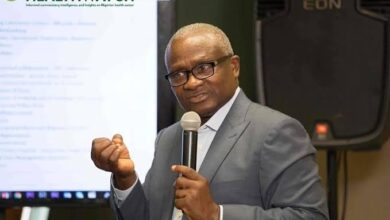
Minister of State for Health and Social Welfare, Dr. Iziaq Salako has called on host countries to ensure Nigerian Healthcare workers in diaspora contribute positively to the nation’s health sector.
Assistant Director Information and Public Relations, Federal Ministry of Health and Social Welfare, Ado Bako disclosed this in a statement on Tuesday.
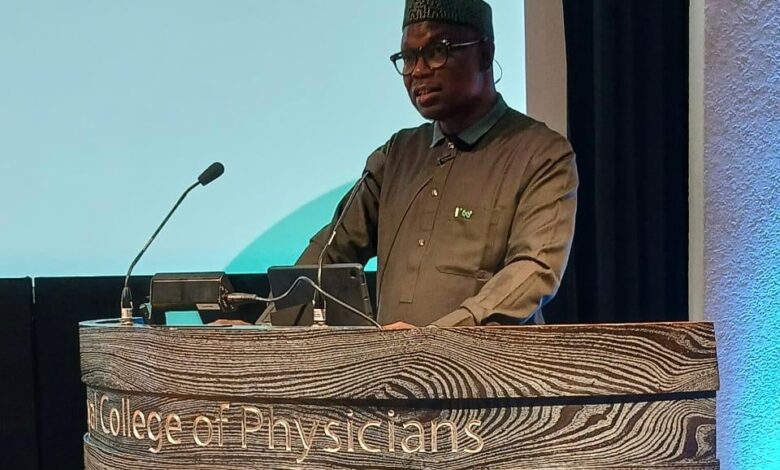
Ado said the minister made the call in his keynote address delivered at the 2026 United Kingdom Global Health Summit, with the Theme: “Shaping Tomorrow’s Health, Together” held on Monday 26 March,2026 at Royal College Of Physicians, London.
He asked for the full integration of diaspora healthcare assets into national and global health strategies, noting that the Nigerian health professionals in diaspora, estimated at not less than 150,000 globally, represents a reservoir of skills, knowledge, networks, and capital that can accelerate health system strengthening.
He therefore invited destination countries, international organisations, and diaspora associations to join in formalising and scaling the programmes of engagement that is already bearing fruit.
Dr. Salako further advocated for a renewed commitment to health research and innovation, with a focus on equity, emphasizing that the global research ecosystem must be restructured so that the priorities, perspectives, and intellectual contributions of low- and middle-income countries are fully represented.
On managing the issue of workforce migration, the Minister stressed the need for a new compact on health workforce mobility, a Managed Migration Agreement with clear terms and KPIs, maintaining that the current model, in which low-income countries invest in training and high-income countries reap the benefits, is neither sustainable nor just.
He therefore suggested for structured bilateral and multilateral agreements that include compensation for source countries, joint training programmes, managed circular migration pathways that allow health workers to gain experience abroad and return with enhanced skills, and investment in health training infrastructure in countries of origin.
“This is why a key component of the theme of this summit, “Together,” is so critical. No nation can solve the global health workforce crisis alone. The interdependence that the pandemic revealed is not a weakness. It is a truth, and it is, if we choose to embrace it, a strength”, he said.
Dr. Salako stated that Nigeria, under the leadership of President Bola Tinubu had adopted a multi-pronged approach to addressing both the quantity and quality of its health workforce, saying that collaboratively, Federal Ministry of Health, the National Universities Commission and regulatory bodies like the Medical and Dental Council of Nigeria, had expanded the number of accredited health workers training institutions in order to produce more, citing increase of about 160% in the number of new intakes to the nation’s medical school between 2023 and end of 2025.
He further said that a similar increase is being witnessed in the training of nurses, midwives, pharmacists, laboratory scientists and other core professional, adding that government also invested in the establishment and strengthening of schools to train para-medical professionals recognising that a resilient health system must rest on a broad and diverse workforce.
Explaining further, the Minister added that government introduced and scaled innovative task-shifting and task-sharing models, in line with WHO recommendations, to optimise the contributions of community health extension workers, community health officers, and pharmacy technicians.
“We are taking decisive steps to address the conditions of service of health workers, a key push factor while also improving the welfare and training conditions of resident doctors and other specialists in training”, he said.
On health financing, Dr. Salako said Nigeria government has recommitted to the Abuja Declaration target of 15% of national budgets allocation to health, which according to him, remains a benchmark that most African nations, including Nigeria, have not consistently met.
He called on international partners to complement domestic investment with predictable, flexible, and aligned development assistance, in addition, he urged for the expansion of innovative financing mechanisms, including health bonds, blended finance, and public-private partnerships, to mobilise the capital needed for health infrastructure, digital health, and workforce development.
The Minister explained that “the world today is contending with a convergence of financial, political, climatic, and demographic pressures that are reshaping the landscape of global health in ways we have not seen in our modern world.”
He said the magnitude of the impact of these changes on our health system is undeniably grave, admitting that Nigeria’s health system, like those of many nations in the global South, is confronting pressures on these multiple fronts and others development related areas including underfunding, infrastructural deficit, high out of pocket expenses for health and rural urban disparity.
Dr. Salako finally admonished, “Let us, together, shape tomorrow’s health. Let us do so with the courage to confront uncomfortable truths, the humility to learn from one another, and the conviction that every life, wherever it is lived, is of equal and immeasurable worth.”