

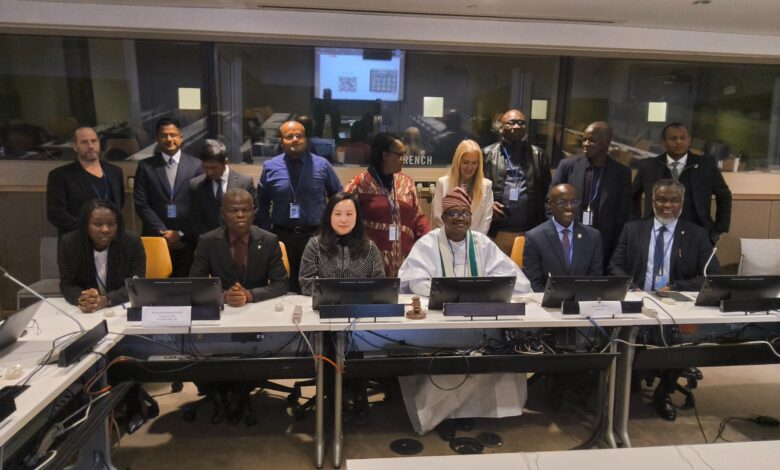

Nigeria has outlined plans to deepen broadband penetration, strengthen cybersecurity and promote inclusive internet governance.

This was unveiled in New York during a Nigerian high-level side event themed “Re-Imagining Digital Cooperation for Sustainable Development: From WSIS+20 Vision to Local Action,” where stakeholders examined how global digital commitments can be translated into national development gains.
Speaking at the event, the Director-General of the National Information Technology Development Agency (NITDA), Kashifu Inuwa, represented by the Director of Corporate Planning and Strategy, Dr. Dimie Wariowei, said Nigeria’s localisation strategy is anchored on the four core activity areas identified under the WSIS+20 review process.
He said digital infrastructure remains a major priority, citing challenges in reaching underserved communities, as well as issues of affordability and digital literacy that continue to limit meaningful access to the internet.
Inuwa disclosed that Nigeria, working with the World Bank, is implementing a nationwide fibre optic backbone project spanning about 90,000 kilometres to improve connectivity and support the digital economy.
He added that the National Broadband Plan currently in operation is nearing the end of its cycle, with plans underway for a renewed five-year strategy to accelerate broadband penetration.
He also highlighted Nigeria’s commitment to inclusive internet governance through its active engagement with the Internet Governance Forum (IGF).
Inuwa noted that the country’s national IGF brings together government agencies, the private sector, civil society and the technical community to promote dialogue and collaborative policy-making.
On cybersecurity, Inuwa said the country is strengthening its legal and institutional frameworks to address rising digital risks.
He referenced the existing Cybersecurity Act and a revised version awaiting parliamentary approval, aimed at enhancing protection for users and critical digital infrastructure.
He further said Nigeria intends to drive digital cooperation across Africa by supporting coordinated data collection and evidence-based monitoring of digital development, which he described as essential for tracking progress and amplifying Africa’s voice in global digital policy discussions.
Stakeholders at the event commended Nigeria’s digital initiatives and growing leadership role within Africa.
Earlier, Ms. Jennifer Chung, Co-Convener of the Informal Multi-Stakeholder Sounding Board (IMSB), said the WSIS+20 review offers a vital opportunity to strengthen monitoring, data collection and accountability, particularly for developing countries.
She stressed the importance of local and regional follow-up platforms such as national and regional IGF initiatives and youth-led forums in tracking progress towards the Sustainable Development Goals and Africa’s Agenda 2063.
Chung also noted that challenges of affordable and meaningful connectivity persist across the Global South, calling for sustained investment in broadband infrastructure and inclusive access to emerging technologies, including artificial intelligence, to ensure no region is left behind in the global digital transition.