

Nigerian Communications Satellite Limited (NIGCOMSAT) has allayed fears over the future of Nigeria’s satellite broadcasting services, insisting that millions of FreeTV viewers will not lose signal despite the nearing end of the design life of NigComSat1R.
The agency disclosed this in a detailed technical clarification released on Monday.
According to the agency, extensive contingency measures have already been put in place to guarantee uninterrupted transmission beyond 2027, including a commercial backup satellite positioned at the same 42.5° East orbital slot.
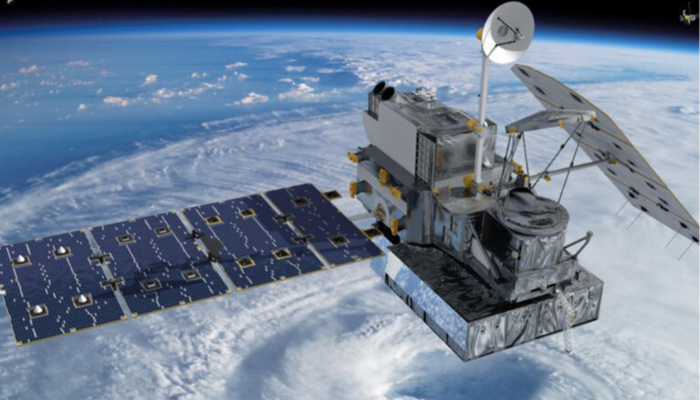
NIGCOMSAT explained that NigComSat1R, launched in December 2011, remains fully functional and capable of operating beyond its original 15-year lifespan through inclined-orbit operations.
The company stressed that “fuel exhaustion” does not translate to an immediate collapse of service, noting that modern geostationary satellites are specifically designed to continue broadcasting even after north-south station-keeping fuel is depleted.
According to the agency, NigComSat1R could remain operational into 2028 with only marginal signal degradation, while most households using standard DVB-S2 decoders and properly aligned 60cm dishes are expected to continue receiving uninterrupted service.
NIGCOMSAT also rejected reports suggesting that millions of households may be forced to repoint their dishes or purchase expensive new equipment during the transition period.
It said the backup satellite arrangement was deliberately designed to match NigComSat1R’s Ku-band frequencies, symbol rates and polarisation settings exactly, allowing migration to occur entirely at the teleport uplink level without affecting consumers.
The agency described estimates of N100 billion for nationwide dish realignment as “grossly exaggerated,” explaining that even in an emergency scenario requiring dish repointing, the process would cost between N1,000 and N2,000 per household and could be completed in less than 15 minutes by trained technicians.
NIGCOMSAT further assured that the planned replacement satellites — NIGCOMSAT2A and NIGCOMSAT2B — remain on track for launch in 2028 and 2029 respectively.
The company disclosed that multiple international launch providers, including SpaceX and Arianespace, are being considered under a competitive procurement framework, dismissing concerns about dependence on any single manufacturer or launch contractor.
On decoder compatibility, the agency said all FreeTV-branded decoders would undergo inclined-orbit compliance testing, while most existing DVB-S2 devices already in Nigerian homes are expected to function without modification.
The satellite operator also pledged sustained public communication ahead of any operational changes, promising at least 90 days’ notice before major transitions such as inclined-orbit migration or activation of backup capacity.
NIGCOMSAT maintained that the broader objective is to secure Nigeria’s sovereign satellite broadcasting infrastructure while expanding future capabilities in direct-to-home television, rural broadband connectivity and digital inclusion through next-generation satellite technologies.