
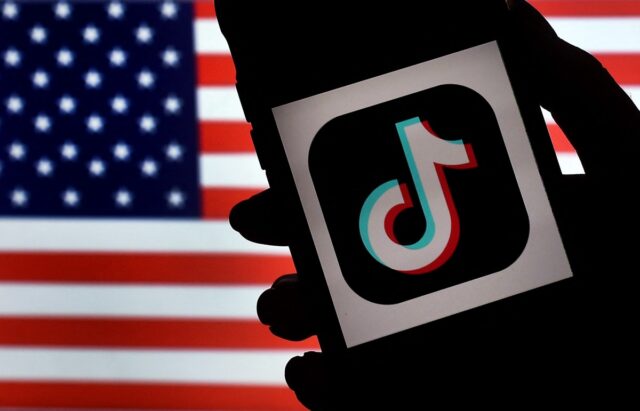

After a series of flip-flops accompanied by back and forth, Byte Dance, the owners of TikTok have a date with history on December 16, 2025, when a definite position is likely to take place on its status in the United States of America (USA).

Threats of its potential ban began in 2020 during President Donald Trump’s first coming.
With an Executive Order, then, Chinese ownersof Byte Dance were threatened to either cede the platform to Americans or facea permanent ban.
The legislature and the judiciary had their input by insisting on the takeover by Americans or remaining banned. Since his second coming in January 2025, Trump has signed many Executive Orders on the subject matter, so that no one seems to know the end of the crisis.
On August 6, 2020, Trump signed Executive Order 13942, which directed the U.S. to prohibit transactions with Byte Dance Ltd. (TikTok’s parent) under U.S.jurisdiction. Other related Trump orders, including one for WeChat, were issued around the same time.
On June 9, 2021, President Joe Biden signed Executive Order 14034, which revoked the earlier Trump orders and replaced them with a broader review framework for apps tied to foreign adversaries.
In Trump’s second coming in 2025, he issued a series of executive orders delaying the enforcement of a law (Protecting Americans from Foreign Adversary Controlled Applications Act) that would effectively ban TikTok if not divested.
These include:Executive Order 14166 (Jan 20 2025), Executive Order 14258 (Apr 4 2025), Executive Order 14310 (June 19 2025), and Executive Order 14350 (Sept 16 2025) in that regard.
In all, there have been six Executive Orders to divest or ban TikTok under American jurisdiction. So the latest extension until December 16, 2025, follows a framework deal between the US and China thataims to have American companies majority-own the US operations.
The lawrequiring ByteDance to sell TikTok’s US assets or face a ban was upheld by theSupreme Court and was originally set to go into effect in January 2025, butTrump issued executive orders to postpone enforcement to allow the divestiture process to be completed.
The ban’s enforcement has been repeatedlydelayed by the Trump administration through executive orders. The framework deal reached with China will enable the US to collect a fee from this deal.
The agreement includes provisions for a new, American-majority board of directors and ensures that Americans’ data will bestored in the US with no access for China, and this deal must be signed, andthe sale must be completed for the ban to be permanently averted.
Curiously, the future of the app depends onwhether this transaction is finalised by the new deadline or not.US Treasury Secretary Scott Bessent claimed last week that the US and China have finalised the details of a deal transferring TikTok’s US version to new owners.
“We reached a final deal on TikTok,” the agency report quoted Bessent, alluding to Trump and his Chinese counterpart, XiJinping, meeting.
“We reached [a deal] in Madrid, and I believe that as of today, all the details are ironed out, and that will be for the two leaders to consummate that transaction” Trump and Xi met in South Korea last week during Trump’s Asia tour, but details are yet to emerge.People familiar with the transaction say the deal is estimated to be valued at $14bn.
The majority of US and international investors will own about 65% of the company, with ByteDance and Chinese investors owning less than a 20% stake. Trump’s executive order hands oversight of the app’s algorithm to the new investors, including six out of seven seats on the board of directors.
Trump arrived in Malaysia on Sunday for asummit of the Association of Southeast Asian Nations, as part of a five-day tour of the continent, with an expected face-to-face meeting between Trump and Xi in South Korea.
All three branches, the executive, the legislature and the judiciary have been involved in the process of the divestiture or ban of TikTok in the USA.For instance, in passing the TikTok Ban/Divestiture Law (2024–2025), Congress passed the Protecting Americans fromForeign Adversary Controlled Applications Act in 2024 (with bipartisansupport).
The implication is that this law requires ByteDance (TikTok’s Chineseparent) to divest TikTok’s U.S. operations within a set time period (about 9–12months), and failure to do so, the app would be banned in the United States andremoved from app stores and web hosting.The Congress provided the statutory authoritythat the executive branch had previously lacked.
The Congress was guided in response tonational security and data privacy concerns that courts had said couldn’t be handled by executive orders alone (like Trump’s 2020 ban attempts).Congress, therefore, set clearer legalstandards and timelines to withstand judicial scrutiny.
As part of its oversight functions, Congressheld hearings where TikTok CEO Shou Zi Chew was questioned about data practices and Chinese government influence in 2023 and 2024.Congress also reviewed Committee on Foreign Investment in the U.S.(CFIUS) findings on ByteDance’s control and debated theFirst Amendment and commerce implications of a ban.
Congress, therefore, framed the ban as anational security divestiture requirement, not a direct suppression of speech —a key legal distinction.The judiciary effectively checked theexecutive’s power, forcing any future ban to come through legislative authorityinstead of unilateral presidential action.
For instance, Federal judges (inWashington, D.C., and Pennsylvania) blocked Trump’s 2020 TikTok executive order(EO 13942) when Courts found that the administration exceeded its authority under IEEPA (the International Emergency Economic Powers Act) and ruled that banning TikTok could violatethe First Amendment (freedom of expression) and due process rights.
This 2025 alone, ByteDance and TikTok creatorshave filed constitutional lawsuits against the 2024 Act, arguing that theTikTok law violates First Amendment rights (speech), Fifth Amendment (dueprocess), and is a bill of attainder (unconstitutional punishment of a specificentity). But the U.S. Government countered it, saying the law regulates ownership and national security risks, not speech directly,and is within Congress’s power.
It is not clear what will happen next as details of the deal are yet to be made manifest. But either way, TikTok may lose its ground onthe platform if new owners emerge as Byte Dance swallows the bitter pill of losing an investment that has all the trappings of global reach and relevance.