OPINION: Underserved Connectivity And Government’s 4,000 Towers Initiative
By Sonny Aragba-Akpore

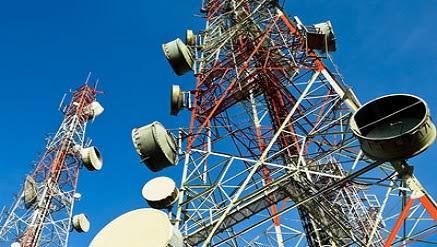

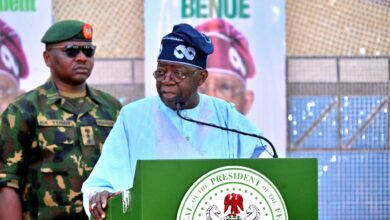
Worried by the growing insecurity in the country and poor connectivity in underserved communities, the Federal Executive Council (FEC) recently approved 4,000 Towers to boost communications. Although details of the implementation and distribution of the 4,000 towers were sketchy, the Information and National Orientation Minister, Mr Mohammed Idris, said the FEC approved the 4,000 towers to boost connectivity and security across the nation.

Announcing the decision, Idris said, “The Federal Executive Council took a decision that 4,000 of such towers be established or erected in these very underserved communities across this country. “Indeed, this will also help in fighting insecurity and enhancing commerce and economic activity amongst the people of those communities,” Idris explained that the programme, 4,000 towers will be erected in underserved communities to boost public communications.
He said the decision followed “A presentation of the Minister of Communications and Digital Economy, Mr Bosun Tijani, indicating that no fewer than 23 million Nigerians are currently underserved, meaning that they are unable to do any form of communication due to the absence of some of these towers. “The rollout is expected to significantly improve rural connectivity, stimulate commerce and enhance security surveillance in areas currently lacking network coverage.” Beautiful as the initiative seems, the Minister did not mention how much will be involved in the project and under which conditions and procedures will be followed to execute the project implementation.
Apart from the infrastructure interventions of the Universal Service Provision Fund (USPF) an organ of telecommunications regulator, the Nigerian Communications Commission (NCC) that erects BTS and towers to boost connectivity in black spots and underserved areas, it is not clear how FEC intends to proceed with the erection of these towers to happen more so since no budget provision was announced in that regard. Building a tower is not a tea party, as huge expenditure goes into actualising one. Besides the capital outlay on erecting towers, such towers don’t come cheaply. Other costs follow, including security and the hydra-headed Right of Way fees charged by state and local council governments. Mobile Network Operators (MNOs) have had to contend with multiple taxes to sustain and maintain the towers that accommodate the Base Transceiver Stations (BTS).
Will the government build the towers in collaboration with network providers? So many questions are hanging as no details of the implementation are available as we write this. Yes, if actualised, communication will improve, but the process of delivering this remains unknown.
The NCC data show that the number of base stations deployed by mobile network operators since 2001, when Global System of Mobile Communications (GSM) began, stood at 137,992 by end-of-2023.
But industry-analysis sources claim that by 2024 (or very recently), the total may have reached ~145,141 base stations nationwide.
The breakdown of recent data (2022–2025) on BTS/towers indicates the approximate distribution by operator / tower-company, and what is (and isn’t) publicly available. However, as of December 2022, the total BTS across Nigeria were 127,294. By the end-2023, the total BTS rose to 137,992.
And by December 2024, the total number of base stations reported was 145,141.
Also, by end-2024, there were roughly 39,880 telecom towers in Nigeria (that is, physical mast/tower structures), reflecting both “macro towers” and collocated sites, including infrastructure-sharing arrangements.
The 4,000 towers being proposed will increase the number to about 44,000.
Sensing the high cost of building base stations and maintenance of the same, many mobile network operators (MNOs) lease rather than own the physical tower infrastructure. Thus, there is now a separation between “base stations/BTS” (active radio equipment) and “tower structures.”
This is typical worldwide and increasingly common in Nigeria now to reduce the costs of putting up one.
Apart from that, the NCC introduced infrastructure sharing many years ago to cushion the cost of individual companies erecting and maintaining the same.
Analysts state that as of 2023, the bulk of towers in Nigeria were owned/managed by tower companies (“Tower Cos”), and not directly by MNOs.
The main tower companies and their approximate holdings (as reported in a 2023 “industry infrastructure” breakdown) include:
IHS Towers — about 18,925 towers
ATC Nigeria (subsidiary of American Tower Corporation) — about 8,270 towers
Globacom — directly owns and manages towers (unlike MNOs that lease towers from TowerCos) . Several smaller “TowerCo” operators (e.g. Pan-African Tower, East Castle, ColoPlus, others) — cumulatively adding to tens of thousands of towers. MNOs themselves directly manage only a small fraction of the total towers. For example, as of 2024, the majority of towers (~30,597 out of 39,880) are under TowerCos, while MNOs own about 9,283 towers.
Because of the lease / infrastructure-sharing model, each tower may host equipment from multiple operators — allowing multiple BTS per tower (or multiple MNOs sharing the same site) and making the mapping between “towers” and “BTS / base stations” non-trivial.
BTS is the electronic equipment used in mobile networks, including 2G/3G/4G/ and 5G.
BTS sends and receives radio signals to/from mobile phones
, performing encoding, modulation, and signal processing by connecting to a Base Station Controller (BSC) or directly to a core network (in 4G/5G)
BTS components include Radios (RRUs), Baseband unit (BBU), Power supply and backup batteries. There are also Antenna systems, Radio Frequency and fibre connections. BTSs are often installed at the base or inside a shelter near the tower.
The tower houses the BTS and can host many more hours by global best practices.
While there are an estimated 145,000 BTSs, a little over 40,000 towers housover 145,000 BTS.
If the government can add 4,000 towers, the number will increase to about 44,000, although the NCC projects that for the country to enjoy robust telecommunication services, a minimum number of 80,000 towers is needed.
The 4,000-tower initiative is the second by the government to bridge the digital divide.
Earlier in the year 2025, the government announced the 90,000-fibre optic project in the country.
Known as Project Bridge, it is currently the largest digital fibre backbone investment in any developing nation.
The bold and strategic effort is to lay a 90,000km wholesale, open-access fibre network across the country,” Minister Tijanni said in an update on his X handle recently.He is quoted as saying: “It is designed to deliver high-speed, resilient, and equitable broadband connectivity to every corner of Nigeria – from major urban hubs to remote communities.”
The minister said the project marks a major step forward in the Federal Government’s mission to build an inclusive and future-ready digital economy for Nigerians. The project is a central part of Nigeria’s National Broadband Plan (2020-2025), which aims to boost internet penetration to 70 per cent by the end of 2025 and 80 per cent for underserved populations by 2027.
Project Bridge, which is expected to create more jobs, will operate under a Special Purpose Vehicle (SPV) to ensure efficiency and accountability.
The connectivity project is expected to cost the government $2 billion, and it is being funded by Direct Foreign Investment (DFI) loans and private equity, with the government holding a minority stake of 25–49 per cent in an independently run SPV.
The project targets 20,000 direct and 150,000 indirect jobs, and 1.5 per cent GDP growth. It aims to contribute from $472.6 billion to $502 billion GDP in four years.
According to the digital economy minister, Project Bridge is structured to support the needs of both large and small Internet Service Producers, ISPs. It offers scalable access through core, metropolitan, and middle-mile layers.
He promised that the digital fibre optic will accelerate fixed broadband growth nationwide by enabling healthy competition and network sharing.
The project will add 90,000km to the existing 35,000km network of fibre optic cables, thereby deepening the country’s digital backbone.
He promised that the digital fibre optic will accelerate fixed broadband growth nationwide by enabling healthy competition and network sharing.
The project design possesses seven regional backbone rings, which interconnect Nigeria’s six geopolitical zones and Lagos.
These rings will form a resilient national framework of 125,000km of fibre that ensures redundancy, minimises latency, and supports seamless data flow across the country.
Tijani is quoted as saying that the structure is critical to meeting growing national demand for high-capacity digital infrastructure.
He further explained that each region is covered by a dedicated fibre ring to connect urban centres and enhance regional connectivity.
“Each region is covered by a dedicated fibre ring (Lagos, South West, South South, South East, North Central, North East, and North West), strategically planned to connect urban centres and enhance regional interconnectivity. This regional design supports economic activity, governance, education, and digital access across all zones,” he stated.