

As the tenure of the operational licenses of the Distribution Companies (DisCos) approaches renewal, the Federal Government has hinted on plans to introduce a minimum capital adequacy requirement as part of the license renewal process, to strengthen the financial health and liquidity position of the utilities.
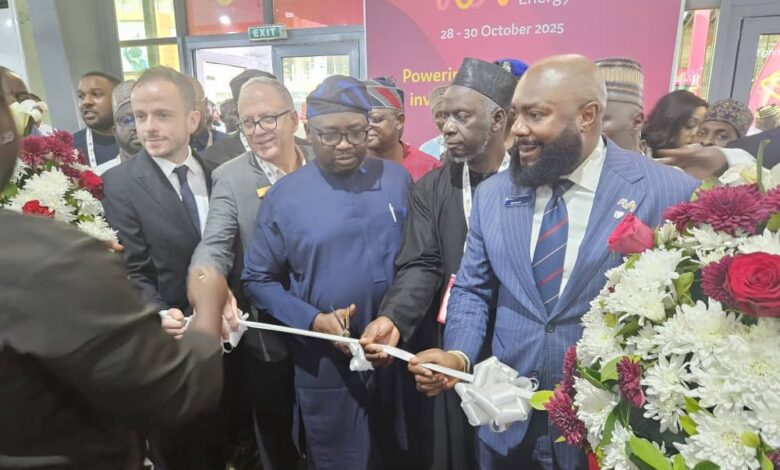
The Minister of Power, Chief Adebayo Adelabu, dropped the hint on Tuesday while speaking at the Nigeria Energy Forum (NEF) 2025 in Lagos.
He explained that the sector continues to face challenges of under-capitalization among several Distribution Companies (DisCos) and a severe debt burden that has constrained their operational efficiency and service delivery over the years.
However, he assured that the Nigerian Electricity Regulatory Commission (NERC) and the State Regulatory Commissions are working in close synergy to drive performance improvement across the utilities.
This is just as the Managing Director of the Azura Power, Engr. Edu Okeke, advised the Federal Government to ensure that each DisCo have up to $500million capital base to operate efficiently in the distribution value chain of the sector.
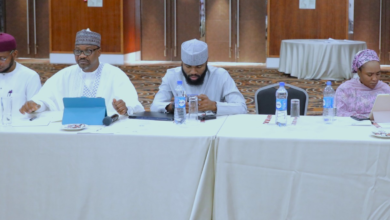
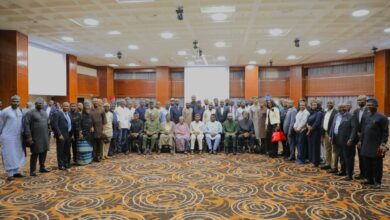
Engr. Edu who spoke during a panel session at the 10 Anniversary celebration of the Association of Power Generation Companies (APGC) on Tuesday in Abuja, said “you can’t operate any of the DisCos in Nigeria with less than $500 million shareholder, unfortunately all of them are basically negative.”
“What the government should first of all do is to clean up the balance sheets of DisCos,” he added.
Speaking on infrastructure development, the Minister disclosed that the Federal Government has introduced targeted national programs aimed at accelerating the viability, expansion, and modernization of the national grid.
“Under the phase zero of the Presidential Power Initiative (PPI), we enhanced transmission capacity, grid stability, and overall system reliability, with over 700MW of additional transmission capacity already achieved.
“Under Presidential Power Initiative (PPI) Phase One, contracts have been signed with Siemens Energy, CMEC, Elswedy Electric, and Power China. Financing arrangements are underway to support implementation. Phase one is planned to add 7000MW operational capacity to the grid.
“In parallel to the grid expansion, generation capacity is being expanded through the rehabilitation of existing NIPP plants to unlock about 345MW, alongside the successful integration of the 700MW Zungeru Hydropower Plant into the grid. Collectively, these interventions have helped sustain an average generation capacity of approximately 5,300MW in 2024 up from 4,200MW recorded in 2023.
“In addition, the unbundling of the Transmission Company of Nigeria, into two organisations: the Nigerian Independent System Operator (NISO), which manages the operation of Nigeria’s electricity grid and coordinates the electricity market, and the Transmission Service Provider (TSP), which owns, maintains, and expands the physical transmission infrastructure. This marks a long-awaited and critical structural reform in the power sector.
“Lastly, the Federal Government has operationalized the Presidential Metering Initiative (PMI) to close the national metering gap and improve sector viability. Already, ₦700 billion has been secured from FAAC to deploy 1.1 million meters by end of 2025, and 2 million annually over the next five years under the PMI.
“This complements the 3.2 million meters being procured through the World Bank’s DISREP program, positioning Nigeria to close the metering gap within five years and strengthen transparency and revenue assurance across the value chain,” he added.