
The Securities and Exchange Commission (SEC) has announced a series of wide-range reforms aimed at strengthening market efficiency.

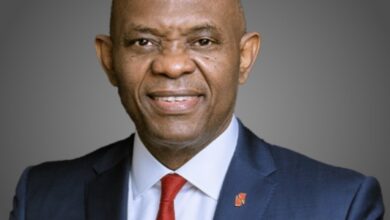
SEC Director-General, Dr. Emomotimi Agama, who unveiled the initiatives during the second Capital Market Committee (CMC) meeting for 2025, held in Lagos, said the reforms are also intended to deepen investor confidence, and accelerate the digital transformation of Nigeria’s capital market.
A statement by the Commission’s Management on Monday, quoted the DG to have also confirmed Nigeria’s move toward a T+1, and eventually T+0 settlement cycle.
According to the statement, Dr Agama while speaking noted that the transition from T+3 to T+2 settlement for equities, implemented on November 28, marked a major milestone for the Nigerian capital market and aligned it more closely with global best practice.
He explained that shorter settlement cycles will enhance liquidity, reduce counterparty risk, and accelerate capital reinvestment.
The reform now applies across the Nigerian Exchange, NASD OTC Securities Exchange, and Lagos Commodities and Futures Exchange.
The SEC DG outlined broader market developments since the last CMC meeting in May, including the upgrade of Nigeria’s sovereign credit rating and the country’s removal from the FATF grey list.
He said these achievements have boosted investor confidence and improved prospects for capital inflows.
Inflation has also moderated, with the headline rate easing to 16.05 per cent year-on-year in October, the lowest level since March 2025.
Agama reported strong capital-raising activities between April and October, with significant transactions approved across debt, equity, and commercial paper markets.
Notable programmes include the N500bn Climate Funding SPV and the N200 billion Elektron Finance bond, reflecting growing investor interest in infrastructure and sustainable finance.
The commercial paper market remained active, with over N753 billion issued across sectors such as manufacturing, energy, and agriculture.
He said these figures demonstrate sustained confidence in the market’s regulatory framework.
Despite these positives, the market faced headwinds in November when the Nigerian Exchange recorded its steepest monthly decline on record. Market capitalization fell by N6.54 trillion, while the All-Share Index dropped nearly 7 per cent.
The downturn was driven by profit-taking ahead of the planned 30 per cent Capital Gains Tax, weakened sentiment in banking stocks, and broader policy and global uncertainties.
However, Agama noted that the market has since shown resilience, with modest recovery following government reassurances on fiscal and tax policy, and remains significantly positive year-to-date.
The SEC is intensifying its market development and financial inclusion efforts through education-based initiatives, including the integration of capital market studies into the national secondary school curriculum in collaboration with the Nigerian Educational Research and Development Council.
At the tertiary level, the Commission partnered with Nnamdi Azikiwe University for a conference focused on leveraging capital market opportunities for SME growth.
Regionally, the SEC continues to reinforce Nigeria’s leadership in non-interest finance.
The Commission recently engaged a Bank of Ghana delegation on regulatory frameworks for non-interest capital markets, highlighting Nigeria’s N1.4trillion sovereign Sukuk issuances and the growth of Islamic mutual funds. Planning is also underway for a Municipal Bond and Sukuk Summit scheduled for the first quarter of 2026.
Agama emphasized ongoing efforts to deepen the commodities and derivatives ecosystem.
The SEC is collaborating with the Standards Organisation of Nigeria to update commodity standards, working with insurance brokers to enhance risk mitigation, and partnering with the Ministry of Solid Minerals to unlock funding for mining companies.
It is also engaging the Central Bank of Nigeria to secure liquidity status for warehouse receipts while strengthening oversight of commodity exchanges through inspections and financial reviews.
The Commission is advancing new rules under the Investments and Securities Act (ISA) 2025 to support commodity exchanges, collateral managers, warehouse operators, and warehouse receipt issuers.
Agama highlighted the Commission’s technology-driven regulatory reforms, including automation through the Digital Transformation Portal, which now allows capital market operators to submit applications, upload documents, and track approvals online.
Looking ahead, the renewal of registration for capital market operators will take place from January 1 to 31, 2026, while electronic receipt and processing of registration applications will commence in the first quarter of 2026.
Agama concluded by reaffirming the SEC’s commitment to building a resilient, transparent, and innovation-driven capital market that can serve as a catalyst for sustainable economic growth.
He said the Commission remains guided by the principle that “a strong capital market is not built in a day; it is shaped by vision, collaboration, and resilience.”