
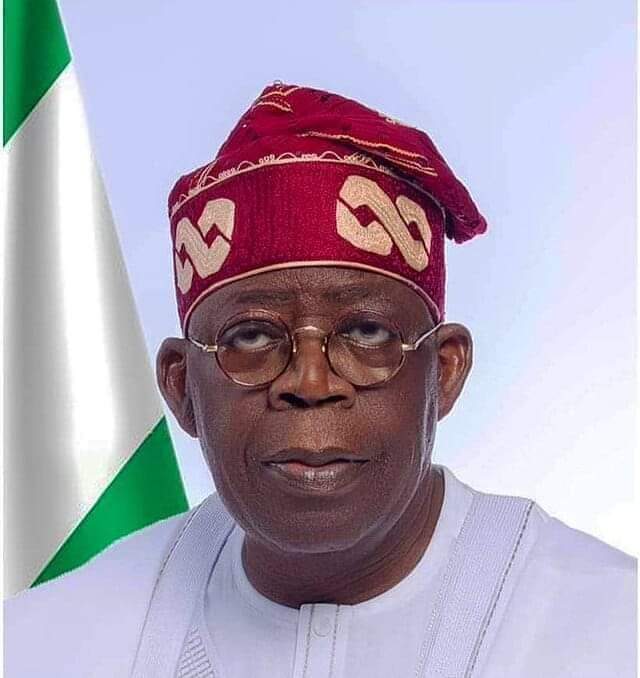

President Bola Tinubu has said fixing the power crisis in Nigeria’s hospitals was now a national priority, describing unreliable electricity in health facilities as a life-threatening challenge that demands urgent action.
The Head, Information and Public Relations, Federal Ministry of Health and Social Welfare, Alaba balogun disclosed this in a statement on Wednesday.
President Tinubu who was represented by the Secretary to the Government of the Federation, Senator George Akume at the maiden National Stakeholders’ Dialogue on Power in the Health Sector held on Tuesday in Abuja, affirmed that reliable and affordable power was central to improving healthcare delivery and restoring public confidence in the system.
He commended the collaboration between the Federal Ministries of Health and Power, describing it as a testament to the present administration’s resolve to promote synergy amongst MDAs. Working as a team, he stated, would deliver sustainable solutions to electricity challenges in the health sector.
Elaborating further, he described the persistent power supply crisis in Tertiary hospitals as a crisis which demands urgent and immediate action to save lives.
“In surgical theatres, maternity wards, intensive care units, laboratories, and emergency rooms across the country, power outages too often compromise safety, interrupt care, and cost lives. These outages cannot continue, and under our administration, they should not. Lives are at stake. We must act now,” Tinubu declared.
He affirmed that addressing energy challenges in hospitals was integral to his Renewed Hope Agenda which prioritises tackling energy poverty, decentralising supply, and expanding private sector participation.
Through the Energy Transition Plan and ongoing power sector reforms, the government, according to him, aims to deploy off-grid solar and hybrid systems for health facilities, incentivise private investment, and leverage blended financing with development partners.
Tinubu challenged health institutions to adopt sustainable, community-owned systems rather than temporary fixes and urged stakeholders to turn dialogue into measurable action.
“This dialogue must not be a talk shop. It must yield actionable outcomes—alignment of policies, institutionalisation of energy audits in hospitals, mobilisation of social and green financing, and establishment of a results-driven accountability framework.
“The success of this initiative will not be measured by the speeches we deliver but by the uninterrupted light in our hospitals, the hum of functioning equipment, and the renewed confidence of every Nigerian who walks into a public health facility,” he said.
On his part, the Minister of Health and Social Welfare, Prof. Ali Pate highlighted that power and connectivity remained the two missing links in Nigeria’s health transformation, stressing the need for partnerships to mobilise private capital through Public-Private Partnerships.
The Minister of State for Health, Dr. Iziaq Salako informed that unreliable electricity was the second biggest barrier to healthcare delivery after funding gaps, citing a BudgIT survey. He urged stakeholders to act collectively, noting: “Every time a hospital is plunged into darkness, lives are put at risk. Powering health is not optional—it is essential for our survival
“This is therefore the time to be creative as we move to develop and adopt smart energy solutions that will strengthen our health system and empower us to deliver on our core mandate of improving population health outcomes”, he said.
Meanwhile, the Minister of Power, Chief Adebayo Adelabu described the event as a turning point in linking energy and health, highlighting reforms under the Electricity Act 2023, the National Integrated Energy Policy, and renewable transition projects, including solar mini-grids for healthcare centres.
Speaking earlier, the Permanent Secretary, Federal Ministry of Health and Social Welfare, Daju Kachollom emphasized the critical importance of electricity in hospitals, describing it as “a matter of life, dignity, and hope”.
The theme “Powering Health Through Public-Private Synergy: Energising Nigeria’s Health Sector for the Future”, she stated, captured the essence of ensuring that every Nigerian, regardless of geography or circumstances has access to affordable healthcare supported by reliable and sustainable power.