
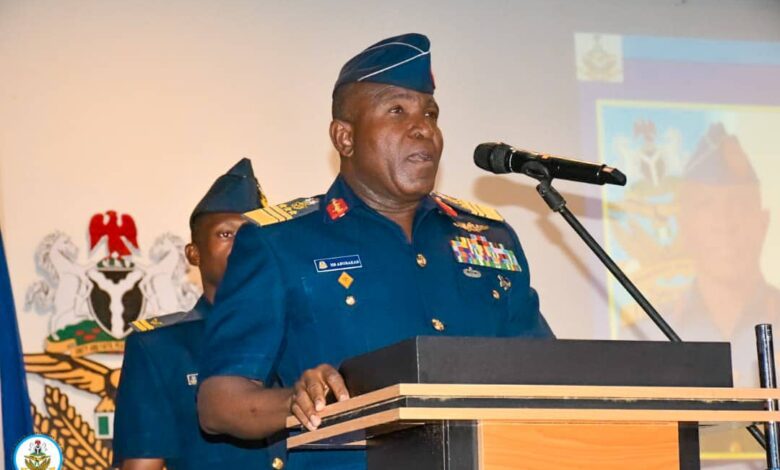


The Chief of the Air Staff (CAS), Air Marshal Hasan Abubakar, has unveiled several initiatives to enhance Air Provost capability.
The CAS disclosed this while speaking at the Air Provost Conference 2025, held on Monday, 8 September 2025 in Jos, where he noted that the presence of sister security agencies underscored “the undeniable truth that national security is a collective responsibility.”
The Air Provost is the Nigerian Air Force’s (NAF) internal security and military police unit, responsible for maintaining law and order, discipline, and security within the NAF. This specialized unit handles tasks such as conducting criminal investigations, enforcing military regulations, providing security for bases and personnel, and participating in ceremonial duties. The Air Provost unit ensures that NAF personnel adhere to the established code of conduct and operates as a law enforcement arm within the broader NAF structure.
Some of the Air Provost Capability enhancing initiatives include the establishment of a state-of-the-art forensic and digital crime laboratory at the Air Police Training Centre in Jos, acquisition of new Military Working Dogs (MWDs), and the annual recruitment of 100 Air Police personnel for the next five years.
Other projects include guard room upgrades, new Provost squadrons, and improved student accommodation at the Air Police Training Centre in Kerang.
Looking ahead, he pledged intensified training in cyber warfare and digital forensics to ensure the protection of the NAF’s critical digital infrastructure. He also expressed appreciation to President Bola Tinubu for his unwavering support, even as he commended the Directorate of Air Provost for reviving the Conference after seven years, assuring that “our personnel will continue to be law-abiding, while upholding justice and respect for civil authority.”
Earlier, Air Marshal Abubakar called for sustained synergy among Nigeria’s security agencies, stressing that national security is a shared duty that demands unity of effort.
He warned that terrorism, banditry, and cybercrime “do not respect jurisdictional boundaries” and must therefore be tackled through joint intelligence sharing, crime detection, coordinated operations, and capacity building.
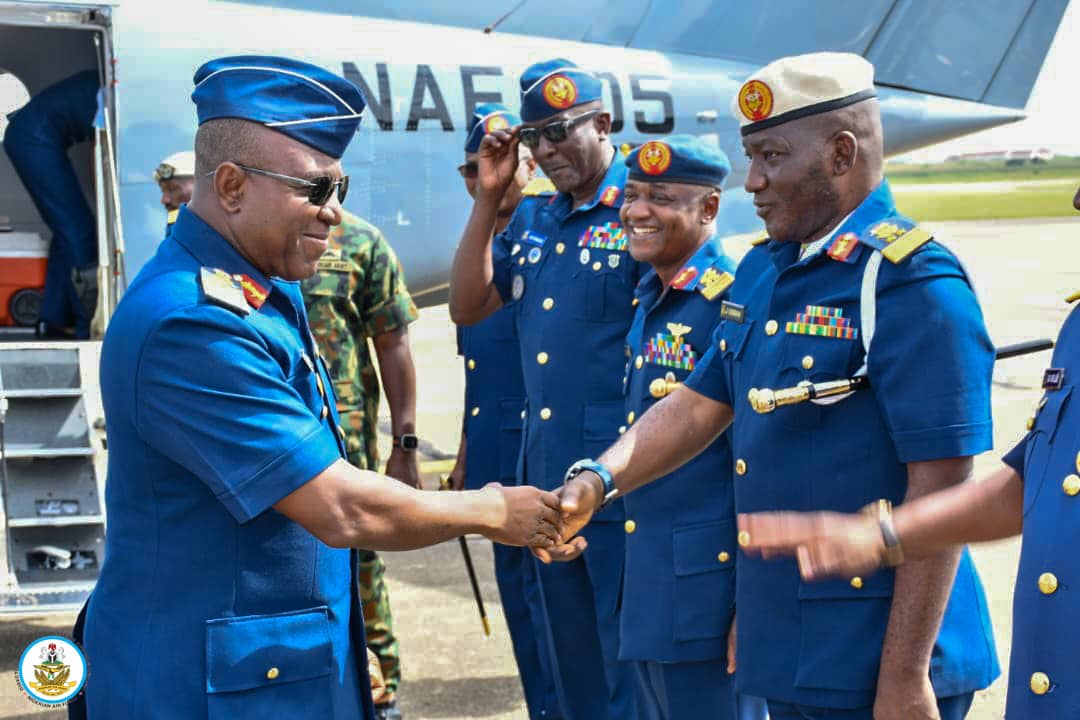
He reaffirmed the Nigerian Air Force’s (NAF) commitment, particularly through the Air Provost, whom he described as the “custodians of discipline” and “guardians of installations,” vital to both internal order and broader operational success.
In his welcome address, the Chief of Administration, AVM Idi Sani, highlighted the pivotal role of the Air Provost in discipline, regulation, and infrastructure protection, stressing that this year’s theme — “Leveraging Technology, Collaboration, Capacity Building and Training for Enhanced AP Duties in a Dynamic Security Environment” — aligned with the CAS’s philosophy of deliberate training and mission-oriented force development.
Plateau State Governor, Caleb Mutfwang, who was represented by the Secretary to the State Government, Architect Samuel Jatau, praised the NAF and other security agencies for their contributions to sustaining peace in the state.
The Air Provost Marshal, AVM JA Usman, lauded the CAS for his strategic guidance and support, noting that the conference had renewed the Directorate’s resolve to harness technology, collaboration, and capacity building.
The three-day event features paper presentations by AVM KG Lar (rtd), Professor Etannibi Alemika, AIG Emeka Nwonyi Polycarp, and Professor Kursim Leonard, linking theory with real-life experiences.