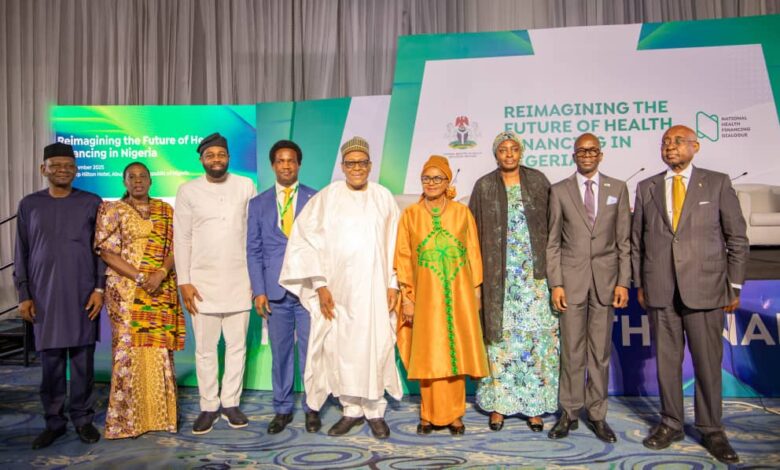

The World Health Organization (WHO) has urged Nigeria to increase public health spending to at least 20% of total health expenditure if it must achieve sustainable financing of her health sector and ultimately achieve Universal Health Coverage (UHC).

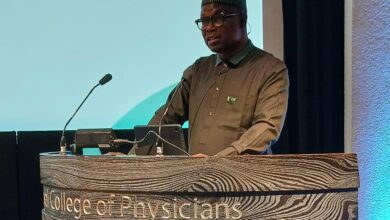
WHO Regional Director for Africa, Prof. Mohammed Janabi stated this at the National Dialogue on Health Financing held in Abuja on Thursday.
Prof. Janabi noted that Nigeria’s leadership in health financing reform was timely and commendable.
“With over 223 million citizens, how the country finances health is vital for the well-being of its people and the future of the continent.
“We know healthier populations are more productive, more resilient to shocks and better able to drive inclusive growth”, he said.
The WHO Regional Director commended Nigeria’s progress stating that it was an encouragement to other countries:
“The Basic Healthcare Provision Fund, the National Health Insurance Authority Act and the expansion of state-level insurance schemes. All are steps in the right direction. The establishment of equity and investment units and the engagement of parliamentarians through the Legislative Network for UHC are inspiration for other countries”, he said.
According to him, WHO emphasizes that sustainable financing was the backbone of resilient systems. This means, “increasing public health spending to at least 20% of total health expenditure, reducing out-of-pocket payments to protect households, strengthening pooling and prepayment mechanisms and using evidence – such as cost-effectiveness and equity analyses – to guide fair decisionmaking”.
He therefore urged the participants to, let the Dialogue be remembered as a turning point, where commitments become sustained action. “Together, we can build a financing system that is inclusive, equitable and responsive. WHO stands ready as a partner on this journey”, he said.
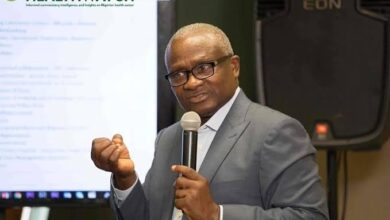
Similarly, Head of High Impact Africa Department, The Global Fund, Ms Maria Kirova also commended the Government of Nigeria for convening the Dialogue and for the bold steps it had taken in recent times to strengthen health financing and advance the country towards universal health coverage.
“Nigeria has demonstrated strong leadership and remarkable progress in tackling HIV, tuberculosis, and malaria challenges, and in recent years, we have seen how investments in the national disease responses have strengthened the health system and pandemic preparedness.
“This High-Level National Dialogue on Health Financing comes at a critical moment in time, when not only international health financing is shrinking, but also when sustainability of such investments in health security and systems is paramount”, she said.
Kirova disclosed that through its partnership model, the Global Fund had fostered sustainability by setting co-financing incentives as a major requirement for the grant financing, providing catalytic funding that leverages greater domestic investments for more effective supply and demand-side interventions towards UHC.
Also by working closely with civil society, private sector, government and communities for the program design and innovative implementation approaches for the national HIV, TB and malaria responses.
“We believe the strong political leadership displayed by the Nigerian Government and the momentum observed in this forum will lead to a positive outcome in mobilizing additional health financing and achieving sustainability of health outcomes”,the Global Fund Representative said.
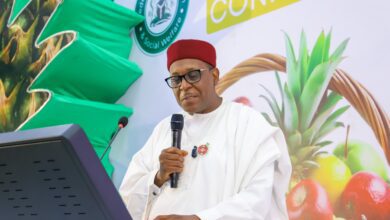
The Coordinating Minister of Health and Social Welfare, Prof. Muhammad Pate stated that the dialogue was not for talk but action. The goal, he said was to “leave this room with commitments that are measurable, financed, and implemented, not to be forgotten when the banners come down”.
According to Pate, this was a call for all levels of government, federal, states and local governments to take the lead in financing and strengthening healthcare systems at a decisive moment.
He therefore urged them to take collective ownership of financing primary healthcare, adding that contributions from the Federal Government exist to support, but the primary responsibility lies with the states.
He further asked them to make health a budget priority by ensuring allocations were fully released Increase and Release Health Budgets: Make health a budget priority; ensure allocations are fully released.
The Minister also advised them to ensure transparency by publishing their budgets, disbursements, and performance metrics.
“Every naira budgeted and released for health is a vote for economic growth, stability, and the dignity of your citizens. States that demonstrate transparent, results-driven health investments will set a national standard.
“Together, we can guarantee safe deliveries for every mother, a healthy start for every child, and equitable access to care for vulnerable populations, ensuring no Nigerian is pushed into poverty when seeking essential health services”, he said.