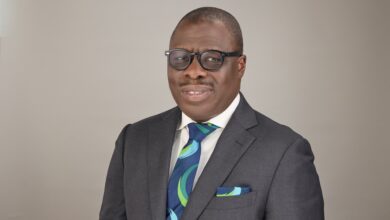


Renowned Economist and President of the Nigerian Association of Energy Economics (NAEE), Dr Hassan Mahmud, has stated that despite the huge natural resources in Africa, the continent generates less than 4% of global electricity.
The abysmal performance, he clarified, was not fundamentally a resource challenge, but a financing challenge of scale, structure, and credibility.
The former Central Bank of Nigeria (CBN) Director, and the Group Chief Economist of the Dangote Group, spoke at the just concluded 9th Nigeria International Energy Summit (NIES), held in Abuja, Nigeria.
The Summit convened under the timely and compelling theme: “Energy for Peace and Prosperity: Securing Our Shared Future,” brought together policymakers, investors, industry leaders, innovators and development experts to advance the nation’s energy agenda.
Speaking on a theme: Financing Africa’s Energy Future, Dr Mahmud said “Africa is home to about 17% of the world’s population. There are projections that in 2060, we are going to be 50% of the world’s population. Yet, produces less than 4% of global electricity.”
Noting that nearly 600 million Africans still live in a situation of lack of access to power, or clean power.
Dr Mahmud noted that Nigeria has been Africa’s largest economy, and one of the most resource-endowed countries, and generates only about5,000 to 6,000 megawatts of reliable power for the population of about 220 million people.
Explaining that electricity consumption per capita remains among the lowest incomparable emerging markets, not even developing economies. And businesses rely heavily on diesel generation, which is not too clean, at an estimated cost of $17 billion annually.
“It is not becauseNigeria lacks energy resources. We have about 200 trillion cubic feet of gas reserves. And one of the strongest solar corridors in the continent. And a large youthful population, and a growing market.
“So, the binding constraint is finance. It is the cost ofthat finance, the cost of the fund, it is the tenure, the maturity of those financing. Because you can’t finance this kind of project using money market loans, or short-term banking sector loans. It is the currency, the FX mismatch that we have, and it is the perception of risk. The premium on lending here ishumongous because of some of the structural friction that we have within the domesticeconomy and the continent.
“When we look at the numbers, let me go a bit specific now. The challenge becomes ever-clearer. Africa requires between $190 to $200 billion annually in energy investment through 2030, which is just about five years away.
“Current flows are under $70 billion to the African continent, of which less than 12% comes to Nigeria or the West African shore. The Minister of Power recently said that Nigeria will require at least $10 to $12, estimates are alsoup to $15 per year, to address this energy infrastructural deficit.
“So this gap cannot be closed by public financing alone.It demands the mobilization of long-term capital, debt and equity, which are long-term and more sustainable, and supported by credible policy framework and intelligent risk sharing,” he submitted.
On why the capital has not flowed at scale, he said: “First,the risk pricing, which is the premium on investment in flows to here. Secondly, is the currency and turnover mismatch. Third, is positional and off-the-cash risk.
“And against this backdrop, Nigeria is an importantinflection point because of the reforms that we had recently. The recent reforms, in terms of Foreign Exchange regularisationto allow flows and transparency into the market, the fuel subsidy removal wassupposed to give fiscal space to the fiscal authority to be able to invest ininfrastructure development to support the sinking coalthat goes into power sector development and infrastructure.
“Then the monetary tightening will give a real positive interest rate for investors to flow in. So, the reforms have been difficult, but necessary. For investors and regulators alike, the critical signal now isthe consistency of these reforms, the reaction function to the feedback they are getting back from the reforms, and the flexibility to allow some of those shocks to penetrate so that we can get the ultimate goal of those reforms.
“So, if reforms are sustained, foreign exchange risk becomes hedgeable, which iswhy we have some track of stability in that sense. Volatility is still there,but this is a traction that you can look for, for the IOCs and other investors. Rather than existential, tariff reform becomes credible, reliable, transparent, equitable, and long-term capital becomes possible,” he said.
On what truly matters for financing the Nigerian or Africanenergy future, Dr Mahmud said: “First, we must move from project finance tosystem finance. Second, blended finance must move from theory to scale. Third, domestic capital must be crowded in, because thinking that FDIs and foreign portfolio investment will develop, that will not be the thing. We need to also raise domestic capital to sustain the retention of those foreign capital.
“Fourthly, this is especially important for regulators andpolicy makers here today. Institutions matter as much as money. What makes someeconomies develop substantially over time is strong and reliable institutions, not just the resources. So, we see how the gains of resource endowment have been transformed into industrialization and all that. The critical factor there is institutional efficiency that we have in that space.
“Fifthly, Nigerian energy transition must be pragmatic,meaning we have to deal with the realities of the economy. We need to renew the dynamics of the current time. “Gas is not Nigeria’s problem. Energy poverty is. Gas stabilizes the grid. I’m happy that we’re bringing gas to power now. It enables industrialization and displaces diesel and biomass. For Nigeria, gas is not a climate contradiction. It is a transition enabler. And we are moving there now from fossil fuel to gas, which is cleaner, and to other condimentsthat we have within that space.
“So let me say a word directly to the investors and otherregulators over here. Nigeria’s energy market offers scale, demands certainty,and reforms momentum. For success, we require engagement beyond transaction, partnership with institutions, innovation in risk structure, and a long-term perspective into this ecosystem. Those who enter and structure right will help shape this market.
“In closing, energy is not just another sector. It underpins industrialization. It is the critical flagger of industrialization of any economy. Most economies are born using more dirty oil, but at least we have technology to support what we do. Job creation, fiscal sustainability, and social stability.
“Financing the Nigerian energy future is therefore macro-critical. The question before us is not whether capital exists. It is whether we can structure it, de-risk it, and deploy it at scale.”