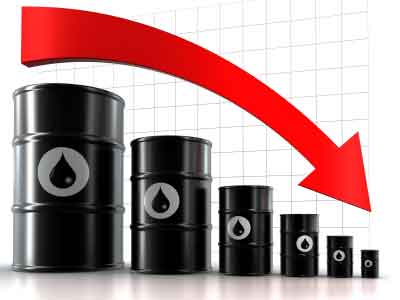


Oil prices tumbled from multi-month highs on Thursday and gold fell back from a record peak, as investor demand for safe-haven assets subsided on hopes that President Donald Trump was backing away from threats of U.S. military action against Iran.

Tech stocks got a boost from Taiwan’s TSMC, the world’s biggest producer of advanced AI chips, which posted a forecast-smashing 35% jump in fourth-quarter profit.
Shares in Dutch chip equipment maker ASML hit a record high, which in turn helped push Europe’s STOXX 600 up 0.4%, back towards record levels.
Currencies steadied, including the yen, which hit its weakest since July 2024 against the U.S. dollar on Wednesday. It retraced some of that decline after Japanese authorities issued a series of verbal warnings that suggested they may intervene to support the currency.
Trump said on Wednesday afternoon he had been told that killings in Iran’s crackdown on protests were easing and that he believed there was no current plan for large-scale executions, adopting a wait and see posture after earlier threatening intervention.
His statement knocked Brent crude futures down 3.3% to $64.34 a barrel on Thursday, after they had risen to a high of $66.82 the day before.
Gold eased back from a record $4,642.72 an ounce to trade at $4,615.7, down around 0.1% on the day.
Trump said in an interview with Reuters on Wednesday he has no plans to fire Federal Reserve Chair Jerome Powell, who is facing a Justice Department criminal investigation.
“Right now, we’re (in) a little bit of a holding pattern with him, and we’re going to determine what to do. But I can’t get into it. It’s too soon. Too early,” Trump said.
S&P 500 E-mini futures rose 0.7% after the benchmark index sank 0.5% overnight. Futures on the tech-focused Nasdaq Composite rose 0.8%, suggesting the index may recover some of Wednesday’s 1% drop later on.
“There’s a rotation playing out on Wall Street that’s ultimately weighing on indices but indicates that the internals of the market are holding up reasonably well,” Kyle Rodda, an analyst at Capital.com, said.
Highlighting that greater breadth in the market is the performance in January of the equal-weighted S&P 500, which strips out the effects of the mega-cap stocks that dominate the benchmark index. The equal-weighted S&P has risen 3.6% in January, versus an increase of just 1.1% for the S&P 500 itself, while the small-cap Russell 2000 is up nearly 7% this month.
“We saw more of the rotation pattern at play since the start of the year, with the small-cap Russell 2000 (+0.70%) hitting a new record as it outperformed the S&P 500 for the ninth session in a row,” Deutsche Bank strategist Jim Reid said.
Goldman Sachs and Morgan Stanley headline the earnings calendar on Thursday. Rivals Bank of America, Citigroup and JPMorgan have all reported and the takeaway is that lenders have boosted their profits thanks, in part, to increasing demand from customers – a sign the economy is holding up for now.
The U.S. dollar was steady against other major currencies on Thursday. It was held at 158.35 against the yen, roughly unchanged from levels late on Wednesday, having dropped to an overnight low of 158.095.
Prime Minister Sanae Takaichi plans to call a snap parliamentary election as early as February 8. Her spending plans have sparked concern among investors about the impact on government finances, while the Bank of Japan appears more reticent to raise interest rates to temper inflation, both of which have weighed on the yen for months.
The euro was a touch weaker at $1.1636, while the pound hovered around $1.3414, having shrugged off data that showed the British economy grew more strongly than expected in November. (Reuters)