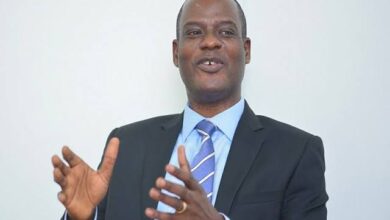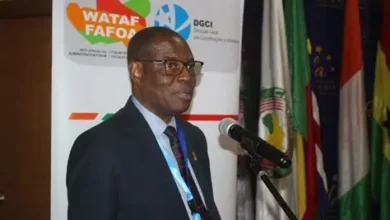
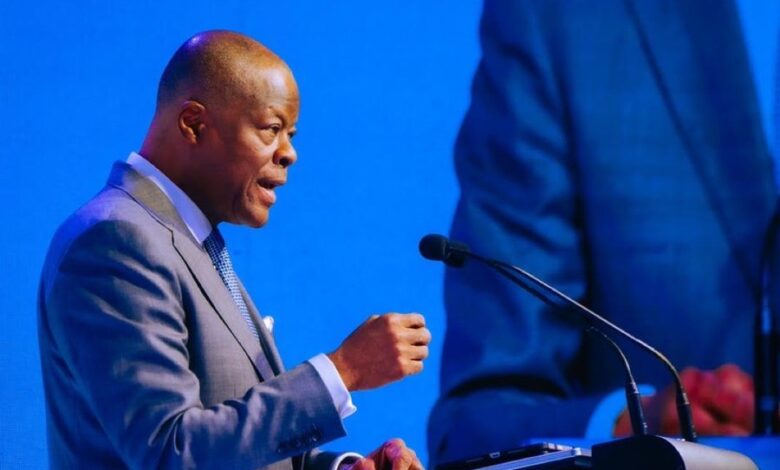


The Minister of Finance and Coordinating Minister of the Economy, Mr. Wale Edun, has underscored the need for strategic integration, renewed multilateralism, and a united Global South to navigate economic fragmentation.

Mr. Edun Spoke on Thursday at the 2026 G-24 Technical Group Meetings, held in Abuja, with the theme: “Mobilizing finance for sustainable, inclusive, and job‑rich transformation.”
Speaking on Global Economy: Fragmentation, Integration, and Harnessing South-South Cooperation, the Minister said the current global environment is defined by geopolitical rivalry, structural distrust, and weakening multilateral institutions, necessitating an economy that is integrated by choice, resilient by design, and inclusive by nature.
Edun, who is the current Chairman of the G-24, said the body is meeting at a defining moment for the global economy, one marked by profound uncertainty, systemic vulnerabilities, and a historic contest between fragmentation and integration.
He said the meeting provides an opportunity to re-shape the development trajectory of the Global South at a time when global risks are converging faster than institutions can respond.
He pointed out that the 2026 Global Risks Report identified geoeconomic confrontation—tariffs, sanctions, investment restrictions, and strategic decoupling—as the most likely global crisis trigger.
The Nigerian Finance Minister also mentioned that with 68 percent of respondents expecting a fragmented or multipolar world order, cooperation frameworks are under unprecedented strain.
He submitted that deepening fragmentation could reduce global output by 2 percentage points and shrink global trade by 2.3 percent. These losses, according to him, are particularly damaging for Emerging Market and Developing Economies (EMDEs) whose development models rely on trade integration, technology diffusion, and stable capital flows.
Edun said despite having 17 percent of the world’s population, Africa accounts for only 3 percent of global trade and 2.5 percent of global GDP, an imbalance that fragmentation could worsen.
He also stated that over a quarter of EMDEs have already lost access to international capital markets, while more than half of low-income countries are in or approaching debt distress.
This tightening financing environment, according to him, threatens much-needed investments in health, education, infrastructure, and climate resilience. Adding that the annual SDG financing gap has expanded to $4–5 trillion, highlighting the urgency of reforming global financial structures.
Edun said in this era of geopolitical realignments, the Global South must expand collaborative mechanisms to strengthen collective economic resilience.
He said the South–South trade remains under-leveraged despite its potential to stabilize supply chains and diversify markets.
Noting that with global trade projected to reach $35 trillion in 2025, equivalent to 32 percent of global output, the Global South must capture a larger share through value-added exports, logistics harmonization, and cross-border industrial clusters.
To navigate this complex environment, he said the G-24 must articulate a unified and solutions-oriented vision.
These, according to him, include Reforming the Global Financial Architecture, Ensuring Climate Finance Equity, Accelerating Digital Cooperation, Mobilizing Innovative Finance, and Advancing Regional Value-Added Manufacturing.