

The Nigerian Communications Commission (NCC), the telecommunications industry regulator, believes licensing more Internet Service Providers (ISPs) will boost internet access in the country.

Not just any run-of-the-mill company, but globally acclaimed ones that will bring meaningful investments and accelerate connectivity.
Although the NCC is silent on the cost of services to end users, the regulator believes that good services will attract good prices, especially for sign-on fees and device acquisition costs. But it is not clear whether connectivity will boost affordability, since the investors are not in the business of charity.
Like the devices, data is not cheap, but if the NCC provides assurances that the cost of acquisition will drop significantly, making services not only available but also affordable, then these satellite communications licenses will be seen as good news by potential subscribers.
On the other hand, there are no guarantees that existing subscribers who are already connected to other mobile services will suddenly switch networks. Unless there are incentives to attract such transitions.
When it announced licenses for two multinational companies early in 2026, the NCC said it was to boost competition in connectivity and take services to underserved and unserved areas of the country via satellite.
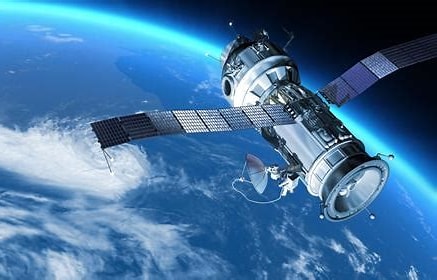
The licenses grant Amazon LEO to operate its space segment in Nigeria as part of a global constellation of up to 3,236 satellites, and NCC says the approval aligns with global best practices and reflects Nigeria’s willingness to open its satellite communications market to next-generation broadband providers.
The permit positions Amazon LEO “to provide satellite internet services over Nigerian territory and sets the stage for intensified competition with Starlink, currently the most visible satellite internet provider in the country,” according to agency reports.
The second is Beetle Sat-1. Both Amazon LEO and BeetleSat-1 also get the legal comfort to invest in ground infrastructure, local partnerships, and enterprise contracts, while giving Nigeria a wider market opportunity to play in space internet service delivery, where Starlink currently operates as a dominant player.
The two new licences have the potential to extend their footprints to underserved and unserved communities across the country. The licensing was done in line with NCC’s powers under Sections 2 and 70(2) of the Nigerian Communications Act 2003 and the Commercial Satellite Communications Guidelines for the telecommunications sector in Nigeria. The Guidelines, which came into effect in November 2018, regulate all Satellite Communications Services in all Orbits in Nigeria.
NCC claims it has put in place deliberate policies to facilitate the provisioning of Space-based communications services and has developed a licensing framework to facilitate investment and entry into the Nigerian market for the provision of communications services.
The Commercial Satellite Communications Guidelines of 2018 provide a regulatory framework for satellite communications services and networks within Nigeria or on Nigerian-registered vessels.
The Objectives and Scope of the guidelines aim to organise the Nigerian satellite market in line with international best practices, encourage innovation, and ensure public safety.
The guidelines, among others, apply to: Commercial satellite services, space segment and earth station operators, gateway providers, and vendors of terminal equipment. The guidelines, however, do not cover Military, non-commercial government, radio navigation, amateur, and earth observation satellites, as well as receive-only earth stations.
The guidelines cover the licensing and authorisation of the Establishment of an earth station, which requires being a corporate body registered in Nigeria and obtaining a license before providing service listed as Very Small Aperture Terminal (VSAT) Earth Station Network Frequency Licence, Earth Station-in-motion (ESIM) Network Frequency Licence (Aero, Land and Maritime).
The guidelines also cover UAV/Drone Network Frequency Licence, Mobile Satellite Service (MSS), Network Frequency Licence, Gateway Earth Station (GES) Frequency Licence, High Altitude Platform Station (HAPS), and others.
Under Space Segments, Operators authorised by foreign administrations may request NCC authorisation to provide services in Nigeria, and Authorized satellites are included in a list maintained by the Commission.
Space segment operators must apply for landing rights; although landing rights do not incur a fee, authorisation is granted for the lifespan of the satellite.
Both individual and frequency licenses for earth stations are valid for 10 years.
Earth Stations in Motion (ESIM) on aircraft, ships, or vehicles must comply with specific registration and technical conditions.
Visiting ESIMs staying longer than six weeks must notify the NCC and obtain a permit. The guidelines state that no operating license is required for portable terminal equipment used by end-users. But all satellite ground equipment and portable terminals must be type-approved by the NCC before being sold or used in Nigeria.
The guidelines specify Technical and Financial Obligations, including yearly spectrum usage fees for Earth stations on L, C, Ku, Ka bands, and ESIM/VSAT terminals whose fees are pegged at $2,000 USD (or the Naira equivalent).
The NCC mandates technical measures such as power-flux-density limits and minimum separation distances to prevent interference between satellite and terrestrial systems. Licensees must maintain customer databases and ensure the security of subscriber information, granting third-party access only when legally required.
Apart from the state-owned communications satellite company, Nigerian Communications Satellite Limited (NIGCOMSAT), there are four commercial communications satellite companies operating in the country.
These include Starlink Internet Services Nigeria Ltd – a satellite broadband service provider owned by SpaceX (Elon Musk’s company).
Starlink was granted regulatory approval to operate in Nigeria with an International Gateway license and an Internet Service Provider (ISP) license, enabling satellite internet access across the country.
Kuiper Systems LLC (Amazon’s Project Kuiper) received a seven-year landing permit and satellite operating license from the NCC recently to provide non-geostationary broadband services (Ka-band) over Nigeria via its planned constellation of up to 3,236 satellites (valid from February 28, 2026, to February 28, 2033).
There are also NSLComm BeetleSat Licensed by the NCC to operate its BeetleSat-1 non-geostationary satellite network (about 264 satellites) over Nigerian territory with a seven-year permit, providing broadband and mobile connectivity services and Satelio IoT Services – Germany-based operator approved to operate its planned constellation focused on Internet of Things (IoT) connectivity (about 491 satellites planned) under a seven-year license covering S-band operations.
The NCC also maintains landing permits and spectrum licences for many global satellite operators that can deliver space segment capacity (Fixed Satellite Service – FSS, Mobile Satellite Service – MSS) over Nigerian territory.
These include long-established space segment operators with landing permits (historically), such as: Intelsat LLC – FSS satellite network operator with permits to serve Nigeria through its multiple satellites.
There’s also Eutelsat S.A. / OneWeb – providing satellite fleet services over Nigeria. Iridium Communications – MSS operator has landing permit rights. There is also Avanti Communications, a satellite broadband operator with Nigerian authorisations. Inmarsat / Viasat – Satellite communications providers with historic Earth station and MSS licences, and SES (NSS Licensee B.V.) – Satellite operator holding multiple permits for O3B and other networks.
These operators primarily hold landing permits authorising them to beam services over Nigeria rather than directly licensed end-user service operations.
Active Internet Subscribers in Nigeria as of October 2025 stood at 142,631,825, and by December 2025, the figure rose to 148,166,926. Broadband penetration, as of December 2025, was 112,665,176, representing 51.97%.
In terms of connectivity speeds, the Sub-Saharan Africa regional average is 15 Mbps, well below the speeds in many developed countries, where averages often exceed 100 Mbps.
Urban centres like Lagos, Abuja, however, tend to have higher speeds (often 30–40 Mbps or more), while rural areas lag behind, sometimes around 10–15 Mbps in average urban/rural reports.
Nigeria’s average overall nationwide internet speed hovers between ~27–28 Mbps for downloads, based on global broadband testing across the country.
Mobile Internet Speeds: median mobile download speeds vary by measurement source and period, but are typically around 22–33 Mbps for 4G/combined mobile services.
Some operator-specific median figures (like MTN 5G) can be much higher Mbps, but this reflects 5G experienced speeds in limited areas, not the national average.
Fixed Broadband for home Internet shows that Median fixed broadband speeds are typically in the 20–38 Mbps download range, depending on provider and location.