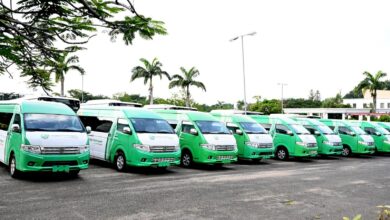


Nigeria’s electric mobility sector recorded another milestone as NEV Electric Motors unveiled the NEV T3, a next generation electric mobility van designed for urban transportation across African cities.

The recent launch signals continued growth in Nigeria’s emerging electric vehicle (EV) industry and reinforces the company’s commitment to delivering locally engineered solutions tailored to the continent’s mobility needs.
Chief Executive Officer of the company, Mosope Olaosebikan, said the NEV T3 builds on the success of the earlier NEV T6 model, which has already been deployed on urban routes in Nigeria.
He said the NEV T6 has transported thousands of passengers while helping operators significantly reduce fuel expenses and eliminate tailpipe emissions.
“The success of the NEV T6 proved that electric mobility can work in Africa,” Olaosebikan said at the unveiling. With the NEV T3, we are introducing a new generation vehicle engineered specifically for the realities of African cities efficient, reliable and sustainable.”
According to him, the NEV T3 is designed to serve multiple purposes, including passenger transport, corporate mobility and urban logistics.
Engineered for African road conditions, the van features an electric drivetrain that lowers maintenance requirements and removes dependence on petrol, offering operators reduced running costs.
Beyond vehicle production, the company is also expanding electric vehicle charging infrastructure across Nigeria to support increasing adoption.
Charging stations are being deployed in key urban locations and transport corridors as part of a broader strategy to build a nationwide network capable of sustaining large scale electric mobility.
The combination of local vehicle manufacturing and charging infrastructure expansion will be critical to accelerating Nigeria’s shift away from fossil fuel powered transportation.
With rising fuel costs and growing urban populations in major cities such as Lagos and Abuja, electric vehicles are increasingly viewed as practical and cost effective alternatives for public and commercial transport.
The introduction of the NEV T3 underscores broader momentum within Nigeria’s electric mobility ecosystem as stakeholders explore cleaner, more efficient transportation systems.
Olaosebikan reiterated the company’s long term vision of advancing sustainable transportation across Africa through the development of electric vehicles and supporting infrastructure tailored to local realities.
“As Africa’s cities grow, we must build transportation systems that are cleaner, more efficient and more affordable. Electric mobility will play a central role in that future,” he said.