

The Federal Government has reaffirmed its commitment to building a safer, modern and citizen-centred aviation sector through sustained investment in infrastructure, improved passenger experience, enhanced safety standards and stronger collaboration with industry stakeholders.

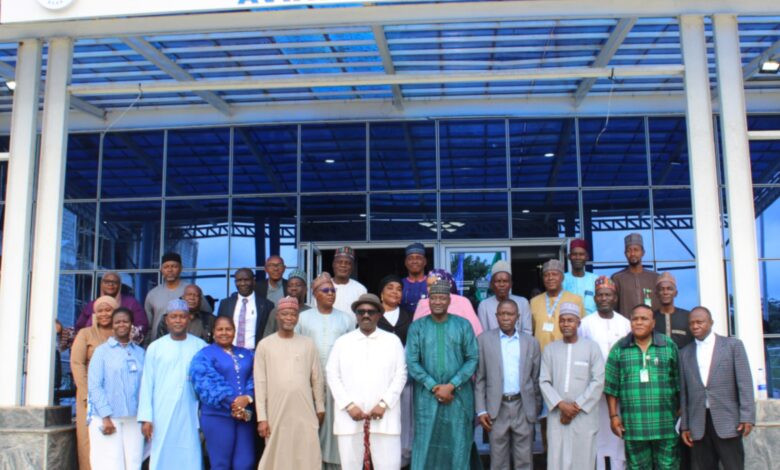
The assurance was given at the Second Quarter 2026 Hybrid Stakeholders/Citizen Engagement on Presidential Priorities and Ministerial Deliverables in the Aviation Sector, in Abuja, according to a statement made available on Tuesday by Director, Press and Public Affairs for Ministry of Aviation and Aerospace Development, Chindaya Adamu.
Speaking on behalf of the Minister of Aviation and Aerospace Development, Mr Festus Keyamo, the Permanent Secretary of the ministry, Mahmud Kambari, said the quarterly engagement reflects the Federal Government’s commitment to transparency, accountability and inclusive governance under President Bola Tinubu’s Renewed Hope Agenda.
According to him, the forum has evolved beyond a routine meeting into a strategic platform where government, industry operators, development partners and citizens jointly evaluate progress and shape the future of Nigeria’s aviation industry.
“This engagement demonstrates the Ministry’s unwavering commitment to transparency, accountability, collaboration and innovation in implementing the Renewed Hope Agenda,” Kambari said.
He said the ministry had made significant progress in implementing its presidential priorities, particularly in aviation safety and security, airport and air navigation infrastructure, passenger experience, local content development and employment generation.
“The Ministry has recorded significant progress in enhancing aviation safety and security, expanding critical infrastructure, modernising airports and air navigation systems, promoting local content and employment opportunities, and improving the overall passenger travel experience,” he stated.
Kambari described aviation as a key driver of national development, noting that the sector supports trade, tourism, investment, regional integration and global connectivity.
He stressed that stronger collaboration between government, private operators, development partners and citizens remains essential to building a resilient and globally competitive aviation industry.
He said the engagement also provides an opportunity to assess achievements, identify challenges and obtain feedback that will strengthen policy implementation and improve service delivery.
“We remain determined to build an aviation sector that meets and exceeds global standards while stimulating economic growth, creating sustainable employment opportunities, attracting investment and delivering world-class services to both domestic and international travellers,” he said.
The Permanent Secretary also commended stakeholders for their continued support, expressing confidence that recommendations from the engagement would translate into practical actions that would further strengthen the sector.
In a welcome address delivered on his behalf by Mr Peter Vembe, the Permanent Secretary described the forum as a strategic platform for dialogue and shared responsibility in advancing the Federal Government’s aviation agenda.
He urged participants attending physically and virtually to contribute practical ideas that would support the development of a safer, more efficient, innovative and globally competitive aviation industry.
Representatives of aviation agencies presented updates on ongoing reforms, highlighting improvements in airport infrastructure, staff capacity development, aviation safety and security systems, and stronger inter-agency collaboration.
They also reaffirmed their commitment to full compliance with International Civil Aviation Organization (ICAO) Standards and Recommended Practices (SARPs) and other global best practices.