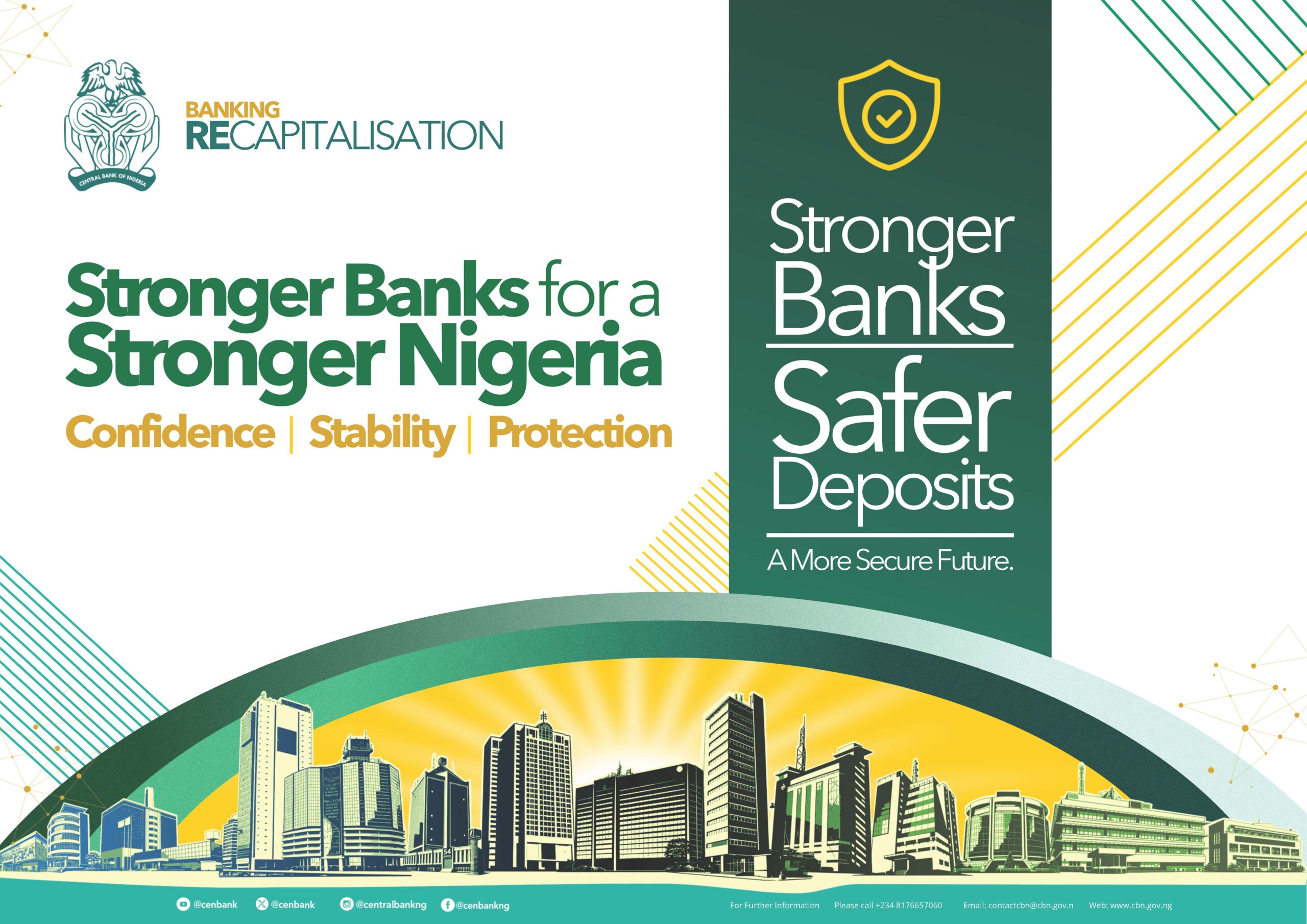



Governor of the Central Bank of Nigeria (CBN), Mr. Olayemi Cardoso, has stated that the ongoing financial-sector reforms, especially the banking recapitalisation, inflation control, and foreign-exchange market stability, are strengthening the nation’s economic foundations.
Mr. Cardoso who spoke at the Distinguished Alumni Lecture, during the Founders’ Day celebration of St. Gregory’s College in Lagos, noted that strong institutions and disciplined policy frameworks remain crucial for sustainable economic growth.
Speaking on a topic, “Strong Foundations: From the Classroom to the Capital Base,” the CBN Governor said the principles that build strong individuals such as discipline, integrity, and intellectual curiosity are the same principles that sustain strong economies and resilient financial institutions.
Cardoso observed that Nigeria’s economy had experienced considerable pressures in recent years, such as macroeconomic imbalances, exchange-rate fluctuations, and inflationary challenges.
He stated that restoring stability necessitates disciplined monetary policy and the rebuilding of institutional credibility.
He explained that the banking recapitalisation programme introduced in 2024 was intended to enhance the capacity of Nigerian banks to support the country’s long-term economic transformation.
According to him, progress under the programme has been steady.
“As of March 2026, thirty-three banks have successfully raised additional capital, while thirty institutions have already met the new minimum capital requirements for their respective licence categories,” Cardoso said.
He added that the remaining institutions were currently undergoing routine regulatory verification in line with the Central Bank’s compliance framework.
The CBN Governor also highlighted improvements in inflation management and foreign-exchange market operations.
He said the Bank’s return to a more orthodox monetary policy environment has helped reduce inflation significantly from a peak of about 34 per cent to around 15 per cent.
Similarly, reforms in the foreign-exchange market have reduced the gap between official and parallel market rates, with the premium dropping from about 50 per cent in 2022 to less than two per cent in 2025.
Cardoso noted that Nigeria’s external reserves have also strengthened, recently exceeding $50 billion, while capital and investment flows into the country increased significantly between 2023 and 2025.
Looking ahead, he emphasised the growing role of financial technology in expanding financial inclusion, describing Nigeria as home to one of the world’s most dynamic fintech ecosystems.
He also encouraged students to embrace interdisciplinary skills, noting that the careers of the future will increasingly require the integration of technology, creativity, and analytical thinking.