ANALYSIS: Can Any Good Things Come Out Of Warri And Port Harcourt Refineries?
By Sunday Etuka

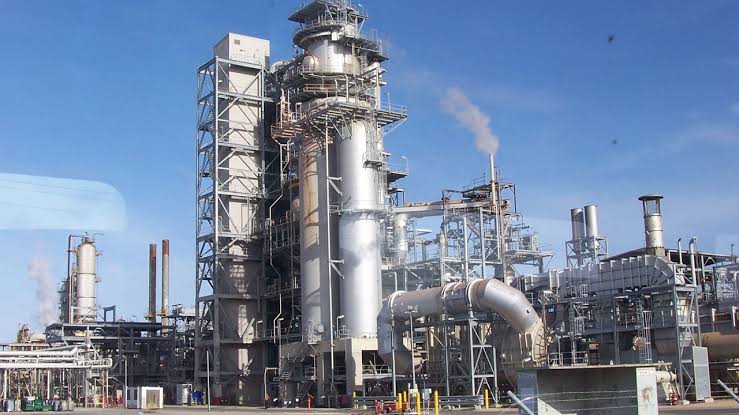

The Nigerian National Petroleum Company Limited (NNPC Ltd.) yesterday announced that it has signed an agreement with two Chinese companies to resuscitate Warri and Port Harcourt Refineries.
According to the NNPC, the Chinese companies, Sanjiang Chemical Company Limited and Xingcheng (Fuzhou) Industrial Park Operation and Management Co. Ltd, would collaborate with the national oil company through a potential Technical Equity Partnership (TEP) in support of the completion and operation of the Refineries.
The state-owned refineries: Port Harcourt I & II, Warri, and Kaduna Refineries, with a combined installed capacity of 445,000 barrels per day (bpd) are currently non-functional despite gulping a whooping sum of $18 billion on rehabilitation. The challenges were blamed on decades of underinvestment, poor maintenance, and vandalism.
The refineries have been a huge loss to the nation. Because while they remained in comatose, workers were being paid for doing nothing at the refineries.
Recall that on Tuesday, November 26, 2024, the NNPC announced the recommencement of petroleum production from the oldest refinery in the country, the Port Harcourt Refinery.
NNPC also announced the truck-out of petrol, diesel, kerosene, and other products at the refinery, with the capacity to load 200 trucks daily.
The old Port Harcourt refinery, which was built in 1965, stopped production over 21 years ago, while the new Port Harcourt refinery stopped production in 2019.
In March 2021, the federal government, burdened with the petroleum products importation and its attendant effect on the economy, approved a $1.5 billion loan to commence the rehabilitation of the refineries.
Even though the rehabilitation of the refineries missed several production rollout deadlines before the announcement, NNPC was resolute in its determination to resuscitate the refineries.
It announced that the functional plant at operation was the old refinery with the capacity of 60,000 barrels per day, while the new plant, which has the capacity of 200,000 barrels per day, was still under rehabilitation and expected to commence production without prior announcements.
According to the national oil company, the refinery was operating at 70%, while plans are on to ramp up production to 90%.
While some Nigerians applauded the NNPC for resuscitating the refinery, others doubted the functional status of the plant. They claimed that the refinery was not producing products as widely celebrated by the NNPC Ltd.
However, the company insisted that the refinery was producing the following daily outputs: “Straight-Run Gasoline (Naphtha): Blended into 1.4 million litres of Premium Motor Spirit (PMS or petrol), Kerosene: 900,000 litres, Automotive Gas Oil (AGO or Diesel): 1.5 million litres, Low Pour Fuel Oil (LPFO): 2.1 million litres, and Liquefied Petroleum Gas (LPG).”
It said the refinery incorporated crack C5, a blending component from its sister company, Indorama Petrochemicals (formerly Eleme Petrochemicals), to produce gasoline that meets required specifications.
In February this year (2026), what started as a rumour became a reality, as the Group Chief Executive Officer (GCEO) of the NNPC Limited, Engr. Bayo Ojulari, confirmed the shutdown of the refineries.
According to him, the NNPC was running them at a monumental loss to Nigeria. “We were just wasting money,” he said.
He explained that the company was spending a lot of money on the operations and contractors without getting values in return.
“So, the first decision that I had to make was to stop the rot by ensuring that we stop and first of all calibrate quickly, rebase to see what we can do.
“You wonder how we’re losing money. We’re pumping cargo, say cargo, every month into the refineries. Utilization of those cargoes was maybe like 55, 50%. That cargo is valuable.
“We’re spending a lot of money on the operations, a lot of money on the contractors. But if you then look at the net, we’re just leaking away a lot of value. And there was no clarity on what the plan was to turn that loss into a positive,’ he said.
To make the refineries work, the NNPC boss said “First, you need the financing, because you need to finance the work, finance the activities and all of that. Two, you need competent Engineering, Procurement and Construction (EPC) contractors to deliver world-class projects for you that are great. Three, you need a world-class operational capacity to run the refineries.”
He noted that the national oil company lacks operational capacity to run the state-owned refineries, adding that the company is looking for an entity that has the technical know-how in the management of refineries to come in and partner with the company to manage the refineries.
“And then we use that to develop, rebuild our own skills and support. And our mantra for the refinery and solution is about putting a sustainable solution in place for it to self-finance itself.
“For it to self-finance itself, for it to run like a business. We know that everywhere in the world, refinery margins are very high.
“So, there’s no way NNPC, the structure we have, can run a profitable refinery. Forget it. We don’t have the capacity right now.
“We need to bring in additional capacity to complement what we have to run this refinery,” Ojulari said.
Throwing more light on the partnership, he said “the current NNPC strategy, as approved by our board, is to focus on getting partners that have a track record of running the refinery. We are not looking for contractors. We’re not looking for O&M. We’re looking for an entity that runs refineries. So, coming, we’re looking forward to them buying some of our shares.”
Thankfully, on Monday, May 4, NNPC announced the new agreement, explaining that the potential framework would cover completion of outstanding work at the two refineries, together with operating and maintaining both facilities to achieve best-in-class, sustainable performance. Noting that planned expansion and upgrades would elevate both facilities to cleaner, more profitable product standards.
The company said the potential collaboration also contemplates expanding the refineries’ petrochemical capacities and harnessing gas and downstream opportunities through the development of co-located, gas-based industrial hubs.
While this partnership is commendable, stakeholders in the energy sector have expressed doubt on the possibility of the state-owned refineries to ever work again. They are also skeptical of the kind of partnership deal the NNPC has entered into, as the details are yet to be made known by the national oil company.
Having wasted billions of dollars on the refineries, questions are beginning to be asked whether any good things could still come out of the refineries. NNPC must come out to clear the air on the modalities of the agreement signed with the Chinese firms. Does it involve exchange of crude, or injection of more money?
Last year, the African Democratic Congress (ADC) called for a full audit of the rehabilitation of the refineries. The party asked whether the Tinubu administration has been deceiving Nigerians, having spent over $2.8billion dollars on the refineries, before declaring that they were moribund.
“Successive APC administrations have poured over $18 billion into the so-called rehabilitation of Nigeria’s refineries. The current administration is reported to have spent another $2.8 billion under the same pretext. Yet there is no verifiable increase in refining capacity, no observable cost efficiency, and no fuel security benefit accruing to the Nigerian people. Instead, the same refineries have remained idle or dysfunctional, while the government continues to fund the importation of refined petroleum products,” ADC said.