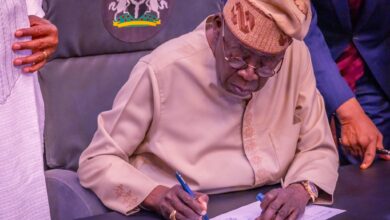


A group under the auspices of Independent Media and Policy Initiative (IMPI), has come out strongly in defence of the President Bola Tinubu administration’s approach to financing infrastructure development through borrowing, dismissing critics of the policy as politically motivated and offering no workable alternative.

IMPI, in a policy statement signed by its Chairman, Dr. Omoniyi Akinsiju, argued that the opposition to debt-financed infrastructure spending reflects a fundamental misunderstanding of the scale of Nigeria’s infrastructure deficit and the historical failure of successive governments to adequately fund capital development.
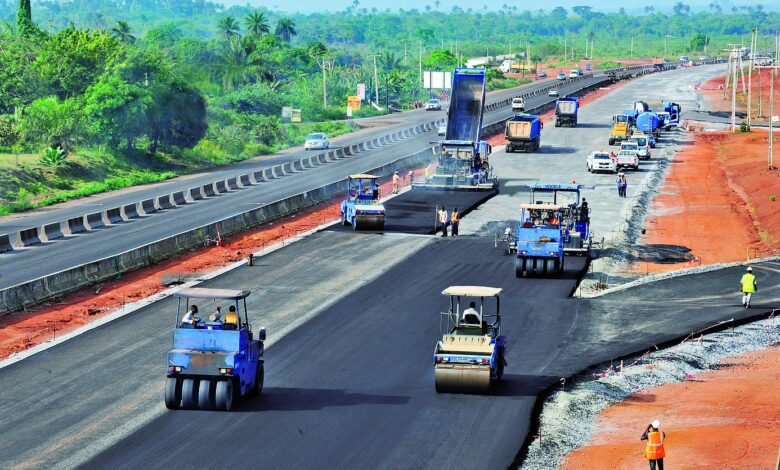
Nigeria’s infrastructure needs are enormous, the group noted. More than 70% of the country’s approximately 195,000-kilometre road network is in poor condition driving up transportation costs, delaying deliveries, and limiting access to markets, especially for small businesses and farmers.
The group also submitted that the national rail network stretches only 3,500-kilometre-inadequate for a population of over 220million, and actual electricity output averages just 4,000MW against an installed capacity of 12,000MW. That power shortfall alone costs businesses an estimated $29billion annually in alternative energy expenses, a burden IMPI linked to the exit of multinationals such as GSK and Procter and Gamble from the Nigerian market.
Estimates of the total investment needed to close the infrastructure gap range from $142billion over ten years, according to KPMG, to as high as $3trillion over thirty years, according to the World Bank. IMPI said the KPMG’s figure of $142billion in annual spending is the most realistic benchmark for Nigeria’s circumstances, and appointed out that no federal administration had ever met it, even during the oil booms of the 2000s and early 2010s when capital budget implementation rates regularly fell below 70%.
Against that backdrop, the group said the 2026 budget represents a historic turning point. Under the approved Appropriation Act, the Federal Government allocated approximately $23billion to infrastructure and capital expenditure-roughly half the total budget and the first time in Nigeria’s fiscal history that annual infrastructure spending has matched or exceeded the KPMG benchmark. The budget deficit being used to finance this spending is of a comparable size, making debt the primary vehicle for the capital push.
IMPI rejected the arguments that the savings from the removal of fuel subsidy, estimated around $10billion annually, should have made debt financing unnecessary. The subsidy itself was largely debt-funded, the group said, and the savings are in any case insufficient to cover the scale of investment required.
The group was equally critical of calls for a greater reliance on Public-Private-Partnerships. Empirical evidence shows that PPPs in Nigeria face high transaction costs, lengthy negotiations, weak legal frameworks, and limited institutional capacity, IMPI argued.
It also noted that despite institutional assets such as pension and insurance funds exceeding $100billion, less than 5% is invested in infrastructure, compared to 15% in South Africa, reflecting private sector hesitancy that, in IMPI’s view, only consistent government investment can overcome.
On concerns about the Federal Government crowding out private borrowers in the domestic debt market, IMPI said that at this stage of Nigeria’s development, infrastructure must take precedence, and that government bond issuance actually helps deepen local financial markets by establishing a benchmark yield curve for corporate debt pricing.
The group pointed to what it described as growing market confidence in Nigeria’s fiscal direction, noting that the yield on Nigeria’s Sovereign Eurobonds recently fell to 6.89% from 8%, a record low, signalling improved sentiments among foreign investors despite elevated global borrowing costs.
IMPI concluded by listing some infrastructure projects recently approved by the Federal Executive Council (FEC), including $2.99billion for rail project in Lagos, Kano and Kaduna, over 7trillion for road and bridge works, reconstruction of major seaports in Apapa, Tin Can, Calabar, Warri, and Port Harcourt, and the N1.096 trillion for the power sector.