


Investments in Nigeria’s pharmaceutical industry are beginning to yield profitable returns as seen in the performance of their stocks on the Nigeria Stock Exchange (NGX) market last year.

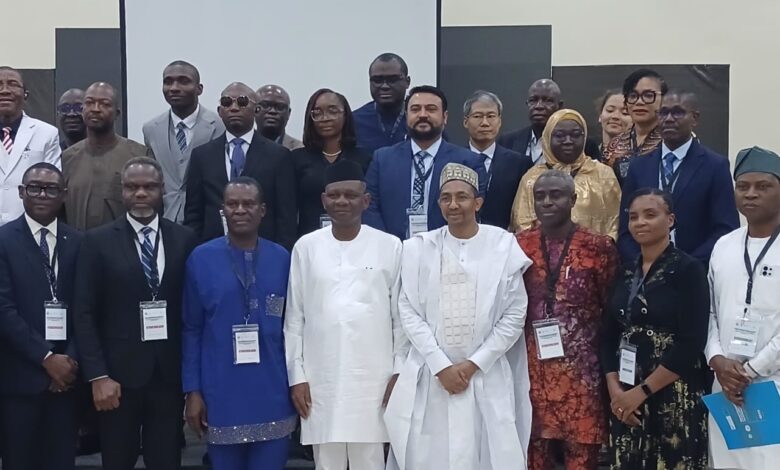
National Coordinator, Presidential Initiative for Unlocking the Healthcare Value Chain (PVAC), Dr. Abdu Mukhtar stated this at the High-Level Stakeholders’ Meeting to Finalize
IMPACT Project Activities with the Pharmaceutical Industry held in Abuja on Friday.
The IMPACT Project (Immunization Plus and Malaria Progress by Accelerating Coverage and Transforming Services) is a major, World Bank-backed initiative designed to improve healthcare delivery, boost routine immunization, and fight malaria across Nigeria. It was also designed to strengthen the capacity of the Nigerian pharmaceutical manufacturers to locally produce safe and quality medicines and pharmaceutical products.
Speaking on the theme: “Strengthening Local Medicines Manufacturing Capacity: From Concept to Action”, Dr. Mukhtar highlighted programs PVAC and the National Malaria Elimination Programme (NMEP) achieved under the IMPACT Project, adding that the key objective of the program was to assess the capacity for malaria commodities across the different production value chains starting from R&D, all the way to production of essential products, active pharmaceutical ingredients, vaccines, test kits, long-lasting insecticide nets and so on.
Highlighting some of the gains, the PVAC National Cordinator said: “We’ve conducted detailed assessment of over 30 manufacturers of various products that I outlined, we have an understanding of the capabilities, who’s doing what, what the gaps are so that you know subsequent interventions can be targeted.
“One the famous order that was established and was signed by Mr President about a year ago to provide fiscal incentives, so zero DT, zero VAT for important equipment and raw materials for local production of essential medicines. I’m happy to report that that is going very well, about 47 pharmaceutical companies have actually utilised this order to the tune of about 26 billion Naira so far. This has resulted in increased profitability and revenues for the local pharmaceutical companies.
“If you look at the performance of the Nigerian Stock Exchange last year, 2025, of the top 10 performing companies on the NSE last year, four were actually pharmaceutical companies. This is huge. Every year traditionally you only see oil and gas companies, banks, but now pharmaceutical companies are already getting there.
“For us that is good, what will even be better if that increased revenues will translate into lower cost of drugs, better drugs, cheaper, more accessible drugs to our people”, he said.
He urged Nigerian manufacturers to have bigger ambitions. “The ambition should not only be for the Nigerian market, we have a 230 million Nigerian market but West Africa is also 460 million, so you should think regionally and there are things that we’re putting in place to make sure that this happens”, he said.
Consequently, Muktar announced that Nigeria had formally joined the African Medicines Agency (AMA) which would enable the nation is produce goods in Nigeria you can sell across the rest of the African continent without having to get regulatory approvals in all the individual countries.
Also speaking, World Bank Team Lead on IMPACT Project, Dr. Onoriode Ezire noted that there was a huge demand for malaria drugs in the country and urged manufacturers to include it in health insurance package:
“If some of these things become part of the package of minimal health care, that alone will guarantee a market of over 150 million in a year.
“For those that produce malaria medicine, for example, 60% of the reason why people seek treatment is largely around malaria. And so if you include malaria products as part of the insurance package, that alone is a huge market”, he said.
Dr. Ezire however, stated that although the IMPACT project was closing, the foundations laid would bring positive development to the nation:
“Let’s continue the trajectory that we are going, and let’s be part of the success story. Let’s look back in another 10 years’ time to say, look, that mustard seed that was planted by Adigwe, that mustard seed that was planted by Dr. Muktar, look, it has grown, it has become a tree, and it’s become a blessing to the country and to all of us who are in this room today”, he concluded.
On his part, Director General of the National Institute for Pharmaceutical Research and Development (NIPRD), Dr. Obi Adigwe disclosed that the IMPACT Project provided a
unique opportunity to move beyond dialogue towards implementation.
Represented by the Research Director and Head of Pharmaceutical Technology and Raw Materials Development at NIPRD, Prof. Philip Builders, the DG noted that “through strategic collaboration between government institutions, development partners, academia, regulators and the pharmaceutical industry, we have collectively developed interventions designed not only to strengthen manufacturing capacity but also to improve research and development, encourage innovation, promote novel biotechnologies and build the human capital required for longterm sustainability”.
He informed that one achievement of the IMPACT Project was its investment in human capital development, adding that, through targeted capacity-building initiatives, “NIPRD has trained over 100 young Nigerian scientists, researchers and pharmaceutical professionals, equipping them with contemporary scientific knowledge and technical competencies required to strengthen our national medicines ecosystem”.
He further stated that, “through the IMPACT Project, we have significantly contributed to building a pharmaceutical industry that is globally competitive, research-driven, and
capable of consistently meeting international quality standards”.