


Nigeria has officially launched its (AI) Artificial Intelligence Readiness Assessment Methodology Report, a major step aimed at strengthening ethical governance and institutional capacity for AI development in the country.

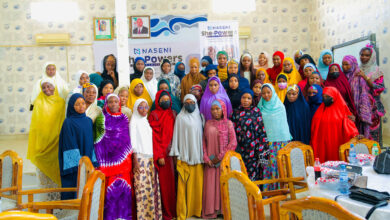
The report was unveiled at a high-level event held at Rockview Hotel, Abuja, bringing together government officials, international partners, development agencies, academics, and technology stakeholders.
Officer-in-Charge of the United Nations Educational, Scientific and Cultural Organization (UNESCO), Mr. Dimitri Sanga described the launch as a milestone in Nigeria’s commitment to building a human-centred and ethically guided AI ecosystem.
He noted that Artificial ntelligence was rapidly transforming governance, education, security, communication, and economic systems globally, making strong regulatory and ethical frameworks increasingly essential.
Sanga referenced the 2021 UNESCO Recommendation on the Ethics of Artificial Intelligence, adopted by 193 member states, as a foundational global framework guiding responsible AI development. He stressed that Nigeria’s ongoing efforts under the Readiness Assessment Methodology (RAM), supported by UNESCO and funded by the European Union, were designed to operationalize AI governance across key institutional and policy dimensions.
He added that the initiative was not an endpoint but a diagnostic foundation for future policy direction, innovation, and capacity building. According to him, over 400 civil servants across six states have already been trained under an AI literacy programme aimed at strengthening public sector readiness.
The Minister of Communications, Innovation and Digital Economy, Dr. Bosun Tijani, who chaired the occasion, was joined by representatives of the European Union Delegation to Nigeria and ECOWAS, including Ms. Ikram Tolba, as well as UNESCO Headquarters representative Ms. Dafna Feinholz, Chief of Section for Ethics of Science and Technology.