Consumer Group Faults FG Over Exclusion From Power Sector Decentralisation Committee
By Sunday Etuka


The Consumer Advocacy and Protection Association (CAPA) has raised concerns over the exclusion of consumer protection groups and the Federal Competition and Consumer Protection Commission (FCCPC) from the recent committee set up to drive the harmonious decentralisation of Nigeria’s electricity ecosystem and full implementation of the Electricity Act, 2023.

Recall that the Minister of Power, Chief Joseph Tegbe, on Tuesday, July 14, 2026, inaugurated a nine-member inter-agency committee to drive sustained engagement among stakeholders and resolve emerging issues arising from the implementation of the Electricity Act, 2023.
Members of the committee were given a four-week duration to review issues raised during a workshop on the decentralisation of the nation’s electricity market in Abuja. Within this period, they are expected to work with other stakeholders and share a resolution within the time frame.
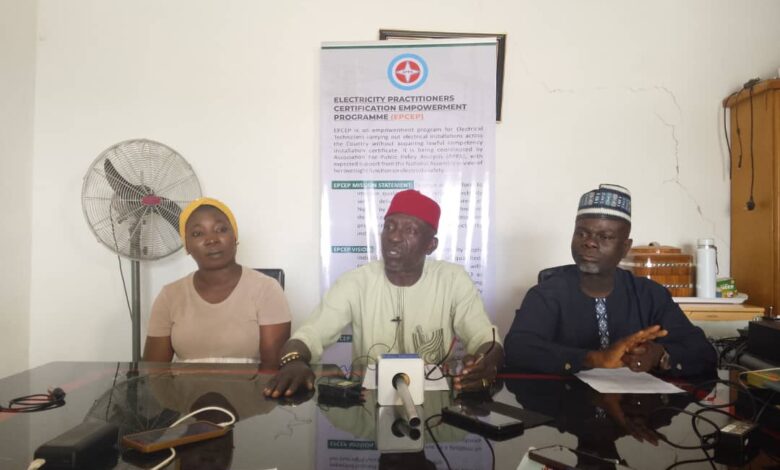
However, speaking at a press briefing on Saturday in Abuja, the National President of the Consumer Advocacy and Protection Association of Nigeria (CAPA), who spoke on behalf of the Association for Public Policy Analysis (APPA), and the Electricity Consumers Protection Advocacy Centre (ECPAC), Chief Princewill Okerie, said the composition of the committee, set up by the Minister, failed to represent the interest of the electricity consumers despite claims that its members were drawn from across the electricity supply and demand industry.
According to Okerie, the Committee comprises representatives of the Federal Ministry of Power, the Nigerian Electricity Regulatory Commission (NERC), the Nigerian Electricity Management Services Agency (NEMSA), the Transmission Company of Nigeria (TCN), the Bureau of Public Enterprises (BPE), the Nigerian Bulk Electricity Trading Company (NBET), the Rural Electrification Agency (REA), the Office of the Attorney General of the Federation, the Nigerian Governors Forum (NGF), private sector investors in generation and distribution, the Association of Nigerian Electricity Distributors (ANED), and Generation Companies (GenCos).
He argued that the absence of the consumer representation and anti-corruption agencies in the committee amounted to a violation of Section 34 (1) (f) of the Electricity Act 2023, which he said requires that regulation be fair and balanced for the consumers, licensees and investors alike.
“Where is fairness in a situation where discussion on power sector privatization predicated on willingness of consumers to pay for efficient service delivery, excludes the very consumers it concerns?” he asked, questioning why investors and distribution companies were represented while no one spoke for the electricity consumers.
The group also used the press conference to draw attention to what they described as widespread “electricity crimes” allegedly perpetrated by licensed distribution companies against consumers, which they said state institutions failed to check.
They defined electricity crimes broadly to include electricity theft, vandalism, unlawful billing, unauthorised takeover of infrastructure provided by non-licensees, illegal disconnections, failure to repair faults in line with customer service standards, and bulk billing practices they said violate Section 29 (6) of NERC’s Customer Protection Regulation.
Okerie contended that the continued inaction of government institutions, including agencies responsible for crime prevention, consumer protection, regulation and prosecution, could be interpreted as tacit support for such practices, which he linked to broader concerns about corruption in violation of Section 15 (5) of the 1999 Constitution.
The consumer groups further urged the Minister of Power and the Senate, currently considering the amendments to the Electricity Act 2023, to prioritise measures that prevent electricity crimes and strengthen consumer protection rather than pursue amendments to a law they said had only recently begun enabling state-level electricity markets.
Okerie warned that amending the Act at this stage could discourage investment and leave consumers more vulnerable to abuse by distribution companies, some which, he alleged, were already failing to comply with directives issued by state electricity regulators.
He cautioned against any collaboration between NERC and state regulators that could undermine the independence of state-level regulatory functions, arguing that NERC had not demonstrated fairness in its regulatory conduct since the privatisation of the power sector began in 2013.
He called for any future amendment to the Electricity Act to focus specifically on strengthening consumer protection and crime-prevention provisions.