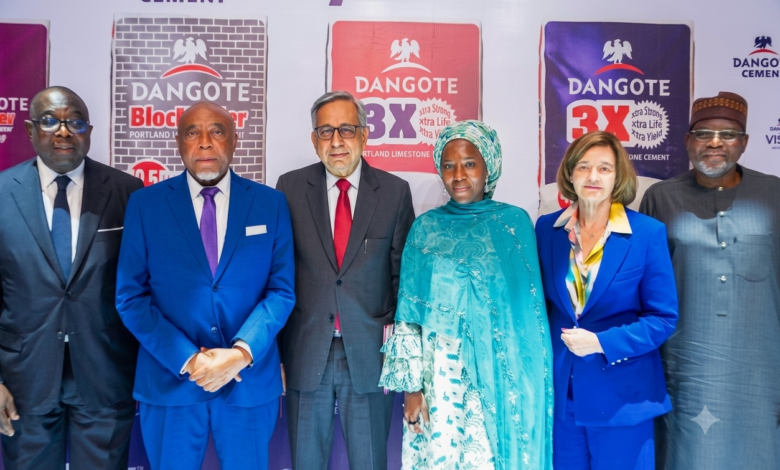


Shareholders of Dangote Cement Plc are set to receive a record dividend of N45 per share for the 2025 financial year, representing a 50 per cent increase over the previous payout and further reinforcing the company’s position as one of the most rewarding investments on the Nigerian capital market.
The company, in a statement on Thursday said it has now distributed over N3.3 trillion in dividends to shareholders over the last 15 years, underscoring its unwavering commitment to creating sustainable value for investors.
The latest dividend announcement reflects the strength of Dangote Cement’s business model, its resilient financial performance, and its disciplined approach to balancing expansion with superior returns to shareholders.
Over the years, investors have benefited not only from robust dividend payments but also from significant capital appreciation in the company’s stock.
Speaking on the company’s commitment to value creation, Chairman of Dangote Cement, Emmanuel Ikazoboh, reaffirmed the company’s determination to deliver consistent returns while maintaining the highest standards of corporate governance and operational excellence.
“Our commitment remains to create sustainable value for all stakeholders. We are proud of the confidence reposed in us by our shareholders over the years, and we will continue to pursue strategies that enhance profitability, strengthen corporate governance, and deliver superior returns on investment,” he said.
The company’s dividend history has become one of the most impressive on the Nigerian Exchange. Dangote Cement previously increased its dividend by 50 per cent from N20 per share to N30 per share, demonstrating a consistent track record of rewarding shareholders even in challenging economic conditions.
Group Managing Director/Chief Executive Officer, Arvind Pathak, noted that the company’s growth strategy remains firmly anchored on expanding production capacity, improving operational efficiency, and strengthening its pan-African footprint.
Commenting on the Board’s decision to increase the dividend payout to N45 per share, Pathak said: “The decision to increase our dividend by 50 per cent to N45 per share demonstrates the strength of Dangote Cement’s earnings capacity and cash generation capability. As we continue to execute our pan-African growth strategy, we remain committed to creating lasting value for our shareholders, investing in the future of the business, and supporting Africa’s industrial development. Our shareholders have stood by us throughout our journey, and we are delighted to reward that trust with another significant increase in returns.”
According to him, Dangote Cement aims to expand installed capacity to 80 million tonnes per annum by 2030, supported by strategic investments across Africa. “In 2025, we marked a milestone with the successful commissioning of a 3Mta grinding plant in Cote d’Ivoire, strengthening our presence in West Africa. With this addition, Dangote Cement now operates fully commissioned assets in 11 African countries, with total installed capacity of 55Mta-comprising 33.5Mta in Nigeria and 19.7Mta across our pan-African operations.”
Pathak emphasized that the company remains focused on its vision of making Africa self-sufficient in cement and clinker production while maintaining strong returns for shareholders.
The company’s remarkable dividend record highlights the success of its long-term growth strategy, which has seen it evolve into Africa’s largest cement producer with operations spanning ten African countries. Through continuous investments in capacity expansion, logistics, energy efficiency, and innovation, Dangote Cement has consistently strengthened its earnings profile and market leadership.
Market analysts say the increase in dividend payout to N45 per share sends a strong signal of confidence in the company’s future earnings prospects and underscores management’s commitment to shareholder wealth creation. The milestone dividend distribution further cements Dangote Cement’s reputation as a premier blue-chip stock and a benchmark for value creation on the Nigerian Exchange.
As the company continues to execute its expansion strategy across Africa, shareholders are expected to remain key beneficiaries of its sustained growth, operational excellence, and long-term commitment to delivering superior returns.