

The Federal Government has approved the comprehensive modernisation and upgrade of Onne, Rivers, Delta and Calabar ports as part of efforts to expand Nigeria’s maritime capacity and reduce pressure on Lagos ports.
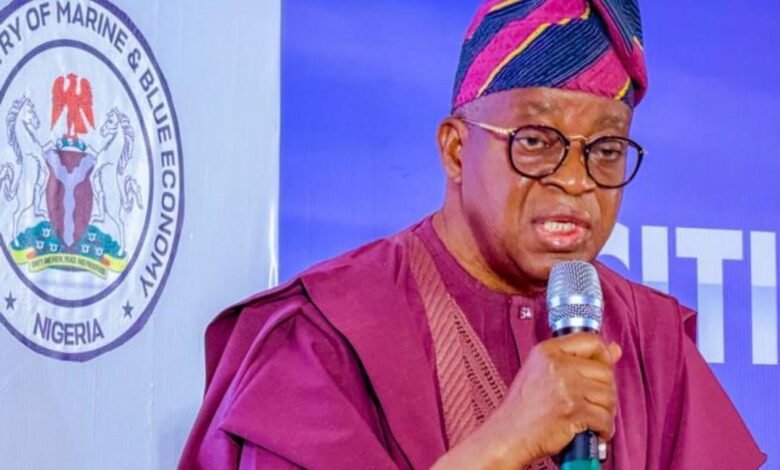
The Minister of Marine and Blue Economy, Dr Adegboyega Oyetola, disclosed this in a statement on Sunday, saying the approval complemented the earlier green light for the modernisation of Apapa and Tin Can Island ports in Lagos.
Oyetola said upgrading the four ports outside Lagos would create additional efficient gateways for international trade and help decongest cargo traffic around the Lagos axis.
“This approval marks another important step in our determination to transform Nigeria’s maritime infrastructure and unlock the enormous economic potential of our ports,” he said.
According to him, improved infrastructure and operational efficiency at Onne, Rivers, Delta and Calabar ports would enhance cargo handling, reduce vessel turnaround time, improve regional connectivity and make the movement of goods more predictable and cost-effective.
“These ports have strategic roles to play in our trade, industrial and regional development, and we are determined to equip them to meet the demands of a growing economy,” the minister said.
He said the port modernisation programme was part of a broader expansion of Nigeria’s maritime infrastructure, alongside approvals for new deep seaports in Ibom, Bakassi, Agge, Gateway, Ondo and Bonny.
Oyetola said the combination of upgrading existing ports and developing new deep seaports would expand the country’s capacity to handle rising trade volumes, attract investment and strengthen economic corridors across the country.
“Our approach is comprehensive. We are modernising existing ports while facilitating the development of new deep seaports. This will give Nigeria greater capacity to handle increasing volumes of trade, attract investment and position our country as a major maritime and logistics hub in Africa,” he said.
The minister also stressed the need for an integrated transport network linking ports with roads, rail and inland waterways to facilitate seamless cargo movement.
“Our ambition is to build a port system that is efficient, transparent and globally competitive. We want Nigerian businesses to spend less time and resources moving their goods, while creating an environment that encourages investment and supports job creation,” Oyetola added.