


The Federal Government has concluded arrangements to hand over Information and Communication Technology (ICT) equipment and materials to 15 Federal and State Colleges of Education (COEs) under the Japanese Government support.
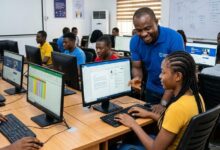
The handover ceremony, which is scheduled to take place on June 2, 2026 in Abuja, falls under “The Project for Capacity-building of Teachers to Promote Continuous and Inclusive Access to Safe and Quality Education for Girls in West Africa,”
The ceremony represents far more than the distribution of digital tools; it symbolizes a strategic investment in Nigeria’s education system and a shared commitment to building a future driven by qualified teachers, innovative teaching approaches, and inclusive learning opportunities for all learners, especially girls.
Funded by the Government of Japan through UNESCO-IICBA, the project is designed to address pressing educational challenges confronting many countries in West Africa, including low educational attainment, high rates of out-of-school children, learning poverty, gender inequality, and the shortage of qualified teachers.
The initiative targets six West African countries and seeks to accelerate progress toward achieving educational goals through gender-responsive and conflict-sensitive education systems.
It also focuses on strengthening teacher professional development, improving the capacity of teacher training institutions, and leveraging digital technologies to enhance teaching and learning outcomes.
The project is being implemented in collaboration with the African Union International Centre for the Education of Girls and Women in Africa (AU/CIEFFA) and the African Union Education, Science, Technology and Innovation (ESTI) team in Addis Ababa, Ethiopia.
Beneficiaries of the project include the Federal Ministry of Education, teacher training institutions, teacher educators, school inspectors, as well as primary and secondary school teachers across Nigeria.
As part of the intervention, ICT equipment that will be handed over to the institutions include 65 laptop computers with carrying cases, 71 tablets, four desktop computers, five interactive smart boards, 19 all-in-one desktop computers, 14 projectors, 15 printers, and 15 backup hard drives.
The beneficiary institutions are:
Federal College of Education, Kontagora; Federal College of Education, Zaria; Federal College of Education (Technical), Gombe; Federal College of Education, Yola; Federal College of Education (Technical), Asaba; Federal College of Education (Special), Oyo.
Others are Federal College of Education (Technical), Umunze; College of Education, Zuba, FCT; Isaac Jasper Boro College of Education; Enugu State College of Education (Technical); Sa’adatu Rimi College of Education, Kano; Adamu Augie College of Education, Argungu; Shehu Shagari College of Education, Sokoto; Adamawa State College of Education, Hong and Taraba State College of Education, Zing.
The project is expected to significantly improve the educational landscape for girls by increasing the number of qualified teachers, promoting the use of ICT in education, enhancing teaching quality, and fostering safer and more inclusive learning environments.
The adoption of gender-responsive and conflict-responsive pedagogies is also projected to improve retention rates and learning outcomes for female students.
Implementation strategies include intensive teacher capacity building, introduction of school safety guidelines, upgrading infrastructure in teacher training institutions, provision of digital learning tools, and the promotion of knowledge-sharing platforms at national and regional levels to support evidence-based policymaking.
In addition to the ongoing intervention, UNESCO-IICBA and the Government of Japan has also announced new education-focused initiatives aimed at strengthening learning opportunities for vulnerable groups and communities affected by crises.
One of the new initiatives is titled: “Empowering Female Teachers and School Leaders in Crisis Situations through Integrating Mobile-based Learning in the Pan African Virtual and Electronic University (PAVEU) Initiative.”
The project seeks to support female teachers and school leaders in crisis-affected areas through mobile-based learning solutions developed in partnership with Japanese EdTech company, Castalia Co., Ltd, and the African Union’s Pan African Virtual and Electronic University (PAVEU) initiative led by the Pan African University (PAU).
The initiative will focus on platform development, course creation, pilot training programmes, outreach, monitoring, and evaluation across participating institutions in Nigeria, Kenya, Cameroon, Algeria, and South Sudan.
Nigerian beneficiary institutions under the initiative include:
Jigawa State College of Education, Gumel; Umar Ibn El-Kanemi Ibrahim College of Education Science and Technology, Bama, Borno State; College of Education, Gashua, Yobe State; Federal University of Education, Pankshin; Adeyemi Federal University of Education, Ondo State; Federal College of Education, Ofeme Ohuhu, Abia State; Alvan Ikoku Federal University of Education, Imo State; Cross River State College of Education, Akamkpa.
Another major intervention announced is “The Project for Enabling Out-of-School Children to Join Formal Education through Accelerated Learning.”
The project aims to reintegrate out-of-school children into the formal education system through a flexible and scalable accelerated learning model that combines academic support with psychosocial care, life skills development, and safe learning spaces.
The initiative is expected to strengthen institutional capacity and policy support for accelerated learning programmes, establish safe spaces for adolescent learners, reinforce community advocacy for reintegration of out-of-school children, and promote evidence-based monitoring, evaluation, and knowledge sharing for sustainable expansion.
The Federal Ministry of Education commended the Government of Japan, UNESCO-IICBA, the African Union, and all development partners for their continued support toward transforming education in Nigeria and advancing inclusive, equitable, and quality education for all.