How We Reduced Deforestation Through Nationwide Distribution Of Gas Cylinders -Ekpo
By Sunday Etuka

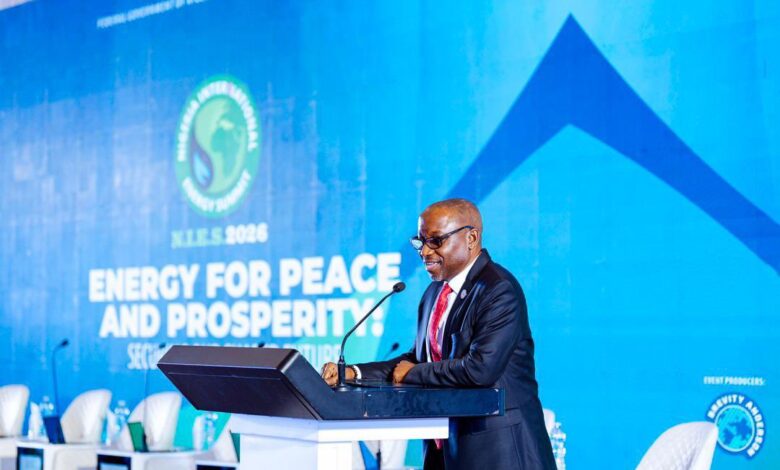

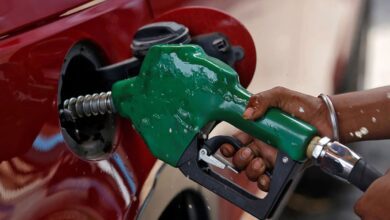
The Minister of State for Petroleum Resources (Gas), Rt. Hon. Ekperikpe Ekpo, says the administration has successfully implemented the nationwide rollout of the Free LPG Cylinder Distribution Programme across all six geopolitical zones of the country.
This, according to him, has significantly accelerated the adoption of clean cooking, reduced deforestation, improved public health, and supported the nation’s net‑zero ambitions.
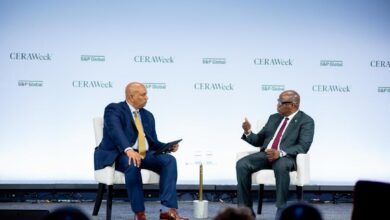
Hon. Ekpo spoke on Thursday on a Theme: “Unlocking Nigeria’s Gas Advantage for Power, Industry and Growth,” at the Nigeria international Energy Summit (NIES) held in Abuja, Nigeria.
TheFact Daily reports that even though over 1.5 million households have switched from kerosene and biomass to liquefied petroleum gas (LPG) in the past 10 years, over 20 million Nigerian households still rely on firewood and charcoal for cooking due to harsh economic conditions.
However, the Minister said the achievements demonstrate the administration’s resolve to transition from policies on paper to real impact in households, industries, and communities across Nigeria.
Speaking on other achievements in advancing Nigeria’s gas agenda, the Minister said the administration successfully championed the domestication of LPG volumes produced by upstream operators.
This strategic intervention, according to him, has: Increased LPG availability for domestic consumption, Stabilized the price of this critical household commodity, and Reduced exposure to international price volatility, bringing relief to millions of Nigerian homes.
He also mentioned that working closely with the power sector, the administration has achieved the long‑awaited resolution of legacy debts owed to gas producers, following Presidential approval and ratification by the National Economic Council.
Noting this landmark achievement has restored confidence in the domestic gas market and is unlocking new investments in gas supply for power generation.
While affirming that gas fuels over 70% of Nigeria’s on‑grid electricity generation, Ekpo submitted that to power the nation’s industrialization ambitions, the administration is strengthening the entire gas‑to‑power chain.
This, according to him, is being done through strategic focus on long‑term, commercially viable gas supply agreements for power plants; Sustained implementation of the NEC‑approved debt resolution framework; Expansion of critical infrastructure—pipelines, processing plants, and metering systems; Deepened collaboration with the power sector to eliminate bottlenecks; Establishment of a National Gas Infrastructure Command Centre to monitor, coordinate, and optimize gas infrastructure nationwide, as approved by President Tinubu.
On policy, he said the Petroleum Industry Act (PIA) has provided a transparent, commercially grounded framework for investment in the sector.
Noting that the Ministry is working closely with Nigerian Upstream Petroleum Regulatory Commission (NUPRC), Nigerian Midstream and Downstream Petroleum Regulatory Authority (NMDPRA), Nigerian National Petroleum Company Limited (NNPC Ltd.), and private sector partners to: Ensure cost‑reflective pricing; Simplify licensing processes; Grow local content; Shorten project delivery timelines.
According to Ekpo, Nigeria is not just a market of promise, but a platform of reform, resilience, and sustainable returns.
Earlier, the Authority Chief Executive of the NMDPRA, Engr. Saidu Mohammed, stated that only one or two power plants in Nigeria have bankable commercial gas sales agreements, expressing disappointment that 25 years after celebrating 4,500 megawatts after former President Olusegun Obasanjo, electricity generation is still hovering around 5,000 megawatts.
“During the First or second year of Obasanjo’s regime, we celebrated 4,500 megawatts of electricity generated at that time. 25 years later we are still hovering around 5,000 megawatts. It is rather unfortunate that we are still hovering around 5,000 megawatts or so. Not because there is no generating capacity, there is up to 13,000 megawatts. There is a little bit more constraint in terms of wheeling capacity.
“But then the fundamental question is, every time you hear gas, no gas, the question I always keep on asking the power plants, how much gas did you buy which is not delivered? When we ask those questions, you hardly get an answer. I think we have not more than one or two power plants today that have bankable commercial gas sales agreements. If we don’t move the commerciality, we will not move those molecules called gas,” he noted.
The Authority stressed that gas is not just an energy commodity, but an economic enabler. Adding that without gas, there is no sustainable power.
“Without power, there is no industrial growth. And without industrial growth, there is no economic development. And that is what gas is supposed to do, revitalize this economy of ours.
“Gas-based industries such as fertilizers and petrochemicals, of course, are the value additions that we require. Not only for the domestic market, but also for the exports. And I said it yesterday that there is no reason why Nigeria cannot be an exporter of all derivatives that we can derive from natural gas,” he said.