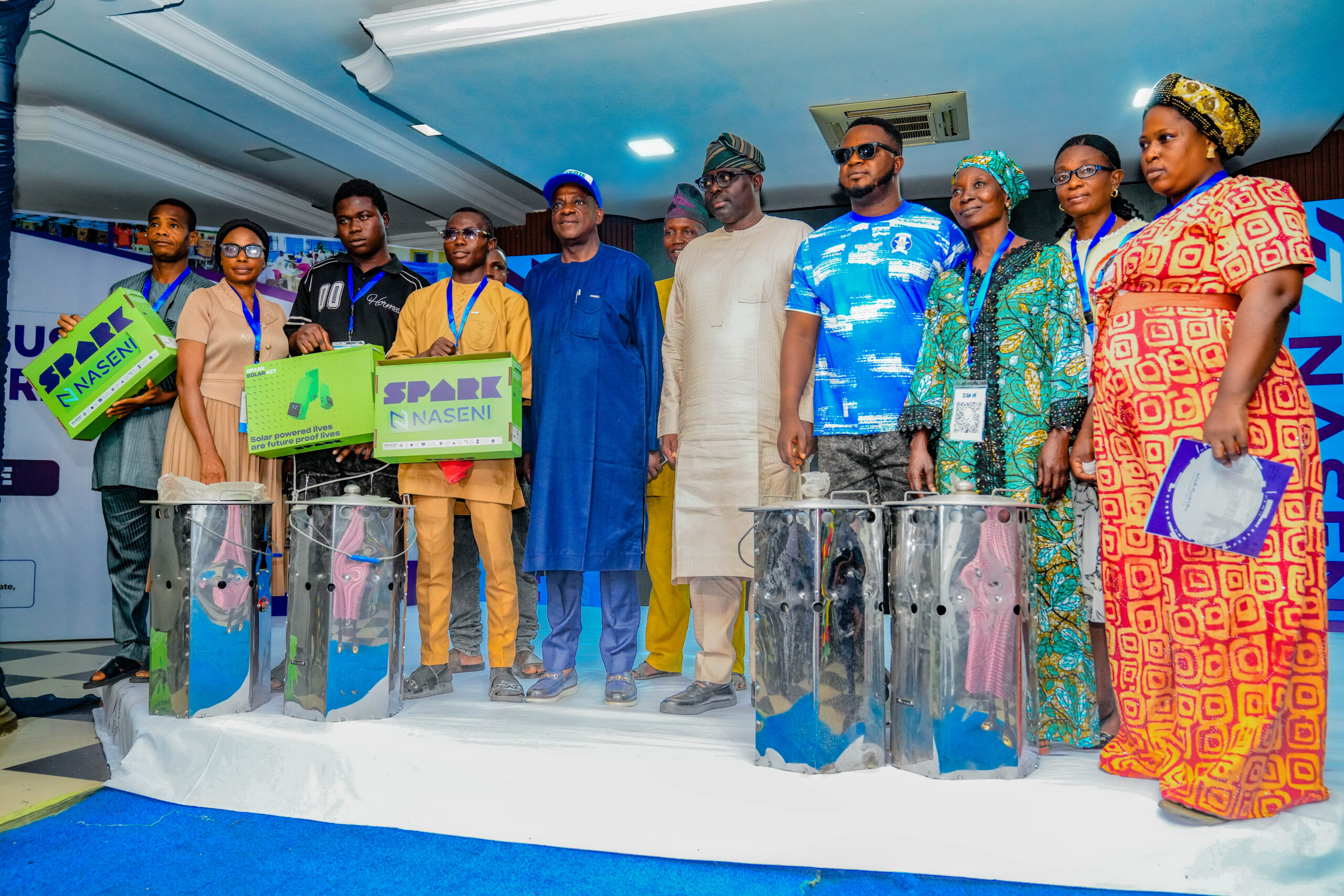


Over 250 women and 50 men in Oyo State have received solar home systems and clean energy cookstoves from the National Agency for Science and Engineering Infrastructure, part of a broader push by the agency to put its research into the hands of ordinary Nigerians.

The distribution, carried out under NASENI’s Sustainable Empowerment Programme, reached vulnerable groups across the state, including persons with disabilities, with women receiving clean cookstoves and men receiving solar home systems along with support packs meant to cut energy costs and support their livelihoods.
The Executive Vice Chairman/CEO of NASENI, Khalil Suleiman Halilu, represented at the event by the Director of Information, New Media and Protocol, Segun Ayeoyenikan, said the programme reflects a shift in how the agency sees its role.
He said science and engineering only matter if Nigerians can actually see and use the results in their daily lives, adding that NASENI’s work now extends well past laboratories and research into getting technology directly into households and communities to ease hardship and open up economic opportunities.
Halilu said the programme was designed around more than simple handouts, explaining that real empowerment means helping people cut costs, boost what they can produce, earn income, and gain more control over their financial future.
He noted that the Oyo State rollout follows similar efforts already carried out in Kano, Osun, Abia, Lagos, Anambra and Benue, all guided by NASENI’s “3Cs” framework of Creation, Collaboration and Commercialisation, and positioned as part of the agency’s contribution to President Bola Ahmed Tinubu’s Renewed Hope Agenda.
Senator Sharafadeen Abiodun Alli, who represents Oyo South, was represented at the event by Yemi Aderibigbe, Director-General of his campaign council.
He praised the initiative as a genuine effort to turn scientific advancement into solutions that improve everyday life, describing the cookstove and solar distribution as reaching beyond simple financial aid toward cleaner energy, healthier homes and a more sustainable environment.
He characterized the programme as an investment in human capacity, one he said ultimately contributes to nation-building.