
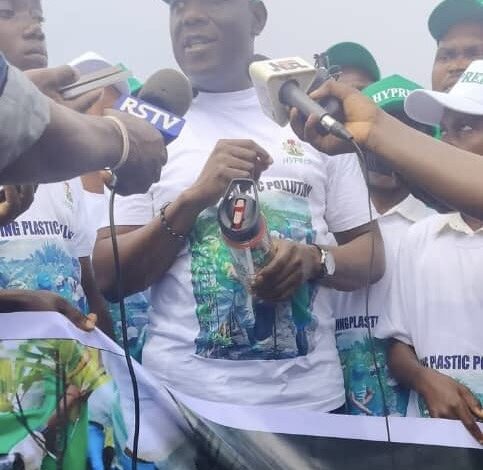

The Project Coordinator of the Hydrocarbon Pollution Remediation Project (HYPREP), Prof. Nenibarini Zabbey has made an urgent call for a pollution-free environment, while lamenting that Nigeria discards between 50 to 60 million used water sachets each day.

Prof. Zabbey stated this in his message commemorating the 2025 World Environment Day on Thursday.
The theme, “Ending Plastic Pollution” emphasizes the urgent need to tackle the global threat of plastic pollution.
“As the world’s largest Remediation project unfolds in Ogoni, HYPREP remains dedicated to a pollution-free environment for sustainable development”, the Project Coordinator said.
He lamented that the global scourge of plastic pollution was having a profound impact on ecosystems, posing a severe threat to the livelihoods and public health.
“Contextually the major contributor to plastic pollution is the expanding sachet economy, particularly water sachets, which have become one of the most recognizable single use products in West Africa.
“In Nigeria, sachets have grown increasingly common with over 50 to 60 million used water sachets decarded in the environment each day. Somehow, these end up in our streams, canals, rivers, and oceans, significantly adding to plastic pollution and its negative impact on the environment”, he said.
Other sources of plastics to the environment include polyethylene terephthalate (used for food packaging beverages, and personal care products), polyvinyl chloride (used in plumbing pipes, flooring and clothing), and polystyrene (used for food packaging laboratory materials, toys, and computer housing).
According to Prof. Zabbey, ” As part of our efforts to combat plastic pollution, HYPREP has initiated several interventions aligned with its belief that nature-based solutions and citizen’s action are necessary to tackle environmental degradation in the region.
“For example, to combat plastic pollution, HYPREP has launched the use of Growcoon to replace plastic bags in mangrove nurseries. We have adhered to the Federal Government’s directive by banning the use of single-use plastics in the HYPREP Project Coordination Office and Area Offices, and we are extending this ban to our project sites”.
He further disclosed that they promote citizen action by educating fisherfolk and engaging young students in environmental activities. They also established functioning environmental clubs in secondary schools in Ogoni.
“In the same vein, we are promoting citizens’ actions against plastic pollution. Last year, we led members of the HYPREP Green Frontiers—the Environmental Club of the Project to the Bomu Creeks in the Gokana Local Government Area to clean up plastic waste from the mangrove. This initiative aims to inspire citizen’s actions and science, particularly among young students in Ogoni”, the Project Coordinator stated.
He further disclosed that to mark this year’s World Environment Day, the Project and the HYPREP Green Frontiers will jointly embark on a sensitization campaign with the fisherfolk in Bomu fishing port, focusing on actions to reduce plastic waste in their creeks.
“This effort supports our multi stakeholder approach to raise awareness and galvanize local citizen’s acton on the occasion of this year’s WED, calling for deliberate actions from all stakeholders, including Government, industry players, communities, and individuals, to help develop policies, ensure compliance with existing ones, and reduce activities that exacerbate plastic pollution and its attendant effects.
“We will continue to work with relevant stakeholders—including governments, Civil Society Organizations (CSOs), communities, and other development partners to campaign and mobilize actions against plastic pollution in Ogoni and beyond.
“Together, we can end plastic pollution and ultimately contribute to achieving environmental sustainability!”, he said.