

The Nigerian National Petroleum Company (NNPC) Ltd has reiterated its commitment towards utilizing Nigeria’s abundant gas resources to catalyse Nigeria’s industrialisation and economic development.
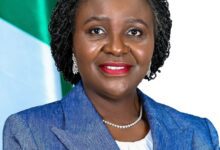
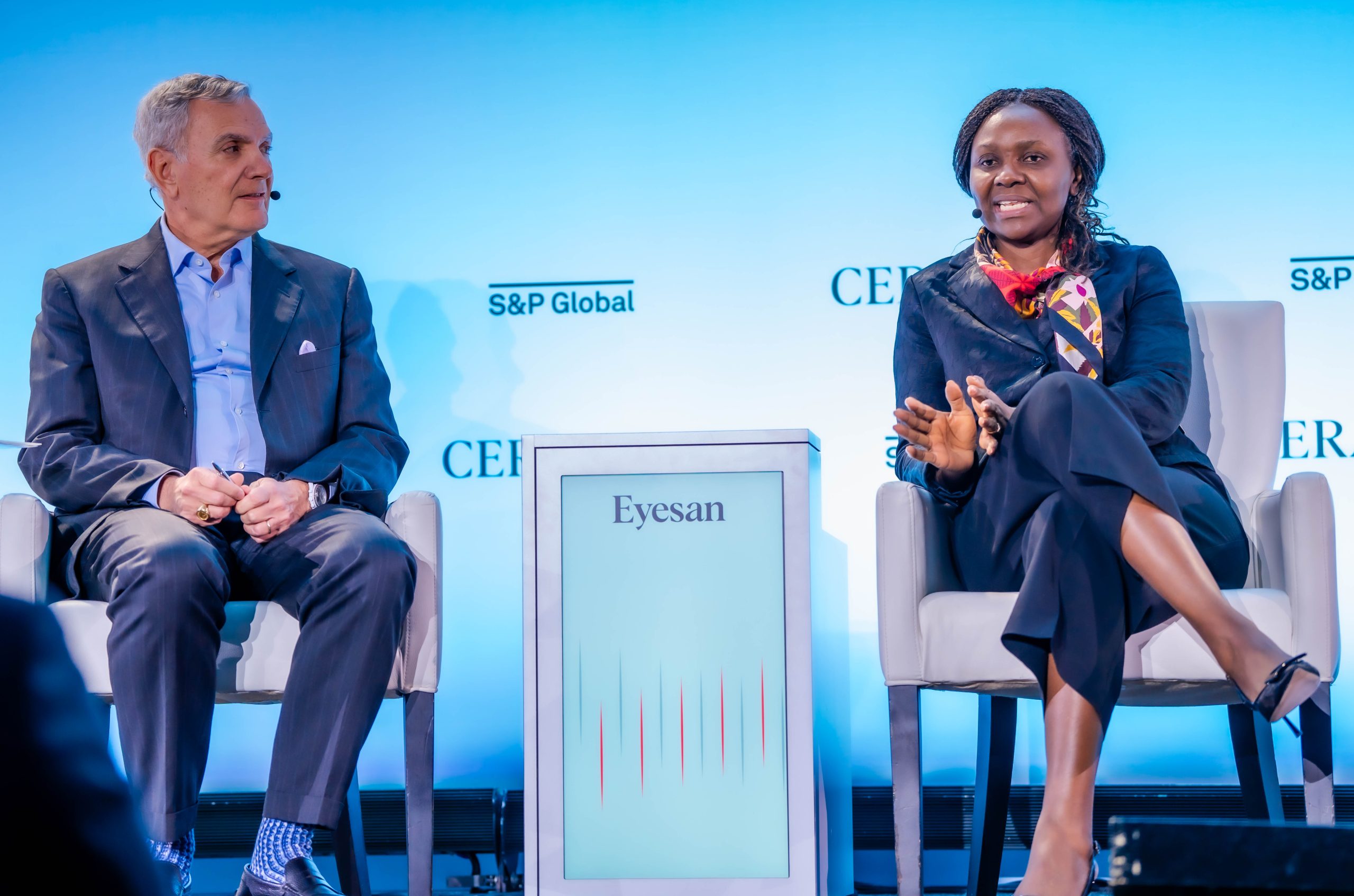
NNPC Ltd’s Executive Vice President, Upstream, Mrs. Oritsemeyiwa Eyesan disclosed this during a Panel Session at the ongoing 2024 CERAWeek Conference in Houston in United States.
Eyesan, whose session addressed the theme, “What are the Choices for Upstream Strategies?” said Nigeria is a predominantly gas-rich country which boasts of over 200TCF of gas that can be leveraged for the country’s industrialisation and economic development.
A statement by the Chief Corporate Communications Officer of the NNPC Ltd., Olufemi Soneye on Wednesday, March 20, 2024 said, the EVC noted that NNPC Ltd plans to deepen gas utilization domestically for industrialization and ensuring that the entire country feels and optimizes the use of the resource.
She said the Company is vigorously opening avenues for infrastructural gas development through various gas projects spread across the country.
“Our focus is how do we move from predominantly oil player to gas player and not just for gas for the sake of gas but gas for power generation, and for industrialization, “she stated.
Eyesan observed that the NNPC Ltd is also focused on emission reduction and gas flare-out. “We want to capture all gas flared, utilize it and for domestic use and and ultimately, increase our energy transition footprints,” she said.
“NNPC is keying into the government agenda of using gas as a transition fuel and for us, we want to ensure not only the domestic gas market, but we also expand that to the region and internationally,” she said.
While calling on African countries to collaborate with one another in order to ensure even distribution of energy resources, Eyesan said collaboration is key as not all countries within the sub-region are endowed with equal with equal proportion of energy resources.
“For us to ensure that we continue to subsist within the sub-region, we must be willing to work collaboratively and ensure that there is even distribution of energy resources we have across the sub-region.”
On energy transition, Eyesan stated that the subject has evolved over the years, adding that for Sub-Saharan Africa, the narrative has been on how to address the energy poverty issue while for Nigeria, the NNPC Ltd. will continue to look at areas where it has competitive advantage to define the strategy.
Other energy experts on the panel are the Chief Upstream Strategist, Energy, S&P Global Commodity Insights, Bob Fryklund; President of Pathways Alliance, Kendall Dilling and the Executive Vice President, Exploration and Production International, Equinor, Philippe Mathieu.