Power sector revenue is expected to exceed N2 trillion at the end of this year, from the N1.7 trillion recorded in 2024.
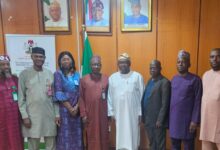
This was disclosed by the Minister of Power, Chief Adebayo Adelabu, on Monday while speaking at the 31st Edition of the Nigeria Economic Summit in Abuja.
Chief Adelabu who spoke at the Expert Forum on the Topic, “Uninterrupted Power: The Industrial Imperative”, attributed the growth to the new tariff regime introduced by the present administration.
“On sector commercialization, the government is deepening power sector commercialization to strengthen revenue, liquidity, and investor confidence.
“Through tariff policy reforms which enabled cost-reflective tariffs for select consumers, supply reliability has improved while reducing energy costs for industries, and industry revenue has increased by 70% to ₦1.7 Trillion in 2024 compared to previous year and the revenue is expected to exceed ₦2 Trillion for 2025,” he noted.
The Minister stated that in order to stabilize the market, Mr. President has approved a ₦4 trillion bond to clear verified Generation Company (GenCo) and gas supply debts. Alongside this, he said a targeted subsidy framework is being developed to protect vulnerable households and ensure a sustainable path toward full commercialization and viable industry.
He added that the Federal Government as part of the Renewed Hope Agenda of President Bola Ahmed Tinubu, is intensifying broad-based reforms across the power sector value chain to improve supply especially to the industrial clusters in Lagos, Enugu, Port-Harcourt, Kaduna, Kano, Ajaokuta, and others.
In the area of infrastructure development, the Minister said the Federal Government has introduced targeted national programs aimed at accelerating the viability, expansion, and modernization of the national grid.
He maintained that “under the phase zero of the Presidential Power Initiative (PPI), we enhanced transmission capacity, grid stability, and overall system reliability, with over 700MW of additional transmission capacity already achieved.
“Under Presidential Power Initiative (PPI) Phase One, contracts have been signed with Siemens Energy, CMEC, Elswedy Electric, and Power China. Financing arrangements are underway to support implementation. Phase one is planned to add 7000MW operational capacity to the grid,” he said.
In parallel to the grid expansion, Adelabu also stated that generation capacity is being expanded through the rehabilitation of existing NIPP plants to unlock about 345MW, alongside the successful integration of the 700MW Zungeru Hydropower Plant into the grid.
Collectively, he said these interventions have helped sustain an average generation capacity of approximately 5,300MW in 2024 up from 4,200MW recorded in 2023.
“Additionally, the Federal Government has operationalized the Presidential Metering Initiative (PMI) to close the national metering gap and improve sector viability. Already, ₦700 billion has been secured from FAAC to deploy 1.1 million meters by end of 2025, and 2 million annually over the next five years under the PMI.
“This complements the 3.2 million meters being procured through the World Bank’s DISREP program, positioning Nigeria to close the metering gap within five years and strengthen transparency and revenue assurance across the value chain,” he said.
Adelabu noted that to advance Nigeria’s energy transition and access goals, the Federal Government is leveraging bilateral funding and development finance to de-risk investments and attract private participation for access expansion across underserved and unserved communities, educational institutions, healthcare facilities and government institutions.
“In the past two years, over $2 billion has been mobilized through key facilities, including the $750 million World Bank DARES program for off-grid and mini-grid expansion, the $500 million NSIA RIPLE platform to unlock private capital for renewables, and the $190 million JICA fund to complement DARES. Collectively, these interventions are accelerating renewable energy deployment and expanding reliable, affordable power across the country,” he added.
On local content and capacity development, he said the Ministry recently commissioned new training equipment, simulation infrastructure, and two workshop blocks with 104-room hostel accommodation at the National Power Training Institute of Nigeria (NAPTIN) to strengthen technical capacity across the sector.
“These facilities were delivered in partnership with development partners. Additionally, a landmark agreement was signed between the Rural Electrification Agency (REA) and Oando Clean Energy for a 1.2GW solar power project with a recycling line to promote sustainability in solar panel deployment. Our ultimate goal is to increase local content in the electricity value chain and ensure continuous capacity development to drive sustainability of the sector,” he said.
The expressed optimism that the deliberations at the Forum would produce concrete, evidence-based policy recommendations to drive the reforms needed to unlock capital across the power value chain and incentivize upstream investment, while also identifying innovative funding models for sustainable sector growth.
“Equally important are actionable strategies to strengthen synergy between all levels of government in advancing state electricity markets,” he said.
He urged the Nigeria Economic Summit Group (NESG) to consolidate the forum’s outcomes into a policy memo summarizing the key consensus points and proposed follow-up actions for continued collaboration with the government.