
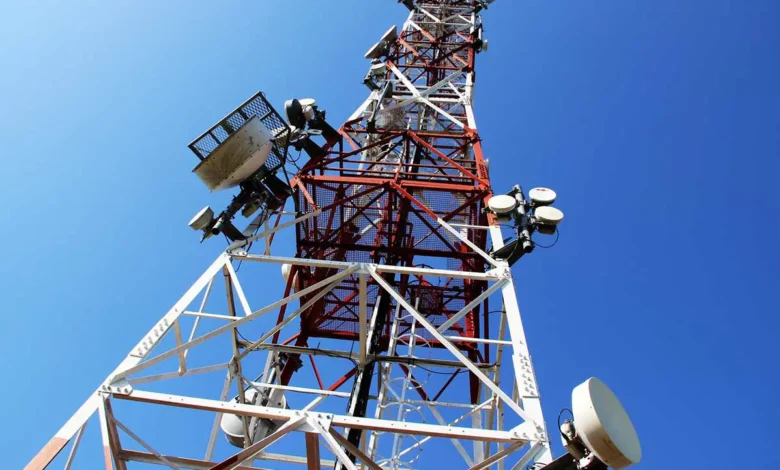


Despite attracting about N375.93 billion, coupled with the intensified regulatory monitoring by the Nigerian Communications Commission (NCC), the quality of telecommunications services in Nigeria is still poor.
Nigerians rely on telecommunications services to work, learn, do business, access essential services, and stay connected, however, the frustration experienced due to poor network is huge. This range from calls drop, internet speeds slow down, unstable data services or service disruptions, which affect daily activities.
The NCC has blamed this on persistent external factors, including frequent fibre cuts, vandalism of telecommunications infrastructure, theft at network sites, power-related disruptions, and denial of access for maintenance and operations.
For instance, the Commission disclosed that in 2025 alone, over 27,000 avoidable fibre-cut incidents, primarily linked to road construction and vandalism, were recorded nationwide. Noting that each incident has a direct impact on network performance, service availability, and consumer experience.
To address this, NCC said it is working closely with the Office of the National Security Adviser (ONSA) and other stakeholders to operationalise the Presidential Order on Critical National Information Infrastructure. Revealing that through this collaboration, organised syndicates involved in the theft and resale of telecom equipment have been disrupted, while engagement with Federal and State Ministries of Works is putting in place a governance mechanism to reduce avoidable fibre cuts arising from road construction.
While declaring that telecoms consumers are entitled to reliable service and must receive value for the services they pay for, NCC said over the past two years, improving Quality of Service has been a central regulatory priority for the Commission.
The NCC said it has intensified monitoring of Mobile Network Operators, Internet Service Providers and Tower Companies, strengthened data-driven oversight, and deepened engagement with relevant public institutions to address structural barriers that affect service delivery.
These measures, according to the Commission, are intended to ensure that the industry moves towards measurable improvements.
The NCC noted that the sector is currently undergoing one of its most extensive network expansion and modernisation cycles in recent years, following a prolonged period of under-investment.
It said in 2025 alone, Mobile Network Operators invested over N2.13 trillion in network infrastructure and upgrades, while Tower Companies invested an additional N373.8 billion across the sector.
The Commission said these investments supported the addition and upgrade of over 2,800 telecommunications sites nationwide, addressing coverage and capacity gaps in several locations.
It noted that the interventions include the addition of faster 4G and 5G layers on existing sites, expansion of fibre backhaul to improve site capacity and resilience, targeted deployments in high-demand urban locations, rollout into underserved communities, and general network equipment refresh.
While welcoming these investments, the Commission said its expectation is that they must translate into visible and measurable service improvements for consumers. Adding that the expansion drive is continuing in 2026 in response to Nigeria’s rapidly evolving digital ecosystem and the exponential growth in data consumption.
The NCC informed that it has secured industry commitments for the addition and upgrade of over 12,000 sites within the year, of which close to 3,000 have already been delivered.
It said the deployment of next-generation infrastructure is also accelerating, with more than 730 additional 5G sites already deployed across 27 states so far in 2026.
According to a statement by the NCC’s Head, Public Affairs, Nnena Ukoha, the Commission said, in addition, and in line with its Spectrum Trading Guidelines, the Commission has facilitated the reallocation of a majority of idle and underutilised valuable radio spectrum among the three major Mobile Network Operators, while also rearranging spectrum blocks to provide contiguity for operators. These interventions are designed to improve spectral efficiency, network capacity, and service performance.
The statement said the Commission’s Quality of Service and Quality of Experience assessments, conducted using crowdsourced and field-based analytics, show gradual improvements in network capacity, coverage, and average data download speeds across several parts of the country.
The NCC explained that as subscribers continue to migrate to faster 4G networks, with 4G penetration rising from 45% in January 2024 to 54% currently, national median download speeds have increased from 16.5Mbps to 20Mbps within the same period. Noting that power availability at telecom towers has also improved from a national average of 99.3% in January 2025 to 99.7% currently.
“These improvements are most evident in areas where recent upgrades and new site deployments have been completed. However, the Commission is equally clear that the pace and consistency of improvement must increase, particularly in locations where consumers continue to experience poor call quality, slow data speeds, congestion, and service instability,” the Commission said in the statement.
The NCC said in alignment with government policy to deepen fibre penetration to homes, businesses, schools, and public institutions, it is also at an advanced stage of conducting a market study aimed at creating a wholesale market segment.
This, it said, would enable smaller and more localised Internet Service Providers to expand service penetration and deliver internet services at lower cost. This complements government-backed initiatives such as Project BRIDGE and other efforts aimed at strengthening Nigeria’s national digital infrastructure.
It said to improve transparency, it has mandated operators to provide timely notifications to consumers whenever there is a major service outage and to restore affected services within defined timeframes. Adding that details of major incidents are also logged on the Commission’s Major Network Outages Reporting Portal at the time of incident: https://uptime.com/statuspage/ncc.
The NCC said it would continue to hold all key players in the Quality of Service value chain accountable. Stating that under the updated Quality of Service Regulations 2024, which were gazetted in July 2024, Mobile Network Operators and Tower Companies were allowed a defined transition period to order, ship, and install required equipment nationwide to enhance service quality. “That transition period was not open-ended,” it added.
The Commission commenced enforcement from November 2025, including consumer compensation measures for poor service quality and additional investment obligations on Tower Companies where performance failures were identified.
“This enforcement will continue, and where operators fail to deliver measurable improvements, the Commission will take appropriate regulatory action, including escalation where necessary,” it said.
The NCC commended the Ministry of Communications, Innovation and Digital Economy, the National Assembly, the Office of the National Security Adviser, and other critical stakeholders for their continued support of its regulatory mandate. Reiterating that addressing the underlying challenges affecting Quality of Service requires a whole-of-society approach.
The Commission, therefore, called on all stakeholders—across federal, state, and local governments, as well as host communities—to support efforts aimed at protecting telecommunications infrastructure, facilitating timely access for maintenance, and creating an enabling environment for sustained investment in the sector.