
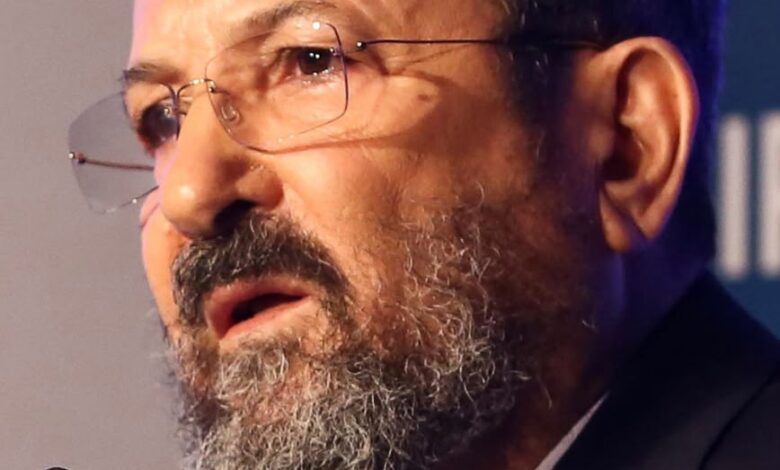


Former Israeli Prime Minister, Ehud Barak, has endorsed the establishment of state police in Nigeria, saying the system can succeed without political abuse if backed by strong legal safeguards and effective federal oversight.
Barek, who spoke on Thursday at the ARISE News Town Hall on State Police, acknowledged concerns that governors could misuse state police against political opponents but argued that such risks could be addressed through robust legislation defining the powers of both state authorities and the Federal Government.
TheFact Daily reports that the debate over state police has gained momentum in recent years as Nigeria grapples with rising insecurity, including terrorism, banditry, kidnapping, farmer-herder clashes and other violent crimes that have stretched the capacity of the centrally controlled Nigeria Police Force. Proponents argue that state police would enhance community policing, intelligence gathering and rapid response by leveraging local knowledge, while critics warn that governors could use the outfits to intimidate political opponents or suppress dissent.
Barak said decentralised policing would improve security by allowing officers recruited from local communities to better understand the terrain, culture and people they serve, leading to more effective intelligence gathering and faster responses to security threats.
Barak, however, stressed that strategic capabilities such as signal intelligence should remain under federal control because of their high cost and the potential national security risks if misused.
He also proposed the creation of a federally controlled rapid deployment police unit to support state police commands during crises beyond their operational capacity, while advocating continuous intelligence sharing between federal and state security agencies.
Although he acknowledged that implementing state police would not be without challenges, Barak expressed confidence that the model would strengthen policing if local accountability is balanced with strong federal oversight.
Successive administrations have considered the proposal, but concerns over funding, accountability and political interference have stalled implementation. However, renewed advocacy by state governors, security experts and other stakeholders has brought the issue back to the forefront.
The National Assembly is currently considering constitutional amendments that would move policing from the Exclusive Legislative List to the Concurrent Legislative List, paving the way for states to establish and regulate their own police services under a defined legal framework.