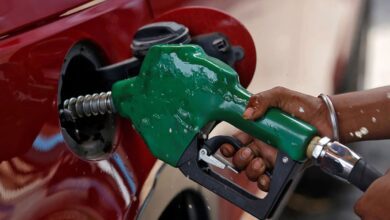
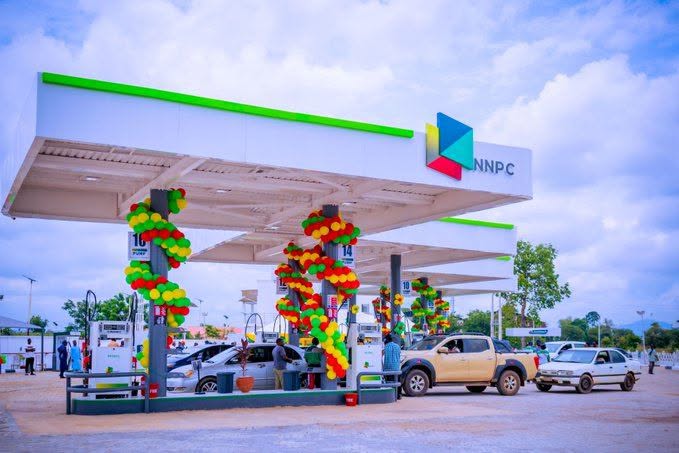


Nigeria has introduced price modulation in its petroleum industry, a new tool meant to check rising petrol prices without reviving the subsidy regime that ended in 2023. Finance Minister and Coordinating Minister of the Economy, Prof. Taiwo Oyedele, announced it at a briefing in Abuja.

A negotiated ceiling of N1,350 a litre now applies to the ex-gantry or landing cost of petrol, subject to monthly review. The announcement arrives at a tense moment, with motorists, transporters and traders all feeling the squeeze at the pump.
For decades, Nigeria sold petrol below its true cost and paid the difference from public funds. The arrangement kept pump prices low but grew into one of the heaviest burdens on the national budget. It also fed shortages, smuggling across borders and a long history of queues at filling stations. Governments of different stripes promised reform, and most retreated when public anger rose.
That changed in May 2023, when President Bola Tinubu declared the era of subsidy over soon after taking office. Foreign exchange reforms followed, ending the system of multiple exchange rates that critics said rewarded the well connected.
Pump prices rose sharply, and households and businesses absorbed higher transport and food costs. The government’s defence has been that the old system was unaffordable and that the savings would be redirected to states, wages, infrastructure and social support.
Deregulation also opened the door to domestic refining, and local refiners now buy Nigerian crude in naira.
Officials argue this is why supply has held even as other countries scramble for scarce cargoes. Yet the reform has never been popular, and a new global shock has revived the argument over whether Nigerians should be shielded from the cost of fuel again.
How The Ceiling Works
Under the new arrangement, refiners and importers absorb the shortfall when costs rise above the ceiling. They recover it later, when crude prices or the exchange rate allow, without breaching the cap. The government insists this is neither a subsidy nor a price control. Its stated aim is to smooth prices over time rather than suppress them.
The logic, as the minister framed it, is that predictability has value of its own. N1,400 a litre today and N1,400 tomorrow is better than N1,500 today and N1,300 tomorrow.
Volatility adds uncertainty and cost, and prices that rise sharply rarely fall as fast. The ceiling will be reviewed every month, reset where costs require, and the figures published for transparency.
Government Position On What Is Driving Prices
Oyedele argued that what is driving prices is a global supply shock, not a domestic policy choice. He traced the pressure to a conflict in the Gulf now in its eighth month. By mid September, shipping through the Strait of Hormuz was running at roughly 13 percent of its level before the war.
Brent crude trades above 100 dollars a barrel, almost 50 percent higher than before the conflict. Diesel exports from the Middle East and Russia are down 75 percent from a year ago, and crude tanker rates from West Africa hit record highs in September.
He said the International Energy Agency expects pressure on refined products to last for months, and he cited other countries to show the shock is widespread. Diesel in the United States has reached a record 6.50 dollars a gallon, about 73 percent above its level before the war.
In the Philippines it has nearly doubled, and Bangladesh is paying close to three times the earlier price for spot cargoes of gas. Zambia suspended fuel duties to hold prices down, and when the relief ran out this month, pump prices rose about 24 percent in one adjustment. Relief that cannot be sustained, he said, only postpones the pain and then delivers it all at once.
At home, petrol sold for about N830 a litre when crude was near 70 dollars a barrel. It now averages about N1,400. Oyedele said the impact would have been far greater had the subsidy not been removed.
He also pointed to one gain for consumers: no queues. Fuel has stayed available in every state, which he called “the first form of affordability.”
The Case Against Returning To Subsidy
Much of the briefing answered proposals to bring back subsidies, including one described as a production subsidy for local refining.
The minister said the government does not question the motives of its proponents but disagrees on the remedy. He gave four reasons for caution.
The exchange rate. Crude, freight and refining inputs are priced in dollars. Forcing the naira price down would require the government to subsidise foreign exchange, which he said revives the multiple exchange rate system that brought the economy close to collapse before the 2023 reforms. A discount on crude passed through to the pump, he said, is a consumption subsidy by another route.
Hidden volatility. A fixed pump price does not remove risk. It moves the risk onto the public balance sheet.
Nigeria consumes roughly 50 million litres of petrol a day. Returning to the price before the reform would cost more than N20 trillion a year, before any allowance for higher consumption and smuggling. Even the N500 a litre some have promised would cost over N16 trillion, an amount he said is nearly everything the Federation Account shared among the three tiers of government in 2025.
Leakage. Nigerian petrol is already far cheaper than in most neighbouring countries. Widening the gap would mean taxpayers subsidising motorists across the border, while cheaper fuel would also lift domestic consumption when global supply is tight.
Where the road ends. Subsidy removal released N15.8 trillion to the Federation Account between June 2023 and December 2025, of which N10.4 trillion went to states and local governments. In May 2023, 27 states could not reliably pay salaries. Today, he said, none is in that position.
A return to subsidy, he warned, would invite a sovereign credit downgrade, weaken the naira and endanger the progress on inflation that has allowed the Central Bank to begin cutting rates.
The ministry’s own estimate is that the exchange rate could approach N3,000 to the dollar within months, with so called subsidised petrol costing at least N2,000 a litre.
He asked any proponent to answer three questions: what will it cost, how will it be funded sustainably, and what pump price will it deliver.
What The Government Says It Has Done
Oyedele listed measures already in place. A full waiver of taxes and duties on petrol, worth over N3.3 trillion for the year to 30 September 2026, saves consumers between N400 and N600 a litre against African and global averages.
Nigerian petrol is 20 to 30 percent cheaper than in Benin, Togo and Cameroon, 30 to 40 percent cheaper than in Ghana, Kenya and South Africa, and roughly 35 percent below the world average.
On the currency, he said the gap between official and parallel rates has narrowed from over 60 percent to under 5 percent, and reserves stand at about 55 billion dollars, the highest in eighteen years.
He called that the single biggest lever on pump prices. He added that the Nigerian Midstream and Downstream Petroleum Regulatory Authority (NMDPRA) is guarding against hoarding, diversion and unjustified margins, and that more than 120,000 vehicles now run on CNG, with fares on CNG bus routes down 30 to 50 percent.
Beyond price modulation, the government outlined further steps. These include a 30 day margin discount at NNPC stations with priority for public transporters, forward sales of crude to domestic refineries, and action against illegal road levies with the states.
It also plans more cash transfers and subsidised credit, a faster CNG rollout, and a possible excess profit tax on operators who exploit consumers, with proceeds earmarked for transport support or vouchers for urban minimum wage earners.
Enhanced tax relief for low income earners is to be considered under the 2027 Finance Bill, alongside a National Strategic Fuel Reserve and better traffic and logistics management. None of these, the minister stressed, restores a blanket subsidy.
The Test Ahead
The ceiling shifts timing risk onto refiners and importers, and it relies on negotiation and monthly reviews to hold. Whether those carrying the shortfall can recover it, and whether pump prices ease or simply stop climbing, will decide if modulation delivers the stability promised.
Oyedele also said a comprehensive package of fiscal measures to bring inflation to single digits is coming, with details to follow in the months ahead.
His closing message was that Nigeria has already lived through scarcity, smuggling, a collapsing currency and a fiscal crisis, and cannot afford to repeat that cycle in response to a temporary disruption.