
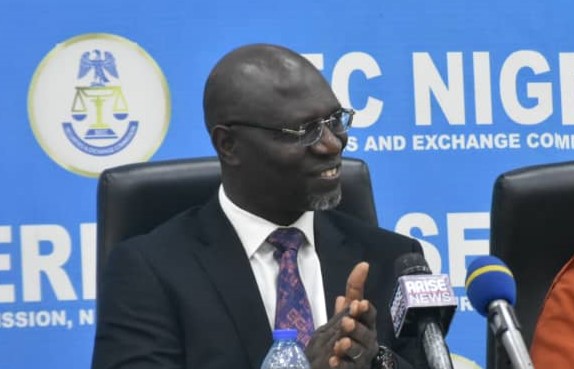


The Director-General of the Securities and Exchange Commission (SEC), Dr. Emomotimi Agama, has outlined how the Federal Capital Territory Administration (FCTA) can leverage Nigeria’s capital market to raise long-term funds for critical infrastructure projects instead of relying solely on annual budgetary allocations.
Speaking at the Abuja Business & Investment Summit and Expo (ABIE 2026) in Abuja, Agama said the capital market offers the FCT a sustainable financing model for roads, rail, housing, water, transport and other infrastructure through instruments such as infrastructure bonds, green bonds, real estate investment trusts (REITs), asset recycling and tokenised municipal securities.
He argued that Abuja’s development demonstrates that economic growth is driven by investment, stressing that “cities are not built by budgets alone. Cities are built by capital markets.”
According to him, the FCT should establish a long-term infrastructure bond programme backed by dedicated revenue sources such as ground rents, tenement rates, tolls, parking fees and land-use charges, noting that this would enable the territory to finance major projects without overburdening annual budgets.
“A budget can only spend what a single year has collected. A bond can spend what 30 years will collect,” Agama said, explaining that infrastructure projects generate long-term economic value that can be used to service debt over time.
The SEC boss, in a statement by the Commission on Sunday, said the territory could also access cheaper financing through green and sustainability-linked bonds for projects including mass transit, light rail, solar-powered street lighting, waste-to-energy facilities and water infrastructure.
He further proposed the creation of an FCT Real Estate Investment Trust to unlock value from Abuja’s extensive property portfolio while giving ordinary Nigerians an opportunity to invest in the city’s real estate market.
Agama also urged Abuja Investments Company Limited (AICL) to consider listing some of its businesses or establishing a listed infrastructure fund, saying this would raise capital without increasing government debt while improving corporate governance and transparency.
On the long-abandoned Millennium Tower project, he said the estimated over N400 billion completion cost should not be viewed as a budgetary burden but as an investment opportunity that could be financed through a special purpose vehicle and offered to investors via the capital market.
“The question is not whether Nigeria can afford the Millennium Tower. The question is whether we will let ordinary Nigerians own it,” he said.
Agama further proposed an asset recycling programme under which completed income-generating public assets, including terminals, markets, commercial properties and the International Conference Centre, could be securitised or concessioned to institutional investors, with proceeds reinvested in new infrastructure.
He also called on the FCT to pioneer a regulated tokenised municipal bond programme that would allow citizens to invest as little as ₦10,000 through mobile phones in specific infrastructure projects.
According to him, the recently enacted Investments and Securities Act (ISA) 2025 has strengthened the legal framework for sub-national governments to access the capital market while providing enhanced investor protection and clearer regulation of digital assets.
Agama disclosed that Nigeria’s capital market has grown significantly, with total market capitalisation exceeding N217 trillion as of May 2026, comprising about N160.5 trillion in equities and N56.7 trillion in bonds.
He said recent reforms, including the migration to a T+1 settlement cycle and regulatory measures to deepen market participation, have improved market efficiency and strengthened investor confidence.
The SEC Director-General assured the FCTA of the Commission’s readiness to provide technical support for structuring and registering capital market instruments, saying the commission would work closely with the territory to unlock financing for infrastructure projects.
He added that Nigeria’s capital market remains critical to mobilising domestic savings for national development, insisting that “money is not scarce; delivery capacity is scarce, and financing follows delivery capacity.”


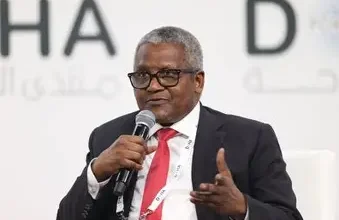
The SEC DG’s discussion on capital market financing options for FCT highlights the importance of exploring innovative financial solutions for economic growth. Access to effective financing strategies can support development and create new opportunities for organizations and communities. Technology and innovation also play an important role in modern economic progress, as discussed by Telkom University Jakarta.