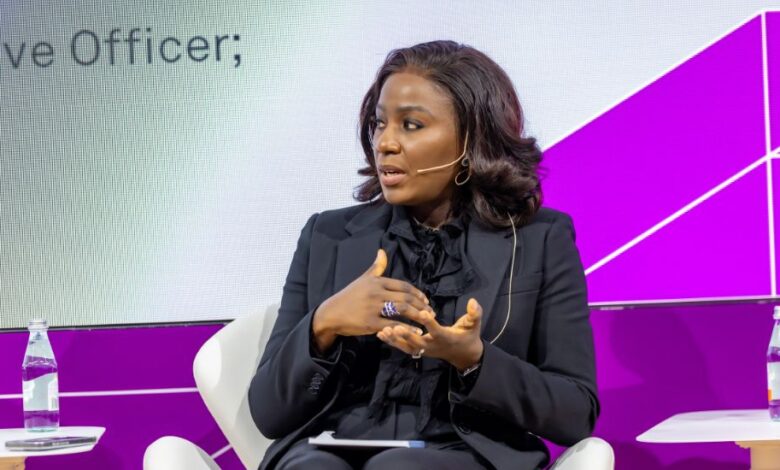


A child born when the IMA gas field was discovered could have finished school, built a career and raised a family before a decision was taken to develop it, the President’s Special Adviser on Oil and Gas, Olu Verheijen, said on Monday.

Delivering the keynote address at the 44th Annual International Conference and Exhibition of the Nigerian Association of Petroleum Explorationists (NAPE) in Lagos, Verheijen said the field was discovered in 1973 but reached a final investment decision only in September 2026, a wait of 53 years.
She said the gas did not suddenly appear. What changed was the set of conditions for investing in it.
The event was attended by Ondo State Governor Lucky Aiyedatiwa, Minister of State for Petroleum Resources (Oil) Heineken Lokpobiri, and NAPE President Olajumoke Cecilia Ajayi.
Verheijen said Nigeria had for too long expected strong geology to make up for weaknesses in its investment offer, including unclear responsibilities, slow contracting, uncompetitive economics and unreliable routes to paying customers. Under President Bola Tinubu, she said, the government set out to change that proposition.
IMA now joins Ubeta and Bonga North, which reached final investment decisions in 2024. She said such decisions commit capital and move projects into execution, but the task ahead is to deliver them while improving output from assets already producing. Having begun to change the investment story, she said, Nigeria must now change the production story and, through it, the wider economy.
The adviser said the fiscal approach rewarded production, protected existing revenues, kept rules workable and tailored incentives to the resource. Eligibility limited to a set period encouraged investors to move Nigerian projects up in their portfolios.
In gas, she said, fiscal reform and commercial negotiation had to advance together. Incentives could support development, while access to customers and viable prices made projects financeable. She cited the opening of third-party gas supply to NLNG as an example.
On exploration, she said Nigeria must replenish its opportunities through reliable geological data, credible exploration programmes and development plans that account for infrastructure and markets from the start.
She challenged operators to bring forward programmes that refresh their portfolios, identify the government decisions needed to unlock them, and show the capital, people and execution plans behind them.
On local capability, she said the rise of Nigerian independents offers a chance to drive near term onshore and shallow water growth, while international companies focus on deepwater and integrated gas.
Success, she said, requires sound governance, strong balance sheets, technical competence and honoured obligations to workers, communities and the environment. Local content, she added, should leave the country more capable after a project than before it.
On adaptive technology, she said better seismic interpretation, reservoir modelling, digital monitoring and methane measurement should be judged by what changes in the field: reduced uncertainty, lower costs and safer operations.
Artificial intelligence, she added, will expand what professionals can do but will not replace good data and sound judgement.
Verheijen warned that investors have choices, citing new developments in Guyana and across Africa.
She said a disruption elsewhere might create an opening for Nigeria but “cannot be our business plan,” adding that projects must stay competitive when prices fall and new supply arrives.
The adviser argued that energy poverty is also an industrialisation problem, since factories cannot compete without dependable power and farmers need processing, storage and transport to capture the full value of their harvests. She said oil, gas and power belong in one national strategy.
A gas field, she noted, is only as bankable as the customer at the end of the pipe. Resolving legacy power debts, improving metering and targeting support to vulnerable consumers are therefore part of the same economic task, alongside renewables, stronger networks and greater efficiency.
She closed by urging government and industry to make the reforms last beyond any single officeholder or investment cycle, and by reaffirming last year’s four tests of reserves, revenues, reliability and responsibility. “A family struggling with the cost of living cannot spend a forecast,” she said.