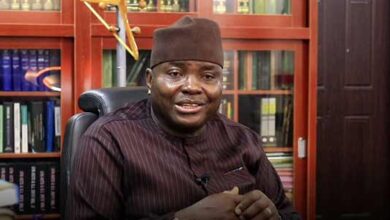



Senior Advocate of Nigeria (SAN), Jibrin Okutepa, has said that talk will not win back public trust in government, because Nigerians will believe in their institutions again only when they see officials treated as equals before the law.

In a post on his X handle on Thursday, Okutepa said many reasonable Nigerians have lost faith in much of the country’s governance machinery.
He described most speeches by public officials as empty rhetoric, adding that slogans, promises and polished speeches cannot restore confidence in good governance.
“It is earned when those entrusted with public office demonstrate, through their conduct, that law binds everyone equally including those who make it, administer it and adjudicate disputes under it,” he added.
The legal luminary said public officers in every arm of government must show respect for the rule of law in the everyday use of power.
“Public authority is trust, not personal possession. It must be exercised within constitutional and statutory limits, with due regard for citizens’ rights and decisions of competent courts,” he said.
He argued that the government cannot credibly demand obedience from citizens while its own officers ignore court orders, manipulate public institutions or use official power to advance private and political interests.
Okutepa said the same standard applies to corruption. “Corruption is not confined to direct theft of public funds. It also thrives where appointments, contracts, public resources and official decisions are shaped by personal loyalty, political patronage or improper pressure,” he said.
According to him, the duty to act with integrity does not end when an officer leaves office. He said public officers must not use prestige, information or connections gained in public service to secure improper advantages for themselves, their associates or their families.
“Conduct in and out of office can either strengthen public trust or deepen belief that public service is merely a route to private benefit,” he said.
Okutepa said citizens are more likely to trust institutions when allegations of wrongdoing are investigated fairly, public resources are accounted for, and the law is applied without fear or favour.
He stressed that accountability must not be reserved for the powerless, political opponents or junior officials. Where misconduct is established, he said, consequences should follow through lawful and transparent processes.
Warning that selective justice only deepens cynicism, he said respect for the rule of law does not weaken government but gives it legitimacy. “Integrity does not hinder public service; it makes public authority worthy of obedience,” he said.
“Nigeria leaders and public officers must therefore show, by example, that no one is above law and no office is licence for corruption or abuse,” Okutepa said.
He rejected the argument by some public officers that winning public confidence is difficult.
According to him, confidence will return when Nigerians see institutions acting impartially, officers serving with honesty, and the law governing power as firmly as it governs ordinary citizens.
“That is the foundation of responsible governance and trust on which democratic society depends,” he said. “Until then, nobody should expect the public to trust empty rhetoric of good governance in Nigeria.”