Alausa, Oshiomhole Take On Opposition Over Tinubu’s Education Reforms
By Alice Etuka, Abuja


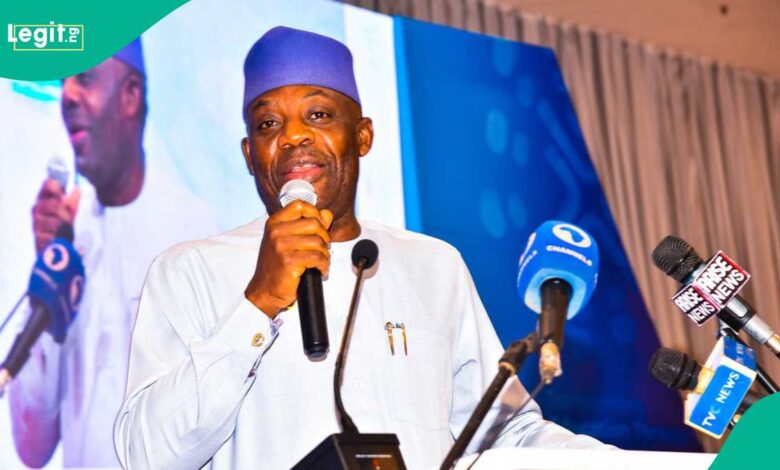
The Minister of Education, Dr. Tunji Alausa, and former Edo State Governor, Senator Adams Oshiomhole, have taken on opposition figures over the Tinubu administration’s education policies, defending its reforms on student financing, university funding and access to education.

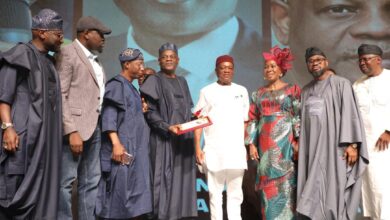
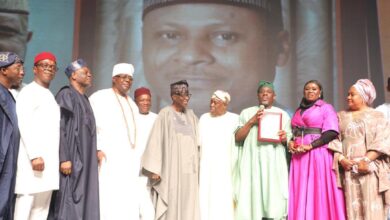
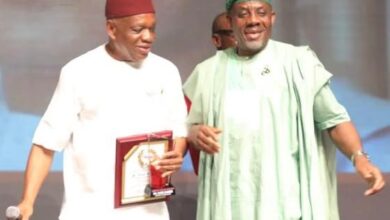
The two officials made their positions known on Monday during the unveiling of the Renewed Hope Education A–Z Scorecard at the All Progressives Congress (APC) Presidential Campaign Council headquarters in Abuja, where they defended the administration’s interventions ahead of the 2027 general election.
While Alausa challenged critics to examine the legal framework and benefits of the government’s interventions, Oshiomhole questioned the education policies associated with former Vice-President Atiku Abubakar and former presidential candidate Peter Obi.
Defending the administration’s student financing initiative, Alausa faulted Obi’s criticisms of the government’s education policies, accusing the former Anambra governor of misleading Nigerians over the funding arrangement for the Nigerian Education Loan Fund (NELFUND).
The minister explained that the 4% development levy introduced under the Nigeria Tax Act was designed to provide sustainable funding for the student loan scheme, with 15% of the proceeds allocated to NELFUND.
He insisted that the arrangement was provided for by law and challenged critics to examine the legislation before questioning the government’s approach.
Alausa said the administration’s interventions had expanded access to tertiary education through student loans, infrastructure development and improved funding, while efforts were ongoing to address academic staff shortages in universities and other higher institutions.
He disclosed that the government had also introduced a three-year renegotiation window for its agreement with the Academic Staff Union of Universities (ASUU) and other university-based unions.
According to him, the arrangement will allow both parties to review issues relating to staff welfare, remuneration and conditions of service every three years, with a view to resolving disagreements before they escalate into prolonged industrial disputes.
The minister further disclosed that guidelines had been developed to strengthen university governance, particularly in the appointment of vice-chancellors, while committees had been established to monitor compliance and address issues such as bullying in schools.
He said the government was also monitoring the implementation of recommendations made by previous education panels, adding that another cycle of reviews would not begin until outstanding recommendations had been implemented.
Alausa maintained that the administration was more interested in delivering tangible benefits to Nigerians than introducing policies without ensuring their implementation.
Oshiomhole, however, shifted the political confrontation to Atiku, questioning the former Vice-President’s position on education privatisation.
He argued that Nigeria could not afford an education privatisation agenda in a country where millions of children still lack access to basic education.
The senator recalled Atiku’s privatisation agenda while serving as Vice-President and challenged opposition politicians to explain whether they would retain or discontinue the current administration’s education policies if elected.
He also criticised what he described as proposals to use public resources to benefit private interests, arguing that such spending could undermine student grants and other support programmes.
“If the money he wishes to use to enrich his friends is not diverted to paying student grants, remember that resources are limited at any point in time. That is why economics is about priorities. What is given to those students will not be available to be used to assist friends,” he said.
Earlier, the Minister of State for Education, Prof. Suwaiba Ahmad, said the scorecard was designed to bring together the administration’s education policies, programmes and achievements in an accessible format for community engagement.
She said the document reflected the collective efforts of government agencies, education workers and development partners in advancing the sector.
Also speaking, the Special Adviser to the President on Policy and Coordination, Hadiza Usman, identified the Nigeria Education Sector Renewal Initiative (NESRI) and the DOTS framework as key drivers of interventions targeting education data, out-of-school children, teacher development and skills acquisition.
She said targeted programmes were helping to bring Almajiri children and girls into school and improve their retention.
The unveiling of the scorecard comes as the APC intensifies efforts to showcase President Bola Tinubu’s performance ahead of the 2027 general election, with education emerging as one of the major areas of political debate between the ruling party and opposition.