

President Bola Tinubu has applauded the
Nigeria Governors’ Forum (NGF) for endorsing the four Tax Reform Bills currently before the National Assembly.
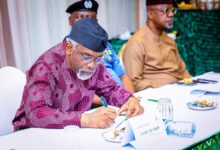
Tinubu’s commendation was contained in a statement on Friday by his Special Adviser on Information and Strategy, Bayo Onanuga.
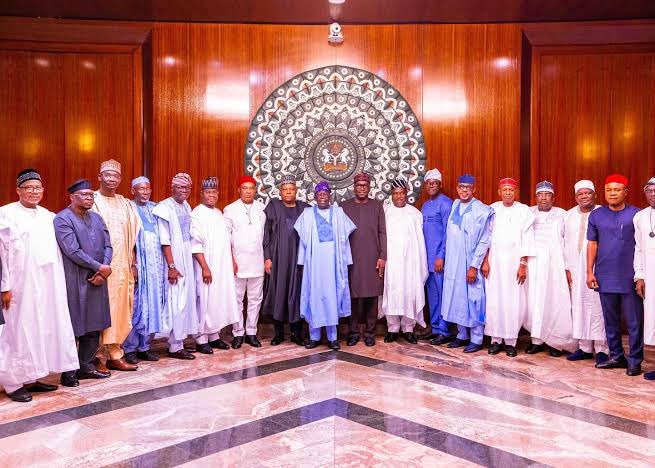
He hailed the governors for their bold leadership and commitment to fostering unity among leaders nationwide, transcending regional, ethnic, and political barriers to advance Nigeria’s development.
Onanuga said the Thursday’s productive consultation between the Nigeria Governors’ Forum and the Presidential Committee on Tax and Fiscal Policy was a commendable example of cooperation between the Federal and State governments.
He said, the President extended special commendations to the Chairman of the Governors’ Forum, Kwara State Governor Abdulrahman AbdulRazaq, for successfully galvanising support among his peers for these transformative tax bills to rejuvenate the national economy and enhance Nigeria’s investment climate.
Tinubu also commended the Progressive Governors Forum, the Northern Governors Forum, and all other groups that made the bipartisan resolution of the controversy stirred by the tax bills possible.
He underscores that the primary aim of the Tax Reform Bills, which is pro-poor, is to promote national interests, improve the competitiveness of Nigeria’s economy, and attract both local and foreign investments.
He said updating the country’s outdated tax laws is essential to this endeavour.
The President notes that the dialogue between the NGF and the Presidential Committee on Tax and Fiscal Policy Reform highlights the power of constructive conversation in resolving differences.
President Tinubu regards the governors as vital contributors to nation-building and affirms his commitment to partnering with them to promote economic growth, national harmony, peace, and stability.
He also encouraged other stakeholders with ideas and suggestions for refining the Tax Bills to engage with the ongoing legislative process at the National Assembly.
He urged the National Assembly to expedite the legislative process for these crucial bills so that the country can swiftly reap the benefits of the reforms.