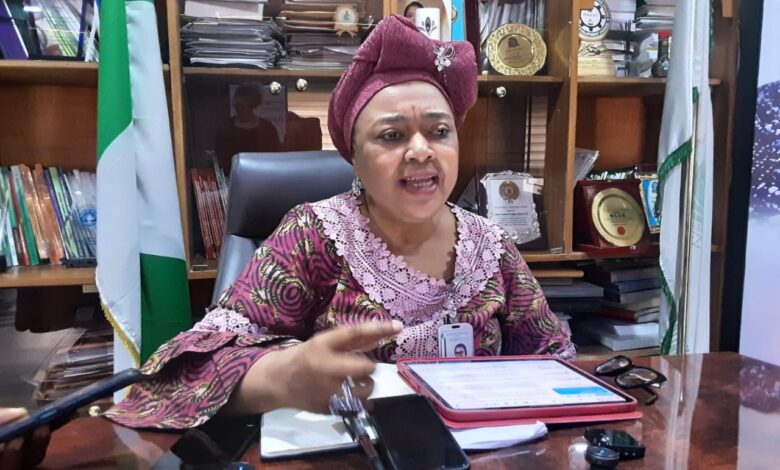


The Executive Secretary of the National Commission for Colleges of Education (NCCE), Dr. Angela Ajala, has described the dual mandate granted to Colleges of Education to award both the Nigeria Certificate in Education (NCE) and Bachelor of Education (B.Ed.) degrees as critical to the survival and transformation of teacher education in Nigeria.

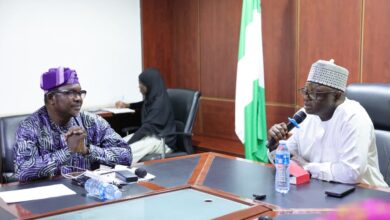
Speaking during an interview with the Association of Corporate Online Editors (ACOE) in Abuja, Ajala highlighted ongoing reforms aimed at improving teacher preparation and making the teaching profession more attractive to young Nigerians.
She said teacher education had experienced declining interest due to negative perceptions about the value of the NCE qualification, adding that the introduction of the dual mandate had provided a major boost to the sector.
The NCCE boss described the policy, signed into law by President Bola Tinubu in 2023, as a revolutionary decision that demonstrated the importance of teacher education to national development.
“Teacher education is at the centre of national development because every other profession sits on teacher education. If you don’t prepare your teachers well, you cannot expect to have excellent manpower,” she said.
Ajala commended the president for approving the policy and acknowledged the support of the Minister of Education, Dr. Tunji Alausa, in driving its implementation.
She explained that the commission had removed the NCE admission process from the Joint Admissions and Matriculation Board (JAMB) to eliminate barriers to access, stressing that JAMB was a placement examination and not an achievement examination.
On safeguards against declining academic standards, she said the NCCE had reviewed the curriculum in collaboration with the National Universities Commission (NUC), which oversees the degree component to ensure it meets the required academic standards.
She added that colleges must satisfy institutional readiness requirements covering infrastructure, staffing and resources before being allowed to operate the dual mandate.
Ajala disclosed that about 20 Colleges of Education were currently ready to commence degree programmes, while others would join in phases.
She explained that state and private colleges must obtain the necessary legal backing through their respective state Houses of Assembly before implementation.
Speaking on curriculum reforms, she said the commission had introduced a competency-based approach, comprising 70 per cent practical training and 30 per cent theory.
She noted that the revised curriculum had also introduced specialised areas in Computer Education, including Artificial Intelligence, robotics, data analytics, cybersecurity and coding.
According to her, the programme now incorporates skills certification to equip students with additional competencies and entrepreneurial opportunities.
She explained that the five-year programme comprises three years for the NCE and two years for the degree qualification, with skills acquisition integrated into the training process.
On the commission’s 2026–2031 strategic plan, Ajala said the NCCE was targeting the enrolment of at least 80 per cent of Colleges of Education into the dual mandate by 2031.
She identified staff training, institutional capacity building, partnerships and advocacy as key priorities, noting that government funding alone could not adequately finance the reforms.
She disclosed that the commission was collaborating with development partners, including the European Union, UNESCO and the British Council, while Oxford University was also supporting aspects of the reforms.
On monitoring, Ajala said the NCCE had established a Reform Delivery Unit to provide quarterly reports and was developing a digital dashboard to monitor activities in Colleges of Education nationwide in real time.
She said the system would strengthen transparency, accountability and timely intervention.
The NCCE boss said it was too early to determine whether the reforms had improved enrolment, as the current admission process had only commenced about two weeks earlier.
She, however, stressed that improving teacher education must remain a national priority.
“Nigeria cannot build a world-class education system with second-class attention to teacher education. If you miss it with teacher education, you miss it with Nigeria,” she said.