


The Federal Government has renewed its call for urgent action to end open defecation in Nigeria, disclosing that more than 40 million people still practise it, while an estimated N4 trillion is needed to make the country fully Open Defecation Free (ODF) by 2030.
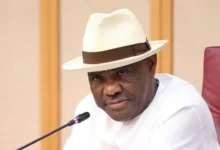
The Minister of Water Resources and Sanitation, Prof. Joseph Utsev, made the call on Tuesday in Abuja at the 2026 National Retreat on the Clean Nigeria Campaign, held at the Rockview Royale Hotel.
Speaking on the theme “Accelerating and Sustaining Progress: Financing, Data, and Systems for a Fully ODF Nigeria,” the minister said sanitation was fundamental to public health, human dignity, environmental protection and national development, and must remain a national priority.
The Clean Nigeria Campaign was launched in November 2019 to rally governments, partners and communities against open defecation. Since then, 185 Local Government Areas have attained ODF status, while Jigawa and Katsina States have achieved State-wide ODF status.
Minister Utsev said the figures show what political commitment, coordination and community participation can achieve, but warned that much work remains.
“We must accelerate progress in the LGAs yet to attain ODF status and ensure that communities which have achieved it do not slide back,” he said.
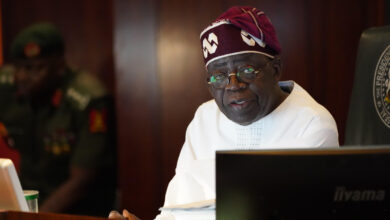
The minister also pointed to the recent signing by President Bola Tinubu of the Executive Order on Open Defecation Free Nigeria by 2030 and Other Related Matters, 2025.
He said the order strengthens the policy and institutional framework and provides a basis for improved coordination, clear responsibilities and accountability at all levels of government.
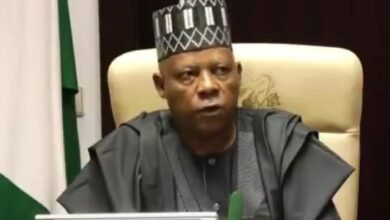
Vice President Kashim Shettima is expected to formally unveil the order at the World Toilet Day Celebration and 7th Anniversary of the Campaign on 19 November 2026.
Utsev urged States and relevant institutions to study its provisions and turn them into practical action.
The minister said progress would depend on three priorities: financing, data and institutional strengthening.
On financing, he said Federal, State and Local Governments must make deliberate budgetary provisions for sanitation, use resources effectively, explore innovative financing and encourage private sector participation.
“Sanitation must not depend solely on occasional interventions or development partner support,” he said.
On data, he stressed that reliable and timely information must guide planning, resource allocation and accountability, and asked States to ensure that information submitted through national monitoring platforms is accurate, complete and timely.
On institutional strengthening, he said the campaign must be built into the regular structures and programmes of State Governments and Local Government Areas, with clear responsibilities, effective coordination and regular monitoring.
He added that continued toilet use, proper maintenance of facilities and sustained government support are needed to prevent a return to open defecation.
Utsev expects every State to assess its performance, identify LGAs needing urgent attention and develop realistic acceleration roadmaps. States that have attained ODF status, he said, should share their experiences and outline how they will sustain the gains.
The Water, Sanitation and Hygiene (WASH) Manager at UNICEF Nigeria, Jolly Ann Maulit, said about 40 million Nigerians, roughly 23 per cent of the population, still practise open defecation.
The World Health Organisation (WHO) put the funding required to end the practice at N4 trillion.
The Director overseeing the Office of the Permanent Secretary, Engr. Ali Ibrahim Dallah, said the responsibility for achieving an ODF Nigeria cannot rest with the current government alone.
He called for stronger political and institutional coordination, and for interventions to be built into government policies, development plans and budgets.
The National Coordinator of the Clean Nigeria Campaign, Mrs. Chizoma Opara, said the campaign has national leadership backing, noting that the President has reaffirmed it by signing the 2030 executive order.
She said the same level of commitment is needed at State level. “Everyone must have access to sanitation and hygiene. Everyone must have access to the toilet,” she said.
Opara said the campaign’s strategy rests on six pillars and is led by the Office of the President, with States championing it locally.
She said the target is to have the country fully ODF by 2030, which would require strategic action, and she urged States to examine what is working and what is not.
According to her, the next stage for Jigawa and Katsina, the two ODF States, is to sustain their achievements and help others follow.
The FCT, meanwhile, is targeting ODF status by 2027 and has called for collaboration to meet the goal.
The retreat is expected to produce practical solutions and clear commitments from States as the country works toward the 2030 deadline.