

The Secretary to the Government of the Federation (SGF), Senator George Akume, has reiterated the country’s commitment to deepening economic ties with Japan, urging Japanese businesses to expand their footprint across key sectors of the Nigerian economy.

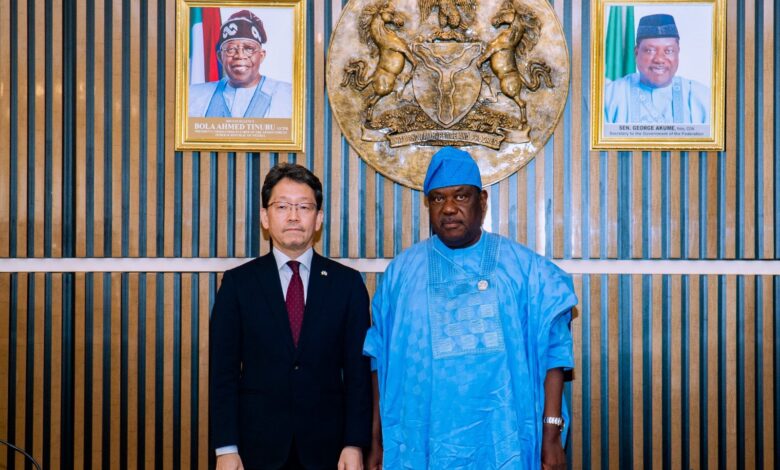
Akume made the call on Monday while hosting Japan’s Ambassador to Nigeria, His Excellency Suzuki Hideo, in Abuja.
He pointed to a series of economic reforms carried out under President Bola Tinubu’s administration, including efforts to ease the business environment, stabilise the macroeconomy, tighten foreign exchange management and attract foreign direct investment, as evidence that Nigeria is becoming a more attractive destination for overseas capital.
According to a statement by the Head of Information & Public Relations, Office of the Secretary to the Government of the Federation (OSGF), Chris Ugwuegbulam, the SGF observed that 57 Japanese companies are currently operating in Nigeria and expressed optimism that the number would increase significantly in view of the favourable investment climate created by the present administration.
“We encourage greater participation of Japanese investors in Nigeria. With the ongoing reforms and improved investment environment, Nigeria offers enormous opportunities for mutually beneficial partnerships. We look forward to seeing many more Japanese companies establishing operations in our country,” he said.
He commended the Government of Japan for its consistent support towards Nigeria’s socio-economic development through technical cooperation, infrastructure development, healthcare, agriculture, education, disaster management, humanitarian assistance and capacity-building programmes.
He also acknowledged the significant contributions of the Japan International Cooperation Agency (JICA) in financing and implementing critical infrastructure projects across Nigeria, noting that the partnership has continued to support national development objectives.
Highlighting emerging areas of collaboration, the SGF called for stronger cooperation in renewable energy, clean technology, energy efficiency, carbon reduction initiatives, climate resilience and environmental sustainability, stressing that Japan’s technological expertise would greatly support Nigeria’s energy transition agenda.
He further appealed for the expansion of Japanese scholarship programmes, technical training initiatives and knowledge transfer schemes, noting that such programmes have continued to build the capacity of Nigerian professionals and remain highly beneficial to the country’s growing youthful population of over 220 million people.
On security cooperation, Senator Akume appreciated Japan’s support for peace-building, humanitarian assistance and stabilisation efforts in Nigeria, particularly in the North-East, while expressing Nigeria’s desire to deepen collaboration in maritime security, counter-terrorism capacity building, cybersecurity, border management and disaster risk reduction.
The SGF also identified Nigeria’s solid minerals sector as a major investment destination, assuring Japanese Investors that reforms in the sector have provided a transparent and predictable legal framework capable of supporting long-term investments in strategic minerals critical to the global economy.
“We want Japanese businesses to take advantage of the vast opportunities in Nigeria’s solid minerals sector. The legal framework has been strengthened, the investment environment is improving, and we are committed to supporting genuine investors within the ambit of our laws,” he stated.
Earlier, the Japanese Ambassador to Nigeria, His Excellency Ambassador Suzuki Hideo, commended the bold economic and fiscal reforms being implemented by the administration of President Bola Ahmed Tinubu GCFR, noting that the measures were already yielding positive results.
He observed that the increase in Nigeria’s foreign exchange reserves, the stabilisation of the naira against major foreign currencies and the improved macroeconomic environment have enhanced investor confidence and created a more favourable climate for business.
The Ambassador further noted that the consistent improvement in Nigeria’s sovereign credit ratings by major international rating agencies reflects growing global confidence in the country’s economic direction.
He disclosed that these positive developments have been regularly communicated to the Government of Japan, particularly the Ministry of Foreign Affairs, as indicators of Nigeria’s improving investment landscape.
Speaking at the backdrop of the recent visit of the Chairman of the Policy Research Council of Japan’s Liberal Democratic Party (LDP), Mr. Takayuki Kobayashi to the SGF, Mr. Hideo disclosed that the Chairman briefed Japan’s Prime Minister and senior government officials on the importance of strengthening bilateral relations with Nigeria, particularly in the areas of trade and investment.
He added that the visit has generated renewed interest in Nigeria among Japanese PolicyMakers and the Private Sector, further reinforcing Japan’s commitment to expanding economic cooperation and fostering mutually beneficial partnerships with Nigeria.
While acknowledging that recent global energy and resource security concerns have heightened interest in Nigeria, Ambassador Suzuki stressed that Japan’s engagement with Nigeria is not driven by short-term considerations.
Rather, he affirmed that both the Japanese Government and the private sector are committed to building a long-term strategic partnership with Nigeria based on mutual trust, shared prosperity and sustainable economic development.
He reiterated Japan’s readiness to continue working closely with the Federal Government to strengthen bilateral cooperation, expand trade and investment, and promote initiatives that will deliver lasting benefits to the people of both countries.
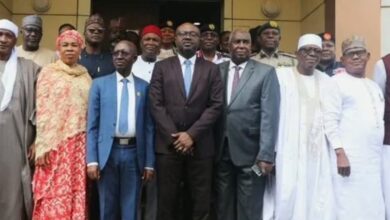
The courtesy visit was attended by five Permanent Secretaries (General Services Office, Political and Economic Affairs Office, Special Services Office, Ecological Project Office and Foreign Affairs) as well as some Directors in OSGF, Ministry of Foreign Affairs and officials from the Japanese Embassy.