


The Nigeria Police Force’s one-day sensitisation workshop on State Police may have been designed as an internal capacity-building exercise, but it also offered the clearest indication yet that Nigeria’s long-debated transition to state policing has entered its final stretch.

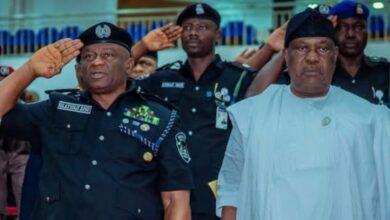
Declaring the workshop open in Abuja on Thursday, the Inspector-General of Police (IGP), Olatunji Rilwan Disu, reaffirmed the Force’s readiness to support the implementation of State Police where adopted, stressing that professionalism, accountability and operational excellence would remain central to the proposed policing model. More significantly, the Director-General of the Nigeria Institute of Police Studies (NIPS), Professor Olu Ogunshakin, disclosed that recommendations made by the Nigeria Police Force Steering Committee on State Police have already been incorporated into the proposed State Police Bill.
While the workshop reflected the Police Force’s determination to prepare its personnel for a new era of policing, it also underscored just how advanced the reform process has become. With the Presidential Working Group on State Policing expected to submit its draft bill to President Bola Tinubu next month, attention is gradually shifting from whether Nigeria should adopt State Police to whether the process of crafting the legislation has been sufficiently inclusive.
A Reform Years in the Making
Calls for State Police are not new. For decades, constitutional conferences, security summits, state governors, retired security chiefs and civil society organisations have argued that Nigeria’s centralised policing structure has become increasingly overwhelmed by the country’s complex security challenges.
The resurgence of terrorism, banditry, kidnapping, communal violence and organised crime has renewed demands for a policing model that is closer to the people and better equipped to respond to local security threats.
Responding to the growing consensus, President Tinubu endorsed the move towards State Police, leading to the establishment of the Presidential Working Group on State Policing. The committee was tasked with harmonising proposals from the Nigeria Governors’ Forum, the Nigeria Police Force, the Office of the National Security Adviser, the Federal Ministry of Justice and other stakeholders into a single legislative framework capable of supporting a decentralised policing system.
If current timelines are maintained, that draft should reach the President as early as September 3 before being transmitted to the National Assembly for constitutional consideration.
The Race Against Time
It is this timeline that has begun to generate fresh debate.
Few dispute that reforming Nigeria’s policing architecture has become necessary. However, policy analysts and governance advocates have questioned whether enough time remains to adequately capture the views of Nigerians before a draft of such constitutional significance is finalised.
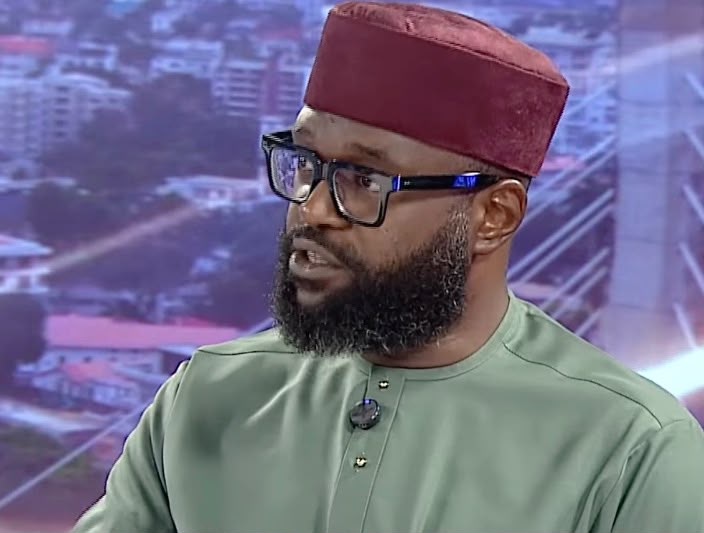
Dubem Moghalu, the Senior Special Assistant to the President on Planning and Research and Secretary of the Presidential Working Group on the National Policing Bill, speaking on Arise News’ The Morning Show on Wednesday, debunked the notion that state police reforms are being rushed, given the fact that the Group has roughly two weeks to articulate workable ideas from Nigerian citizens whose inputs will shape the bill through consultations before legislative consideration.
Unlike routine legislation, the proposed State Police Bill will reshape the country’s security governance for generations. It will determine how state police services are established, recruited, funded and supervised. It will define operational relationships between federal and state police formations, clarify investigative jurisdictions and establish safeguards against abuse of policing powers.
These are issues that extend far beyond government institutions.
Yet, as the Working Group enters what appears to be its final phase, questions are being asked about the breadth of consultations that have informed the draft.
Whose Voices Are Missing?
The Working Group has reportedly engaged government institutions, security agencies, constitutional experts and state governments in developing the framework. Those consultations are undoubtedly necessary.
However, many observers argue that reforms of this magnitude require participation that extends beyond official circles.
Should traditional rulers, community leaders, women groups, youth organisations, labour unions, faith-based organisations, professional bodies, civil society groups and community policing structures have a greater opportunity to contribute before the draft leaves the Working Group?
Should victims of terrorism, kidnapping and violent crime—those who stand to benefit most directly from any policing reform—also have a voice in shaping the legislation?
These questions do not necessarily suggest that consultations have been inadequate. Rather, they reflect concerns that the process may appear overly institutional for a reform whose success will ultimately depend on public trust and acceptance.

Moghalu had stated on the show that, “as much as we want it to be an all inclusive process, it cannot be an all comers affair”, adding that not everybody is going to have a contribution to make on the subject matter. He added that beyond that, if at theme of the two-week window, they don’t have the expected response from citizens to make the process a productive one, then perhaps there could be a conversation about extending the timeframe.
Police Already Preparing
The Nigeria Police Force appears determined not to be caught unprepared.
By establishing its Steering Committee and beginning sensitisation workshops across the Force, the Police leadership has demonstrated its willingness to contribute constructively to whatever policing framework eventually emerges.
That approach marks a notable departure from earlier years when conversations around State Police often appeared to pit advocates of decentralisation against the federal police establishment.
Today’s discussion appears less confrontational and more collaborative, with security institutions increasingly focusing on implementation rather than opposition.
Beyond the Draft Bill
The weeks ahead may prove decisive for one of Nigeria’s most ambitious governance reforms since the return to democratic rule.
The success of State Police will not ultimately be determined by the speed with which the draft bill reaches the President or even by its eventual passage through the National Assembly. It will depend on whether Nigerians believe the law reflects both the realities of the country’s security challenges and the aspirations of the people it is designed to protect.
The Police workshop demonstrated that key institutions are preparing for change. The greater challenge now lies with the Presidential Working Group.
As it puts the finishing touches to a bill that could redefine policing in Nigeria for decades to come, there remains a narrow but important opportunity to ensure that the legislation is not merely technically sound, but also enriched by the widest possible spectrum of Nigerian voices.