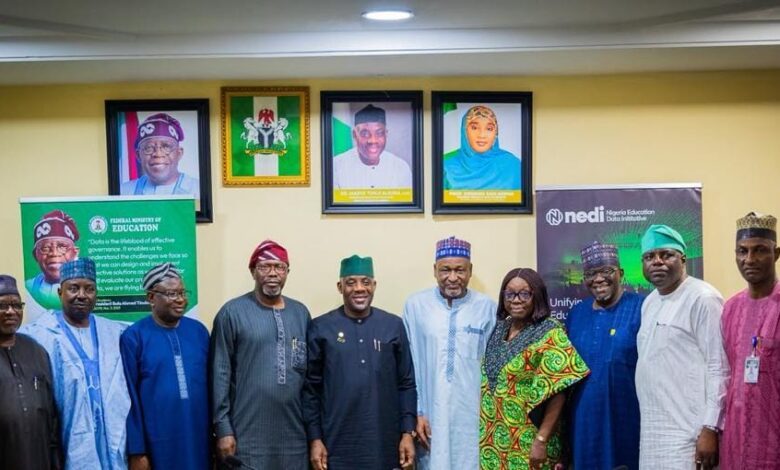


The Minister of Education, Dr. Tunji Alausa, has reaffirmed the Federal Government’s commitment to repositioning Technical and Vocational Education and Training (TVET) as the cornerstone of Nigeria’s industrialisation with the inauguration of the Governing Board of the National Board for Technical Education (NBTE).

Special Adviser to the Minister on Media and Communications, Ikharo Attah disclosed this in a statement on Thursday.
Inaugurating the Board in Abuja, Dr. Alausa described the occasion as another significant milestone in the implementation of President Bola Tinubu’s Renewed Hope Agenda, which places education and human capital development at the heart of Nigeria’s economic transformation.
He said the administration was deliberately shifting the nation’s education system from an overdependence on paper qualifications to producing competent, innovative and highly skilled graduates equipped to drive industrialisation, entrepreneurship and national productivity.
Congratulating the Chairman and members of the Board on their appointments, the Minister described their selection as a recognition of their professionalism, integrity and commitment to national service. He expressed confidence that the calibre of individuals appointed would provide the strategic leadership required to strengthen NBTE’s mandate, deepen reforms across the technical education sector and accelerate the Federal Government’s vision of building a globally competitive workforce capable of supporting industrial growth, innovation and sustainable economic development.
Dr. Alausa stressed that Technical and Vocational Education and Training was no longer an alternative pathway to university education but a strategic national priority. He noted that no nation can achieve meaningful industrialisation without a strong base of technicians, technologists, artisans, fabricators, automation specialists, machine operators and other skilled professionals.
According to him, the Federal Government has therefore prioritised the sector through sustained investments and reforms aimed at bridging the long-standing gap between education and industry while equipping learners in technical colleges, polytechnics, colleges of education and universities with practical, lifelong skills for employment, entrepreneurship and global competitiveness.
The Minister outlined four key priorities for the newly inaugurated Governing Board. He charged members to provide strategic leadership, sound policy direction and effective oversight while maintaining a clear distinction between governance and management by allowing the Executive Secretary and Management Team to handle the day-to-day administration of the Board.
He also directed the Board to accelerate the implementation of the Recognition of Prior Learning (RPL) framework in collaboration with the Industrial Training Fund and other stakeholders to formally recognise and certify the competencies of skilled artisans across the country under the National Skills Qualification Framework. He explained that the initiative would enhance employability, expand access to finance, create opportunities for government contracts and strengthen labour mobility within the ECOWAS region.
On curriculum reform, Dr. Alausa called for comprehensive modernisation through Outcome Based Education, with programmes reflecting the realities of Industry 4.0 by integrating digital technologies, automation, artificial intelligence, green technologies, advanced manufacturing systems and other emerging competencies. He urged institutions under NBTE’s regulatory oversight to strengthen their focus on applied sciences, engineering, technology and innovation while encouraging polytechnics to gradually phase out non-technical programmes outside their statutory mandate.
The Minister further underscored the importance of fiscal discipline, transparency and accountability, directing the Board to ensure that public resources, capital projects, intervention funds, research initiatives and institutional investments translate into measurable improvements in skills acquisition, institutional performance, youth employment and national productivity.
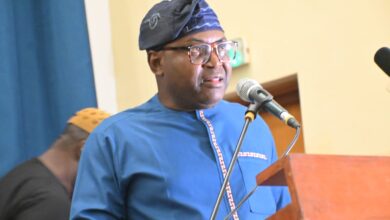
Responding on behalf of the Governing Board, its Chairman, Professor Babatunde Salako, expressed appreciation to President Bola Ahmed Tinubu and the Honourable Minister of Education for the confidence reposed in the Board. He described the inauguration as the beginning of a new chapter for technical education in Nigeria and commended Dr. Alausa for assembling a team of accomplished professionals with the expertise and commitment required to reposition the sector.
He pledged the Board’s unwavering support for the Renewed Hope Agenda and the Minister’s reform initiatives, assuring that members would work diligently to expand opportunities for young Nigerians to acquire relevant technical skills, promote innovation and nurture a new generation of entrepreneurs and job creators.
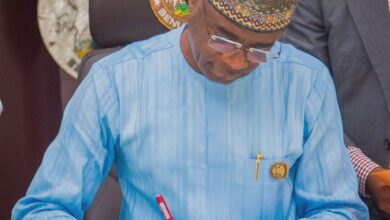
Formally inaugurating the Governing Board on behalf of President Bola Tinubu, Dr. Alausa wished the Chairman and members a successful tenure marked by wisdom, integrity and purposeful service. He reminded them that their appointments represent a solemn call to national service and that the future of Nigeria’s technical education system, as well as a significant part of the country’s economic competitiveness, depends on their vision, commitment and leadership.