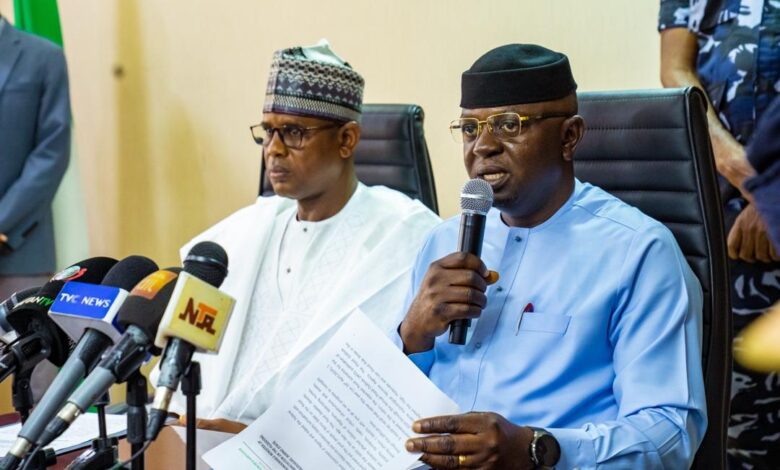


Worried by the devastating effect of flooding across the country, the federal government has advised states in the South to step up proactive measures to address any eventual flooding events.

Minister of Water Resources and Sanitation, Prof. Joseph Utsev, gave the advice on Friday in Abuja while giving an update on the flooding situation in Maiduguri, the Borno State Capital.
Data from the National Emergency Management Agency (NEMA) shows that about 414,000 were displaced by the Tuesday’s devastating flooding in Maiduguri.
The NEMA records also show that 37 people died, while about 58 people sustained injuries, in addition to the destruction to homes, property, farmlands, roads, and other critical infrastructure.
Speaking, Prof. Utsev announced that “as we mourn the losses in Borno, Yobe, Jigawa, Bauchi, and other states affected by flooding, the attention of Nigerians is hereby drawn to the probable river flooding on rivers Niger and Benue and some of their tributaries.
“The daily flow on these rivers indicates a significant increase in flow levels tending towards RED alert. This warning means that a large volume of water is moving through our rivers down to the delta region.
“Therefore, we should increase vigilance on all ramifications and step up proactive measures to address any eventual flooding events in the southern part of the country,” he said.
The Minister, however, clarified that the destructive floods in Borno State were not caused by Alau Dam as was erroneously reported, saying, “There is no collapse of Alau Dam.
“This flood disaster that affected Maiduguri and Jere areas of Borno State was largely due to overflow of water from Alau Dam, which is about 10 kilometres from Maiduguri city centre, owing to massive inflow from the Ngadda River, a major tributary of the River Yedzaram.
“It was one of the dykes that could not hold the excess water that comes from this tributary that overflows the dam. Our technical teams are on ground, and we are working on things to see how we can upgrade this dam.
He explained that “in the inception of this administration, when we came on board, we sent our team round the country to assess all the already existing dams in Nigeria; Alau Dam was one of them, and we looked at it that it was important for us to activate the dam, so we gave a contract for a study and design for the rehabilitation of that dam. So as we are talking, they are working on that.
“The Minister of State, Rt. Hon. Bello Mohammad Goronyo, and I have visited Maiduguri with Heads of Agencies and Parastatals in my Ministry to express solidarity with the Governor, Borno State, and to assess the extent of devastation caused by the flood,” he said.
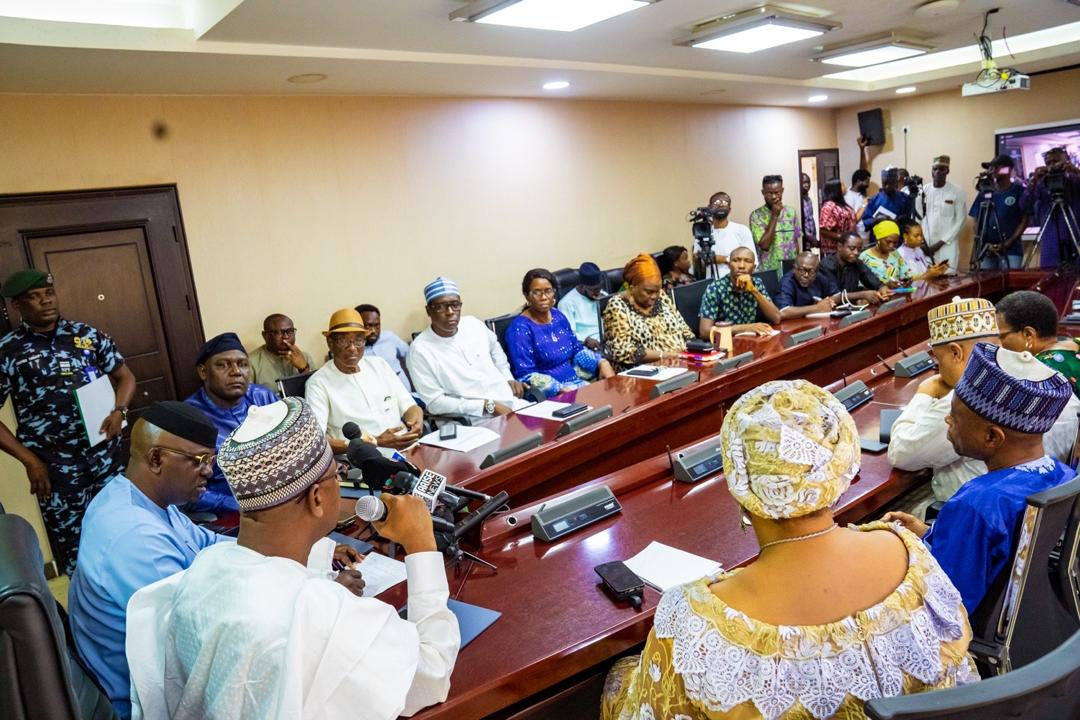
Prof. Utsev disclosed that a team of technical experts from the Ministry, the National Water Resources Institute (NWRI), and the Nigeria Hydrological Services Agency (NIHSA), including the Chad Basin Development Authority, are physically on ground to assess the situation in Alau Dam and the extent of the flood disaster and come up with useful findings and recommendations.
“Reports of similar visits (in Bauchi, Sokoto, and Kebbi States) have been produced, and action is being taken,” he said.
Utsev recalled that earlier this year (on 16th April, 2024), he disseminated to the nation the expected flood scenarios for the year 2024 through the Annual Flood Outlook (AFO) publication of the Nigeria Hydrological Services Agency.
He said the Flood Outlook highlighted the high, moderate, and low flood risk areas in the country, adding that Borno, Bauchi, Jigawa, Taraba, Yobe, Benue, Gombe, and many other states were among the 31 states listed as high flood risk areas.
While sympathising with the government and the good people of Borno State on the flood disaster, the Minister warned the residents to be mindful of the water they drink as it may have been contaminated, so as to avoid further outbreaks of waterborne and communicable diseases.