

The Minister of State for Health and Social Welfare, Dr. Iziaq Salako on Monday unveiled two key documents to ensure standardization, safety, and quality assurance for traditional medicines in the country.
Head, Information and Public Relations of the Ministry, Alaba Balogun disclosed this in a statement on Tuesday.
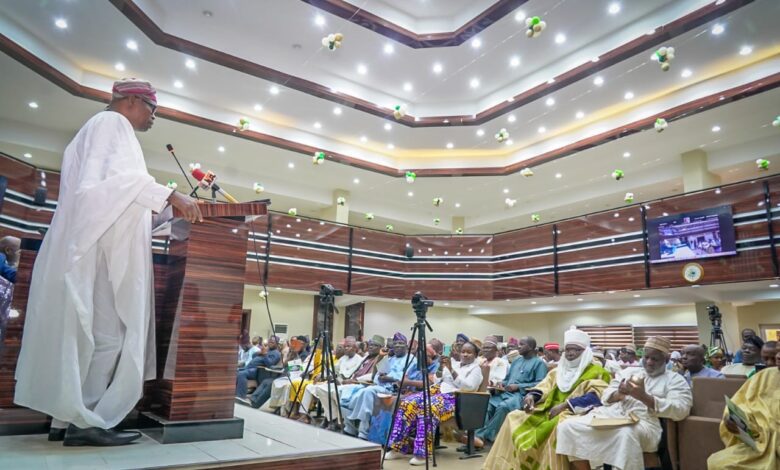
Speaking at the commemoration of the 2025 African Traditional Medicine Day in Abuja on Monday, the Minister of State for Health and Social Welfare, Dr. Salako, said the government was committed to transforming traditional medicine into a “reliable and respected part” of the nation’s health architecture under President Bola Ahmed Tinubu’s administration.
He unveiled two key documents — the Strategic Plan of Action for the Implementation of the Traditional Medicine Policy and the Code of Ethics and Practice for Traditional Medicine Practitioners — describing them as “roadmaps” for policy implementers and practitioners to ensure standardization, safety, and quality assurance.
“Evidence is the bridge between belief and policy. Our goal is to document, standardize, and integrate evidence-based traditional medicine into Nigeria’s national health system, creating opportunities for job creation, local manufacturing, and improved healthcare access”, he said.
Salako outlined several government-led initiatives to strengthen traditional medicine, including the creation of the Department of Traditional, Complementary and Alternative Medicine (TCAM) at the Ministry of Health, Development of the Traditional Medicine Policy for Nigeria and the Nigerian Herbal Pharmacopoeia, which documents over 200 medicinal plants and their uses amongst others.
Salako stressed that Nigeria’s approach to traditional medicine aims to leverage indigenous knowledge for Universal Health Coverage (UHC) and economic development while ensuring ethical research, fair benefit-sharing, and respect for intellectual property rights of local communities.
Citing lessons from the COVID-19 pandemic, Salako called for Africa to position traditional medicine on the global stage, with scientific evidence as its “passport.”
“Traditional medicine and modern medicine are not rivals but alllies. Nigeria is ready to lead Africa in advancing evidence-based indigenous health solutions”, he said.
The minister urged traditional healers, researchers, policymakers, and the private sector to collaborate in documenting, standardizing, and commercializing Nigeria’s phytomedicine resources to attract global recognition and investment.
Speaking earlier, the Permanent Secretary, Daju Kachollom represented by her Technical Assistant Dr. Dogara Okara; emphasized that this year’s theme resonates with the strategic vision of the Federal Ministry of Health & Social Welfare, as it underscored the urgent need to integrate scientific research and empirical validation into our rich and diverse traditional medicine practice.
“Today, we are proud to unveil the Code of Ethics and Practice for Traditional Medicine, which will serve as a guiding framework for professional conduct. This code is designed to uphold the highest standards of integrity, accountability and, patient- standard care among practitioners”, she said.
Delivering goodwill remarks, WHO representative, Dr. Hamzat Omotayo conveyed a message from the WHO Regional Director for Africa, urging member states to strengthen evidence-based practices and regulatory frameworks for traditional medicine.
“For many people in the African region, traditional medicine remains a cornerstone of healthcare. Every year since August 31, 2003, African Traditional Medicine Day has served as a reminder of the vital role traditional medicine plays in the lives of millions across our continent”, he said.