
The Federal Government says it has secured a £746 million financing agreement with the United Kingdom to overhaul Nigeria’s two busiest seaports, Apapa and Tin Can Island.

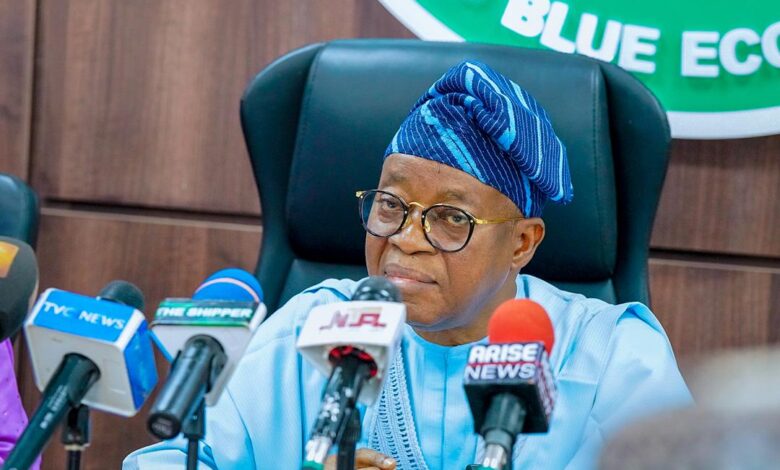
Minister of Marine and Blue Economy, Adegboyega Oyetola, who announced the deal on Tuesday, said it would transform the country’s maritime infrastructure and boost its global competitiveness.
The funding, backed by UK Export Finance, will support a comprehensive upgrade of the Lagos Port Complex Apapa and Tin Can Island Port Complex facilities that handle over 70 per cent of Nigeria’s import and export traffic.
The agreement is expected to be formally signed during the state visit of President Bola Ahmed Tinubu to London on March 18–19, marking a significant step in Nigeria-UK economic relations.
Describing the project as “a defining moment,” Oyetola said the initiative would go beyond routine upgrades to deliver a full-scale transformation of port operations.
“For decades, these ports have carried the burden of national trade without matching infrastructure development. This project will align our port system with global best practices and position Nigeria as a key maritime hub in West and Central Africa,” he said.
Originally established in 1913, Apapa Port remains Nigeria’s oldest and busiest seaport, while Tin Can Island Port, commissioned in 1977, was built to complement its operations. Both facilities have struggled with congestion, outdated equipment and inefficiencies for years.
According to the minister, the modernisation programme will introduce advanced cargo-handling systems, expand port capacity and deploy digital platforms to replace manual processes.
These changes are expected to significantly reduce vessel turnaround time and cargo dwell time.
Minister Oyetola in a statement by his Special Adviser, Dr Bolaji Akinola added that improved efficiency would lower logistics costs, ease trade flows and enhance transparency across the maritime sector.
“Modern infrastructure and automation will reduce bottlenecks, speed up cargo clearance and improve revenue generation,” Oyetola said.
The government also expects the project to attract increased shipping traffic and strengthen Nigeria’s role as a regional trade gateway, while boosting investor confidence in the maritime sector.