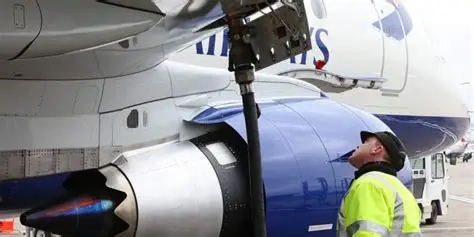
ANALYSIS: Evaluating The Impact Of Aviation Fuel Crisis On Nigeria’s Non-Flying Public
By Stella Enenche


There is no doubt that the undiscerning public in Nigeria do not recognise the Jet A1 aviation fuel crisis, which they consider an industry-specific problem affecting only airlines and wealthy travellers. To the non-flying category of the public, “let them stew in their juice”.

A closer examination, however, shows that the crisis reflects deeper structural weaknesses in Nigeria’s economy in general, and the transport system in particular. These weaknesses have a reverberatory effect on ordinary citizens, including those who may never step inside an airport.
To be sure, Jet A1 fuel is the lifeblood of aviation operations. Once supply becomes unstable or prices spike, airlines immediately face increased operational costs. In Nigeria, where aviation fuel can account for up to 40 percent of airline operating expenses, the impact is swift and severe. Airlines either increase fares, reduce flights, or operate at a loss.
However, the wider implication lies in how aviation intersects with national productivity, trade, security, healthcare, and mobility.
AVIATION NO LONGER A LUXURY
Aviation in Nigeria is no longer a luxury sector alone. In many developed countries, air travel is largely optional because efficient rail systems and safe highways provide alternatives. Nigeria does not have that advantage.
Poor road infrastructure, insecurity along major highways, and the absence of functional interstate rail connectivity have elevated aviation from a luxury service to an economic necessity for businesses, government agencies, medical personnel, and time-sensitive logistics.
This means disruptions in aviation affect more than passengers. They affect the speed of commerce itself.
When flights are delayed, reduced, or cancelled because airlines cannot sustain fuel costs, economic activities slow down. Executives miss business opportunities. Critical cargo arrives late. Technical personnel cannot move quickly between states. Medical evacuations become harder. Supply chains weaken.
Even Nigerians who travel exclusively by road eventually absorb these costs through rising prices of goods and services.
THE INFLATION EFFECT
Domestic airfares in Nigeria have steadily moved beyond the reach of average-income earners. The Jet A1 crisis threatens to push them further into exclusivity.
At first glance, higher ticket prices may appear irrelevant to low-income citizens. But aviation plays a hidden role in determining the cost structure of many businesses.
Manufacturers move spare parts by air. Banks move personnel rapidly across regions. Pharmaceutical products often depend on quick delivery systems. Agricultural exporters use aviation logistics. Media organisations, security agencies, and multinational firms rely heavily on air mobility.
When transport costs rise sharply, businesses transfer those costs to consumers. Inflation spreads beyond aviation.
This explains why the Jet A1 crisis is indirectly linked to broader cost-of-living pressures already confronting Nigerians.
WHAT AIRLINES AND STAKEHOLDERS ARE SAYING
Industry operators have repeatedly warned that the aviation sector is approaching a dangerous financial threshold.
The National Association of Aircraft Pilots and Engineers (NAAPE) recently warned that persistent aviation fuel scarcity and high costs could threaten flight operations, trigger route cuts, and lead to job losses across the industry.
Airlines argue that operating conditions have become increasingly unsustainable due to high foreign exchange exposure, multiple taxation, aging infrastructure, and rising maintenance costs.
Some operators say the volatility of Jet A1 pricing makes business planning almost impossible, especially for local carriers already battling low profit margins.
Aviation unions and stakeholders have also expressed concerns that prolonged instability in fuel supply could weaken investor confidence in the sector and discourage expansion plans.
Airport-dependent businesses — including hotels, logistics operators, travel agencies, and ground handling companies — also face declining revenues whenever flight frequencies drop.
GOVERNMENT INTERVENTION EFFORTS
The Nigerian government has acknowledged the strategic importance of stabilising aviation fuel supply.
Authorities have held engagements with fuel marketers, airline operators, and refinery stakeholders to address supply bottlenecks and pricing concerns.
The Federal Government has also repeatedly emphasized its push toward local refining as a long-term solution to Nigeria’s dependence on imported petroleum products, including aviation fuel.
Industry observers believe the success of domestic refining projects could significantly reduce pressure on airlines if local supply becomes stable and competitively priced.
There have also been discussions around improving access to foreign exchange for critical aviation operations and reviewing multiple charges imposed on airlines.
However, many stakeholders argue that interventions have not yet translated into meaningful relief for operators or passengers.
WHAT DANGOTE REFINERY IS SAYING
The emergence of the Dangote Refinery has generated expectations that Nigeria may eventually overcome recurring fuel supply disruptions.
Officials linked to the refinery have repeatedly stated that increased domestic refining capacity should help reduce dependence on imported petroleum products and stabilize supply across sectors, including aviation.
Industry analysts believe that if Jet A1 production from local refineries becomes fully operational and efficiently distributed, airlines could benefit from shorter supply chains, reduced logistics costs, and less exposure to foreign exchange volatility.
However, some experts caution that refining alone may not immediately solve pricing challenges unless broader issues such as exchange rates, transportation infrastructure, market competition, and distribution networks are also addressed.
WHAT NIGERINS ARE SAYING
Among ordinary Nigerians, frustration continues to grow over rising transportation costs generally.
Many citizens increasingly view domestic air travel as inaccessible, with some business travelers already cutting down trips or shifting back to road transportation despite security concerns.
Others worry that continued increases in airfare will worsen economic hardship by contributing to higher prices for food, pharmaceuticals, and other goods indirectly linked to air logistics.
On social media and public platforms, some Nigerians have questioned how a major oil-producing country continues to struggle with fuel supply challenges across multiple sectors.
There is also growing public concern that recurring energy crises reflect deeper governance and infrastructure failures that continue to undermine economic stability.
THE SECURITY DIMENSION
One overlooked consequence of expensive or unavailable flights is increased dependence on
road travel.
Many Nigerians choose air travel not for luxury, but for safety and time efficiency. If fares continue to rise beyond affordability, more travelers may return to highways plagued by banditry, kidnapping, armed robbery, and poor road conditions.
In this sense, the Jet A1 crisis is not only an economic issue but also a social and security concern.
THE BIGGER NATIONAL PROBLEM
Perhaps the greatest irony is that Nigeria remains a major crude oil producer while still struggling with aviation fuel supply instability.
The recurring Jet A1 crisis exposes the country’s weak refining capacity and dependence on importation. Exchange rate volatility, logistics bottlenecks, and global oil market fluctuations continue to shape domestic aviation costs.
Until local refining becomes more reliable and energy infrastructure improves, the aviation sector will remain vulnerable to repeated disruptions.
The Jet A1 crisis is ultimately a mirror reflecting larger national challenges: infrastructure deficits, energy insecurity, weak transport alternatives, inflationary pressure, and economic fragility.
For ordinary Nigerians, the danger is not simply higher airfares. It is the possibility that a struggling aviation sector could worsen inflation, reduce mobility, threaten jobs, and slow economic activity nationwide.
In a country where transportation already consumes a growing share of household income, instability in aviation fuel supply becomes more than an industry problem. It becomes a national economic concern.