SPECIAL REPORT: Assessing Nigeria’s Costly War Against Power Infrastructure Vandalism
By Sunday Etuka


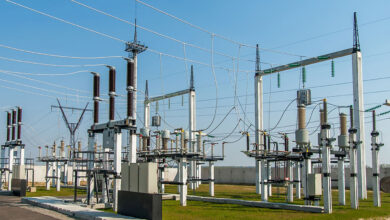
Across Nigeria’s rural landscapes, towering steel structures that carry electricity to millions of homes and businesses have become targets of a persistent and costly menace: infrastructure vandalism.

From dismantled transmission towers to armed raids on substations, the attacks are draining public resources, deepening power shortages , and testing the resolve of officials tasked with protecting the national grid.
Data from the Transmission Company of Nigeria (TCN) paints a troubling picture of a crisis that has evolved over several years. TCN has disclosed that it recorded no fewer than 276 cases of transmission tower vandalism across the country between 2022 and 2025, according to figures released by the company’s Lagos Region management during a community sensitisation event in Ogun State.
The damage has not been limited to isolated incidents. Data from TCN also showed that between January and November 2024, vandals and bandits destroyed 128 transmission towers nationwide, and the trend continued in 2025, with 42 vandalism incidents recorded in the first half of the year alone, affecting a total of 178 transmission towers across the country. Separately, TCN recorded 131 cases of infrastructure vandalism across its network between January and November 2025.
The financial toll has been steep. Available records show that the Federal Government spent about N8.8 billion repairing vandalised transmission towers across the country -a figure that underscores how vandalism translates directly into public expenditure that would otherwise fund expansion or maintenance of the grid.
BEYOND VANDALISM: ARMED ATTACKS ON SUBSTATIONS
The threat has escalated in some cases from opportunistic scavenging to armed criminality. In May 2026, TCN reported an incident of robbery at the Ogbomosho Transmission Substation and the Offa 133kV Transmission Substation in Osogbo Region, which led to the declaration of force Majeure on the facility.
According to the company, the station was invaded by armed men who forcefully gained access to the control room and held all personnel on duty hostage at gunpoint.
TCN’s account of the incident detailed the extent of the sabotage: the attackers ordered the operator on duty to open both the Offa and Ojoku 33kV feeders at exactly 12:45 a.m. on Thursday, 7th May 2026, and further demanded a total shutdown of the substation, during which control switches and relay buttons were tempered with, and the 40 MVA transformer was opened at approximately 1:07 a.m.
Such incidents are not confined to one region. In June 2026, power supply was disrupted in parts of Nigeria after vandals destroyed six transmission towers on the critical Apir-Lafia transmission line in Nasarawa State, forcing TCN to reroute supply through the Lafia -Jos Transmission line as a temporary measure to minimise the impact of the outage on affected electricity customers within the franchise areas of Abuja Electricity Distribution Company (AEDC) and Jos Electricity Distribution Company (JEDC).
Officials note that vandalisation of critical infrastructure remains one of the major challenges facing Nigeria’s power sector, contributing significantly to outages, supply disruptions and mounting repair costs, with similar incidents also common in the telecommunications and oil and gas sectors.
SIGNS OF PROGRESS
Amid the grim statistics, TCN officials say community engagement is beginning to yield results. Speaking in Ogun State, the General Manager, Transmission, Lagos Region, Engr. Adeshina Adeonipekun, said vandalism cases have been minimised to about 40 in 2026, down sharply from the 276 recorded between 2022 and 2025, crediting the improvements to the support of communities and the proactiveness of TCN staff.
He explained that the company has put measures in place, including yearly sensitisation programmes held at different locations to curb vandalism, enabling collaboration with host communities to safeguard infrastructure.
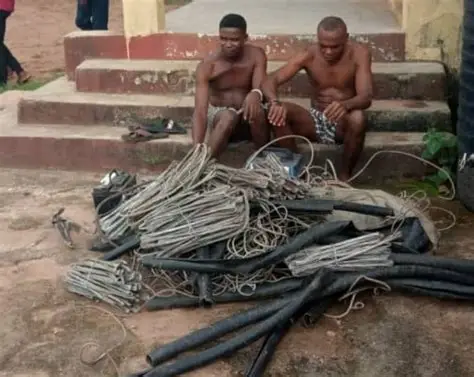
Community vigilance also produced tangible results in some areas. In Ebonyi State, local vigilantes and youths in Ezza Umuhuali apprehended two suspected vandals accused of removing transmission tower members from critical installations along the Nkalagu-Abakaliki line in May 2026 -an arrest that residents said underscored the growing importance of community participation in safeguarding public assets.
GOVERNMENT AND INSTITUTIONAL RESPONSE
The Federal Government has moved to formalise security cooperation around power infrastructure. In a significant policy step, the Federal Ministry of Power entered into a partnership deal with the Nigeria Police Force (NPF) to establish a dedicated Joint Task Force to protect critical power assets across the country. The pact was reached during a courtesy visit by the Minister of Power, Joseph Tegbe, to the Inspector-General of Police, Tunji Disu, at the Force Headquarters in Abuja.
TCN has also widened its security partnerships at the state level. In Edo State, TCN, the Nigeria Security and Civil Defence Corps (NSCDC), telecommunications operators, and other critical infrastructure stakeholders strengthened collaboration to protect power transmission facilities and fibre optic infrastructure from vandalism and and accidental damage, following a strategic engagement convened by the NSCDC’s Edo State Command in Benin City.
TCN’s public education campaigns have expanded to address not only outright vandalism but also encroachment. In Ogun State, officials warned residents against vandalism of electricity infrastructure and the dangers of erecting buildings under high-tension power lines, noting that transmission facilities located in rural communities remain vulnerable to vandalism and illegal activities. On the legal front, TCN officials have stressed that offenders risk prosecution if apprehended, describing vandalism as a very serious offence.
In Enugu State, the company has gone further, moving to enforce safety clearances along its Rights-of-Way. TCN reiterated that approved safety clearances for transmission lines are 50 metres for 330kV lines (25 metres on each side) and 30 metres for 132kV lines (15 metres on each side) , stressing that strict adherence remains essential for reliable power delivery and the safety of host communities, after removing illegal structures encroaching on its transmission line rights-of-way in the state.
A CONTINUING CHALLENGE
Despite these interventions, officials concede that vandalism remains a stubborn, evolving threat that stretches across virtually every region of the country -from the South-West and South-South to the Middle Belt states of Nasarawa and Benue. TCN has described infrastructure vandalism as one of the most persistent threats to the stability of Nigeria’s power transmission system, an assessment borne out by the recurring incidents recorded through 2026.
For a country still grappling with epileptic power supply and an ambitious electricity expansion agenda, the battle against vandalism has become as much a test of security coordination and community buy-in as it is one of engineering resilience. The emerging model -combining sensitisation campaigns, community vigilance, joint security task forces, and stiffer legal consequences -suggests officials are betting that partnership, not enforcement alone, will ultimately determine whether Nigeria’s transmission lines can be kept standing.