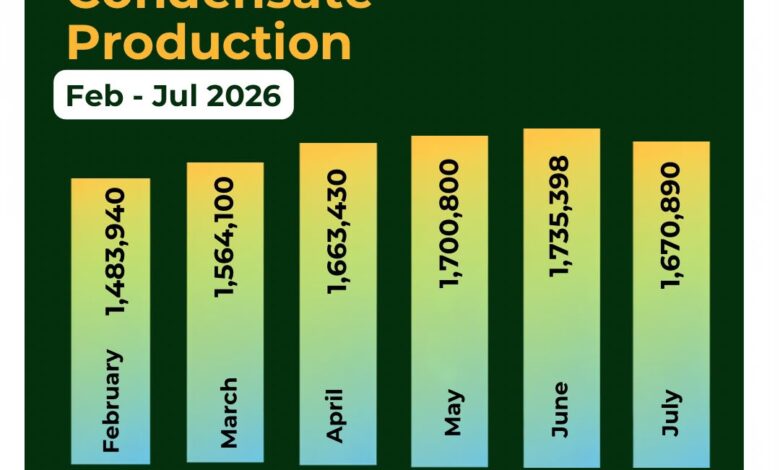


Nigeria has met and exceeded its OPEC quota of 1.5mbpd for the third consecutive month, as crude oil output surged 1.67 million barrels per day (mbpd) in July 2026.
In the latest statistics released on Wednesday by the Nigerian Upstream Petroleum Regulatory Commission (NUPRC), the country produced 1.505mbpd of crude oil and 0.17mbpd of condensate, bringing the combined daily production to 1.67mbpd.
In the month under review, the daily peak production of crude oil and condensate was 1.78mbpd while the lowest daily production was 1.57mbpd.
A breakdown of the daily average crude oil and condensate production by terminals/streams during the review month shows that Forcados Terminal accounted for 322.34kbpd while Bonny Terminal accounted for 303.72kbpd while Qua Iboe Terminal recorded an average production of 158.02kbpd of crude oil and condensates while Escravos Oil Terminal posted a daily average of 131.41kbpd.
Bonga ranked as the fifth highest producing terminal, recording an average of 100.23kbpd of crude oil.
Although Nigeria met its OPEC quota in the month of July, the statistics show that on a month-on-month basis, production fell by 4%.
The NUPRC, in a statement by its Head of Media and Corporate Communications, Eniola Akinkuotu, attributed the decline in production to operational challenges experienced at the Erha and Akpo fields, which impacted production output during the period under review.
The statement explained that these disruptions constrained production volumes and contributed significantly to the overall reduction in national crude oil output.
It said despite the challenges encountered, production operations across other producing assets remained relatively stable, with operators implementing measures aimed at maintaining production efficiency and minimizing the impact of operational constraints.
“Routine production activities and crude evacuation operations were largely sustained across the sector,” the statement read. “Industry stakeholders remain focused on addressing the identified operational issues, restoring affected production capacity and strengthening asset reliability to support improved performance in subsequent months.”
The Commission said the July outcome underscored the importance of proactive asset management, operational resilience, and timely intervention in mitigating production disruptions within the Nigerian upstream petroleum industry.