

Nigerians are crediting the Dangote Petroleum Refinery with ending one of the country’s most familiar frustrations: the long fuel queue.
As the facility marks 727 days since it began producing Premium Motor Spirit (petrol), social media users have flooded X with accounts of how local refining has changed everyday life at the pump.
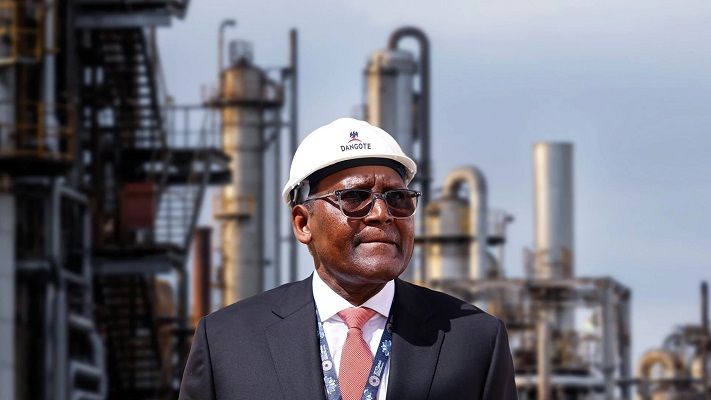
The reflections, shared under the hashtag #DangoteRefineryImpact, followed the anniversary of an announcement by Aliko Dangote, President and Chief Executive of Dangote Industries Limited, that PMS production had commenced at the refinery.
The milestone prompted Nigerians to look back on the refinery’s effect on fuel supply, local refining capacity, distribution and the wider economy.
The discussion opened with a question from user @AgbaKobz, who asked when other Nigerians had last queued for petrol. Responses poured in from people recalling years when hours-long waits at filling stations were routine.
User @Tobenna21s said local refining had changed how the country thinks about fuel supply, while @Sirr_Pele recalled a time when fuel queues were considered an unremarkable part of daily life and described their disappearance as a shift worth noting.
Several contributors linked the change to reduced reliance on imported fuel. @Utdalexandro said Nigeria was no longer solely dependent on imports to meet domestic demand, pointing to the refinery’s output of petrol, diesel and aviation fuel as evidence, and noted the effects were being felt across filling stations, transport networks and aviation.
@Fabulous_Jr made a similar case, arguing that producing fuel locally at scale reduces Nigeria’s exposure to disruptions at foreign refineries and international terminals.
Others focused on the economic value of local refining. Labibah Musa said Nigeria’s challenge had never been a shortage of crude oil but rather a limited capacity to refine it, meaning more value could now stay within the country as litres are processed domestically.
Bukola Babe and @R_GentleSoul argued that a refinery of this scale generates activity well beyond fuel output, supporting transportation, marine services, engineering, maintenance and security, and creating opportunities for contractors and logistics providers.
The conversation also touched aviation and cooking gas. @ninawinerr said locally produced jet fuel gives Nigeria’s aviation sector an added domestic supply source, while @Bigorx_ pointed to Liquefied Petroleum Gas as an important part of the country’s shift toward cleaner cooking energy.
On distribution, @consciencehub1 highlighted the refinery’s nationwide network, reportedly reaching cities including Lagos, Abuja, Kano, Kaduna, Port Harcourt, Enugu, Ibadan, Benin City, Maiduguri and Jos, and expressed hope that additional local refineries and a well-regulated market could further strengthen Nigeria’s position in the global energy sector.
Taken together, the posts point to a shift in how Nigerians talk about petroleum, from years dominated by scarcity and queues to a growing focus on local refining capacity, value retention and distribution.
Nearly two years after the refinery’s first PMS output, the question many contributors are now asking is not where Nigeria’s next fuel cargo will come from, but how far domestic refining can go in shaping the country’s energy future.